

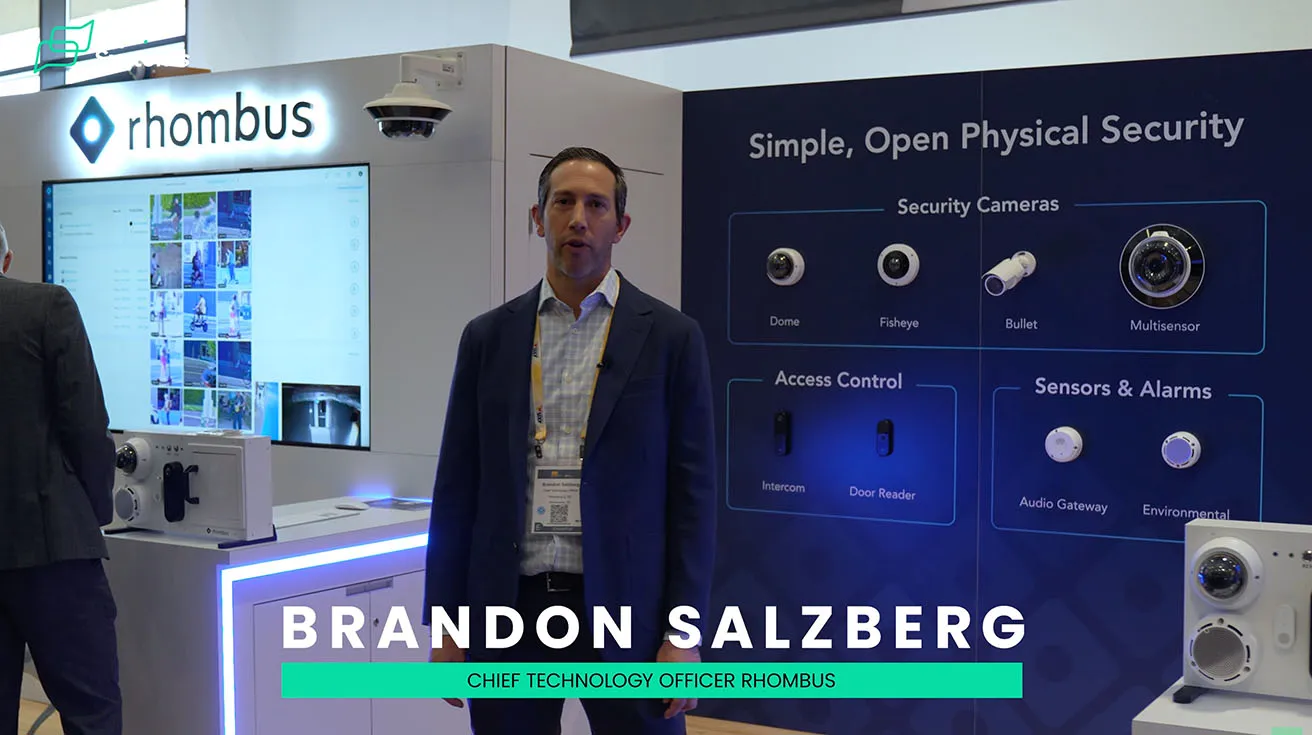
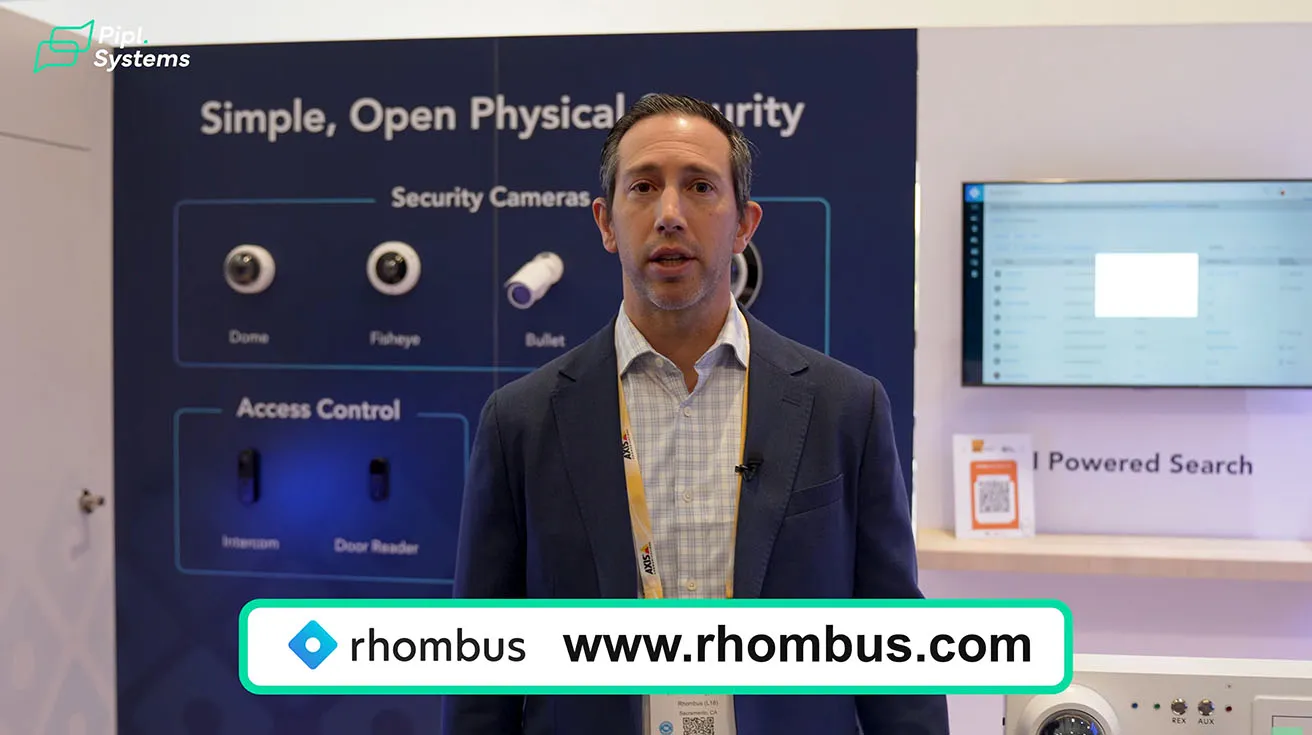
Hello. I am Brandon Salzberg, Chief Technology Officer at Rhombus. At Rhombus, we build cloud-managed physical security products. Our ecosystem includes security cameras, access control, audio sensors, and environmental monitors. Basically, we create anything you can imagine to manage your physical environment. We are at ISC West 2026 to show some of our new product lines. If you followed our progress in the Rhombus Security at ISC West 2025 overview, you know we focus on unified cloud platforms. This year, we are stepping beyond fixed hardware.
Why Mobile Robotic Security and Rhombus Recon
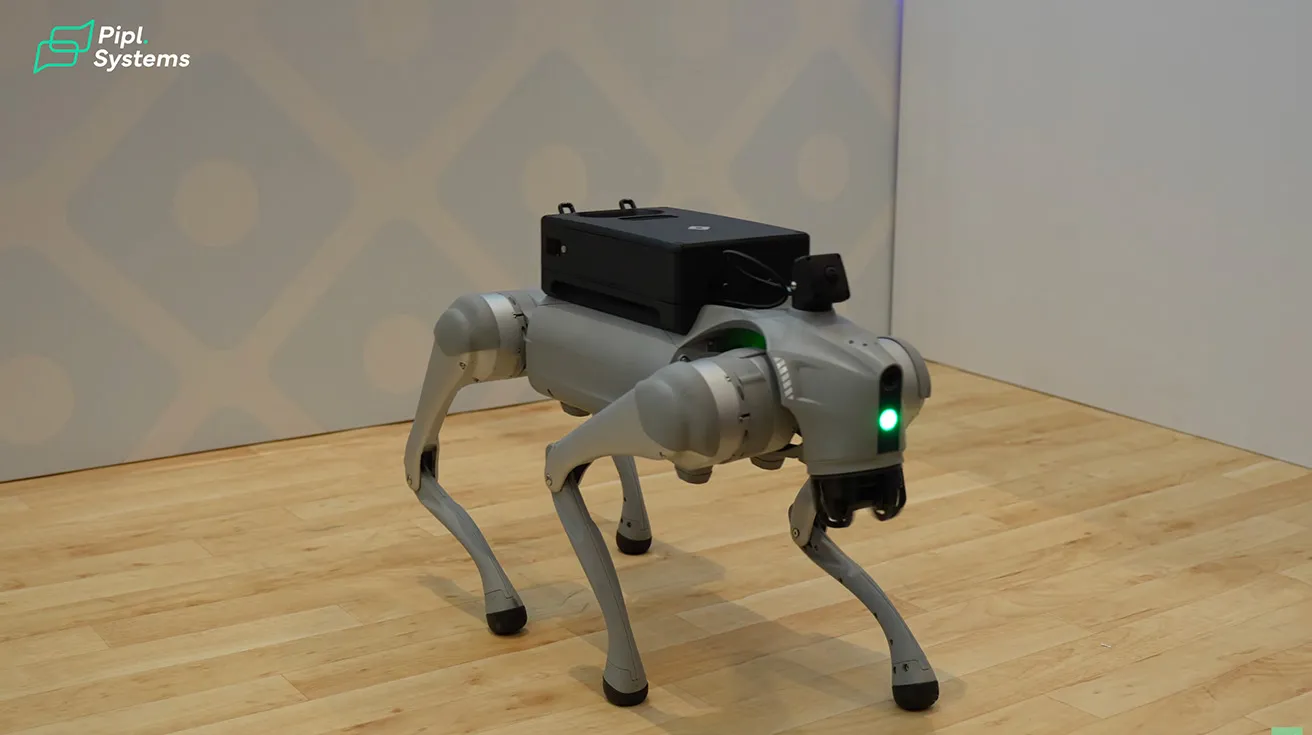
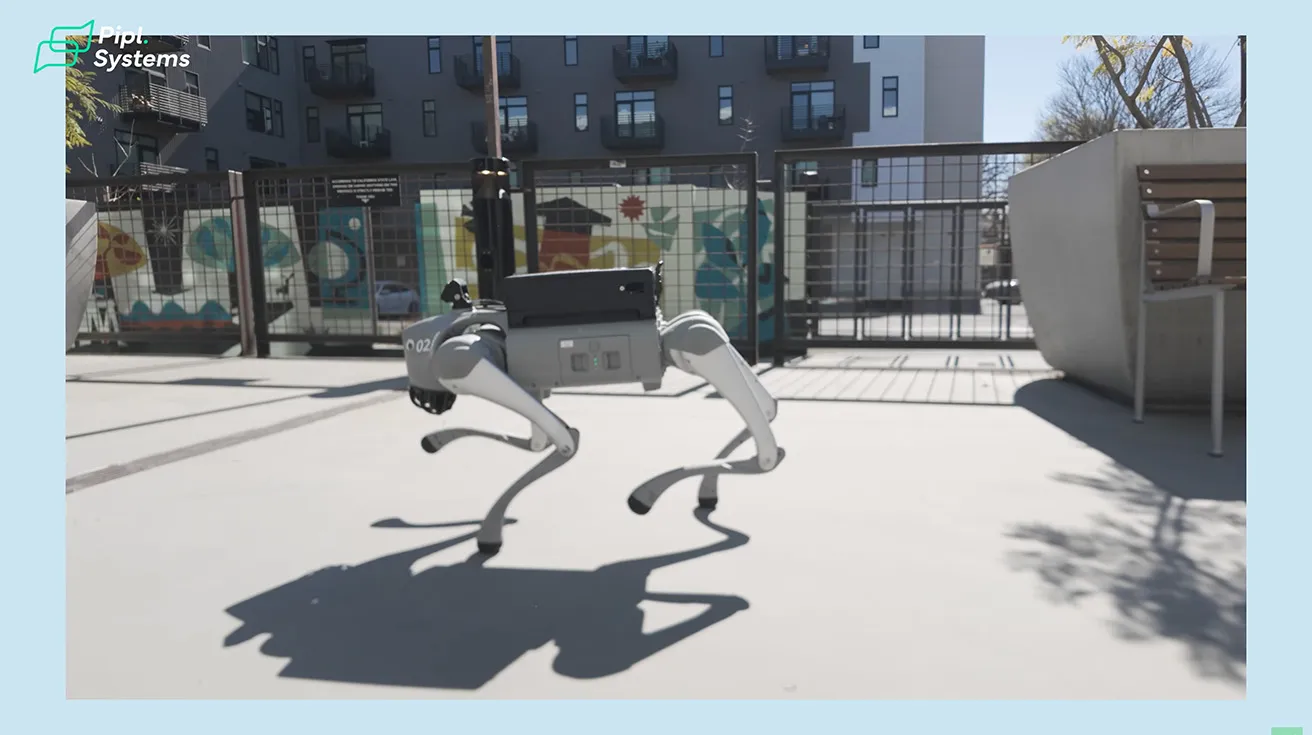
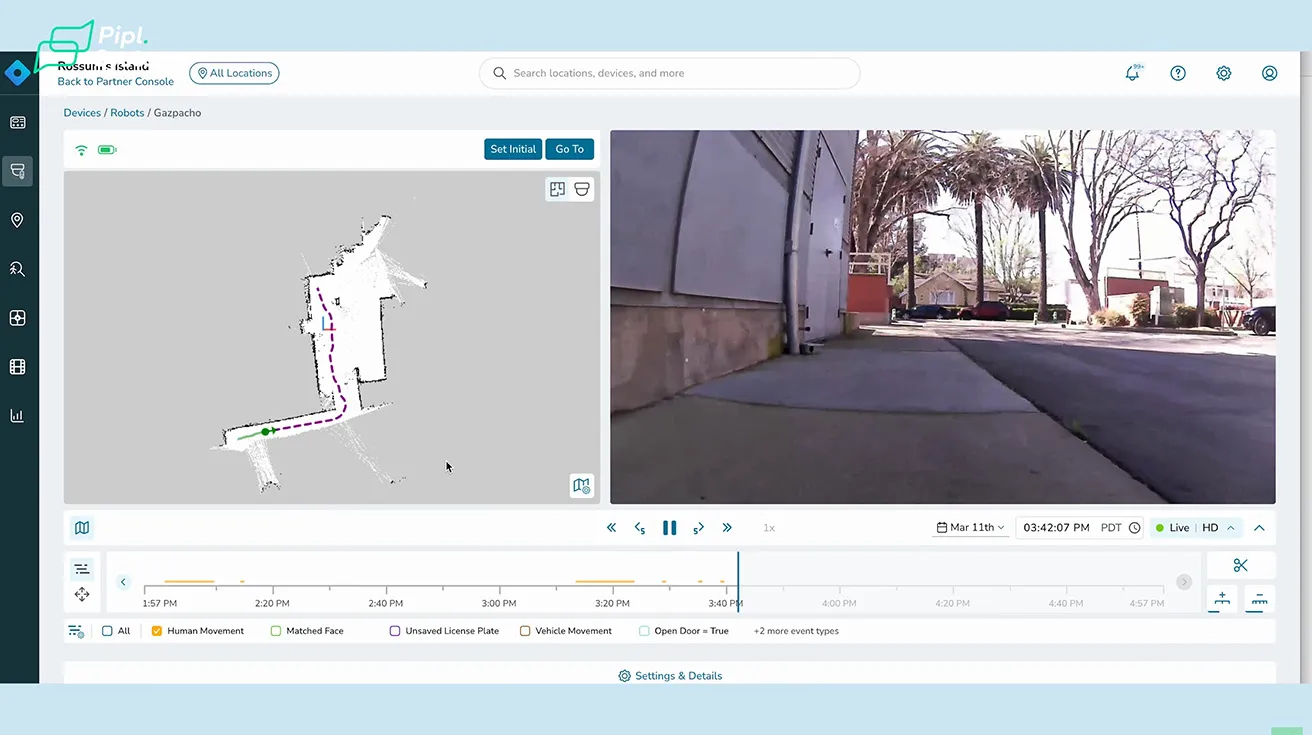
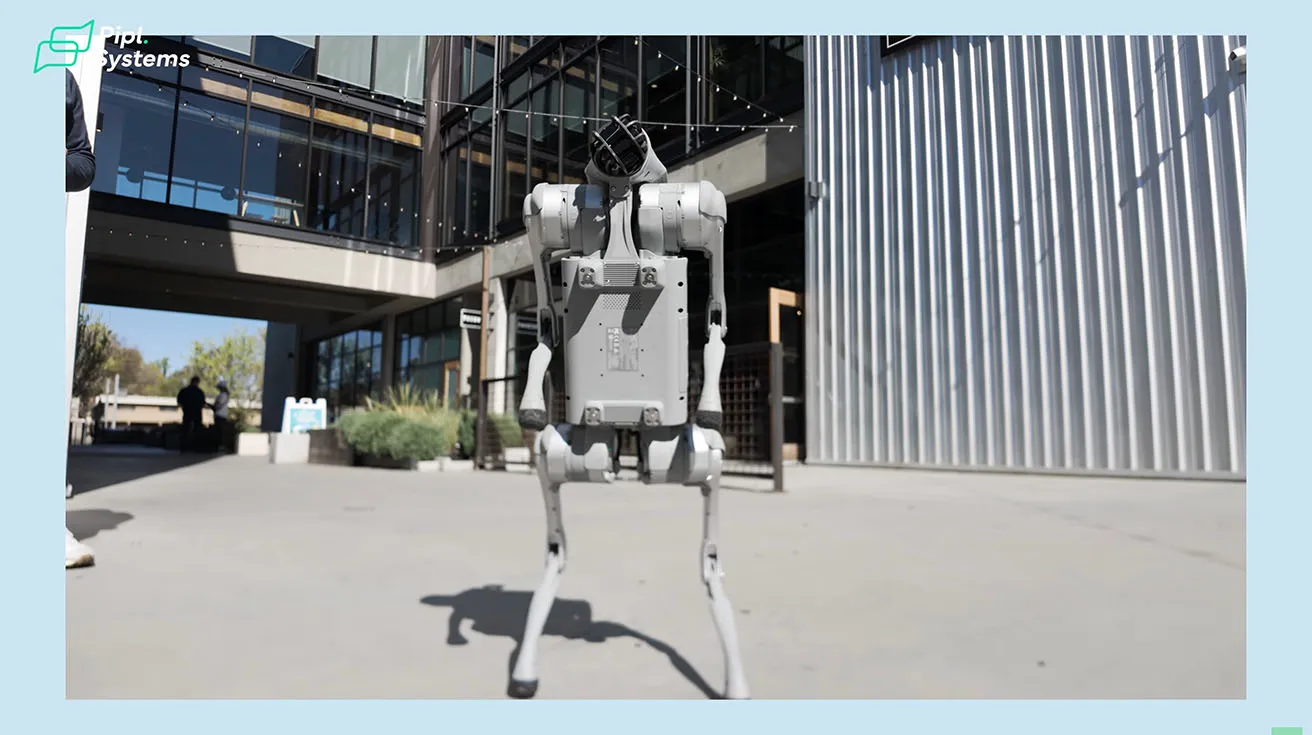
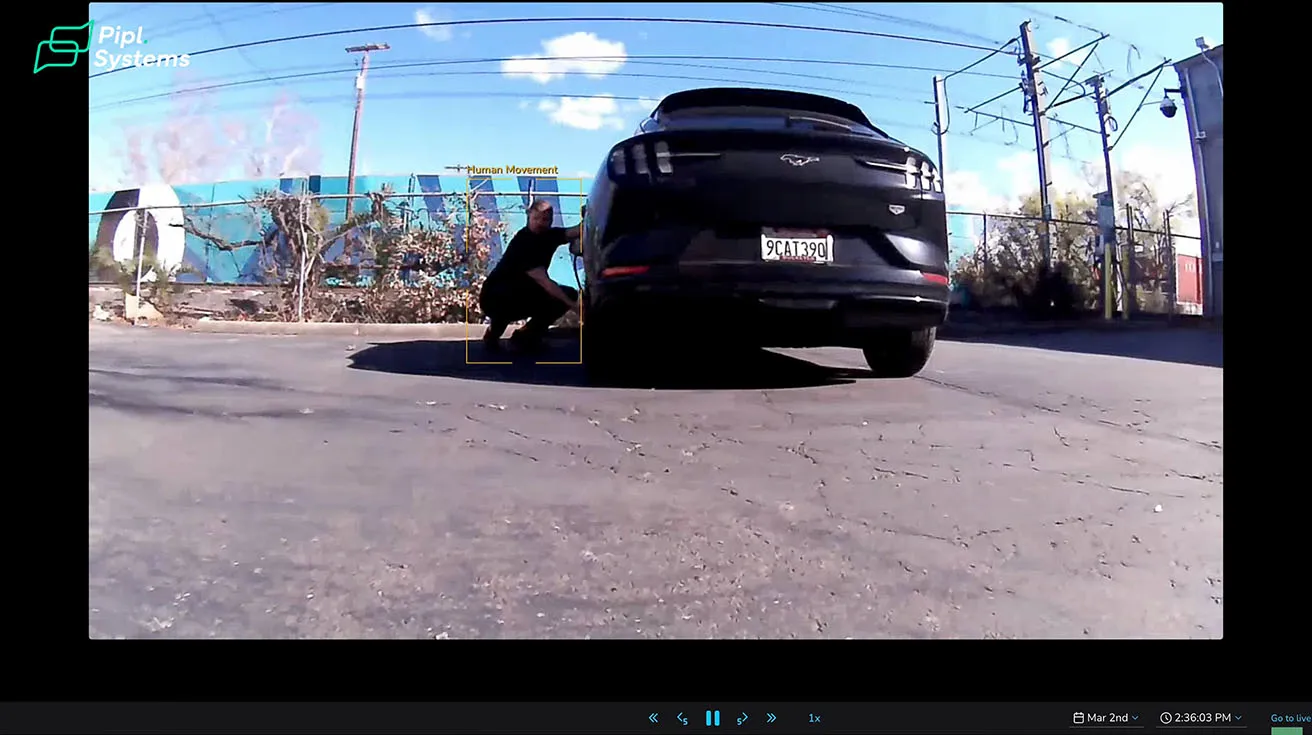
We are officially announcing Rhombus Recon. This is our foray into robotics. For years, the physical security industry relied exclusively on stationary devices. You mount a camera to a wall, and that dictates your fixed point of view. Recon changes that by extending the perimeter of our solution. Now, we have mobile autonomous devices that can follow the action wherever it goes. If there is activity outside your property, you can deploy a robotic patrol unit to get a closer look. You are no longer constrained by static surveillance. This allows security integrators to cover vast, complex areas dynamically.
1 / 5
Live Control of the Robot Dog
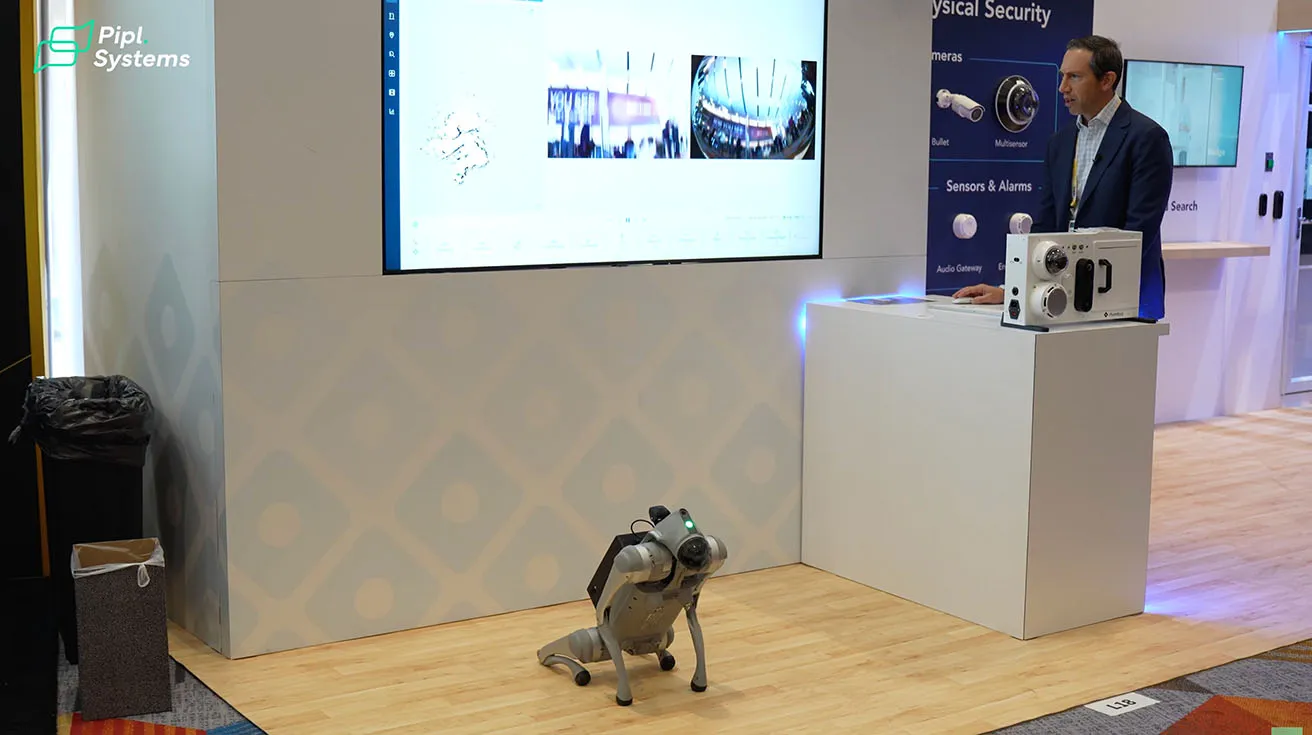
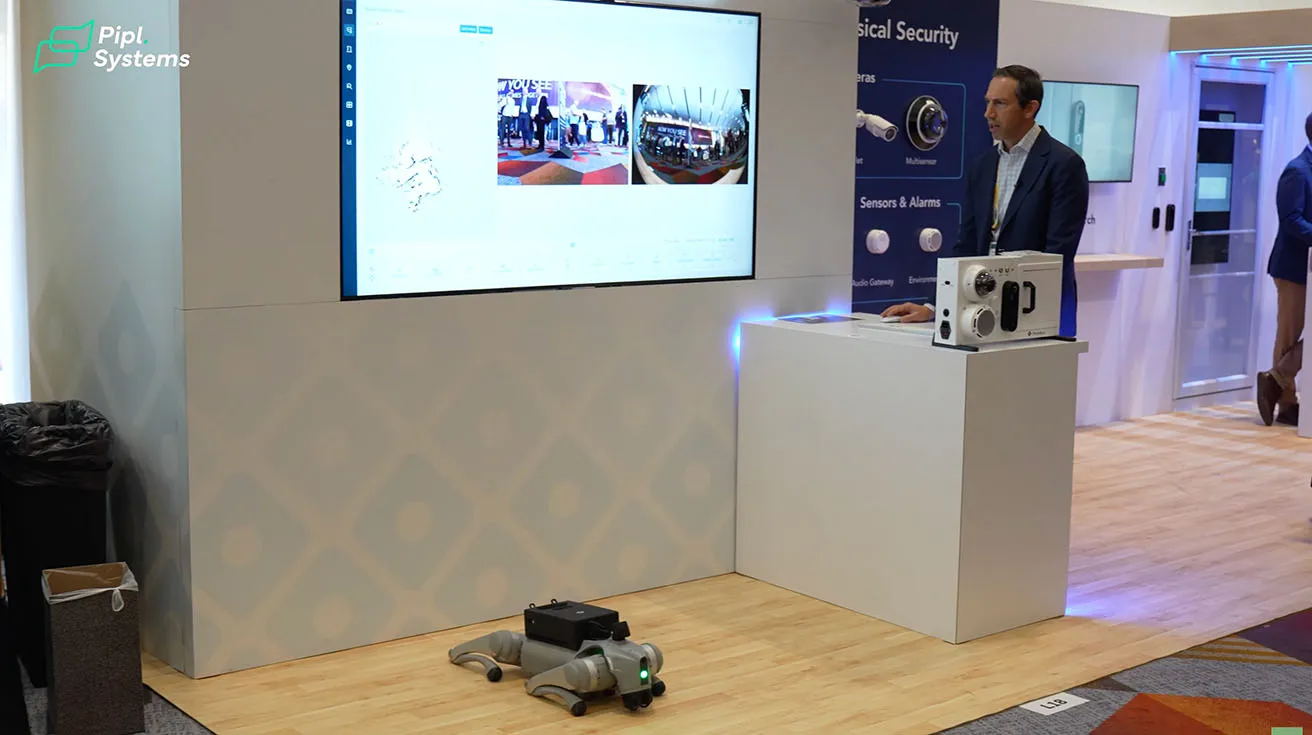
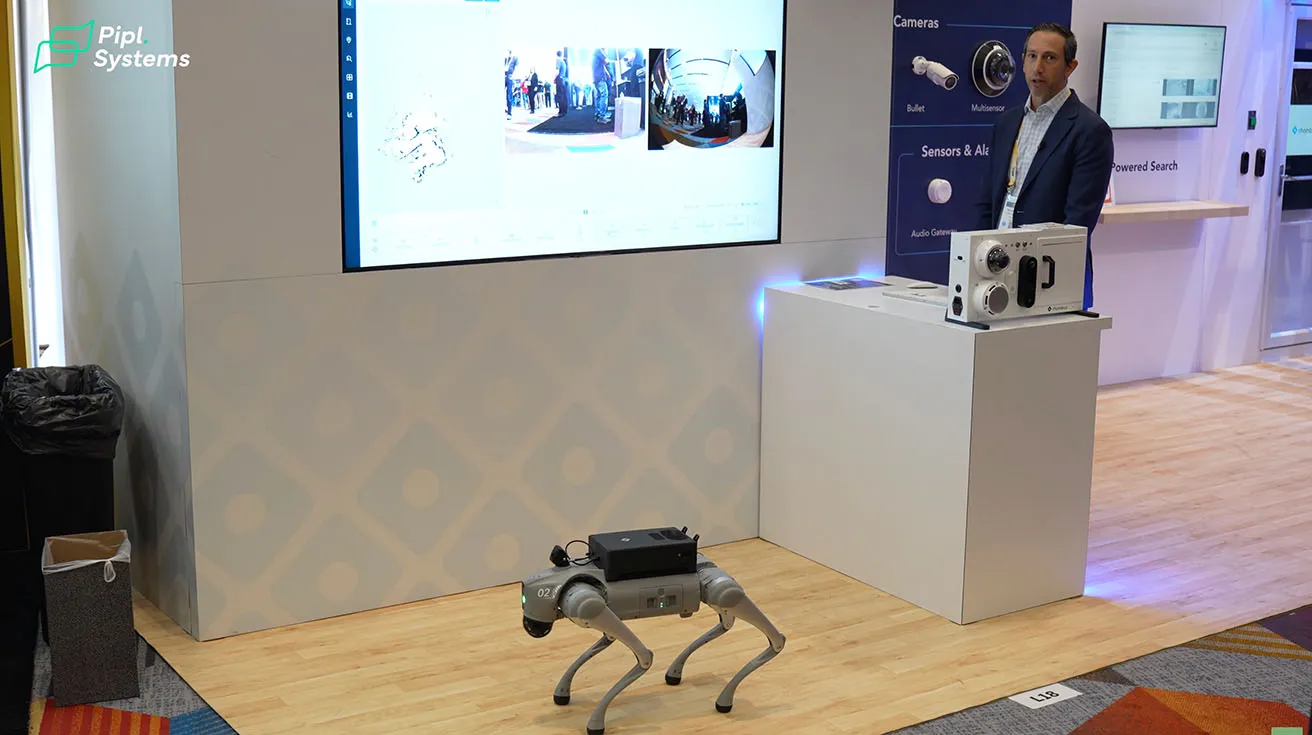
Let me show you exactly how Rhombus Recon works in practice. The robotic device is equipped with two primary cameras. Through our console, you maintain full control and can see exactly what the robot sees. A map on the left side of your dashboard tracks the unit in real time. You can manually command the dog to stand up, sit, lay down, or walk around. You can move it forward or backward to investigate a specific area. The entire time, it captures and streams high-quality footage directly into our cloud platform.
1 / 3
Autonomous Patrol and LLM Tasks
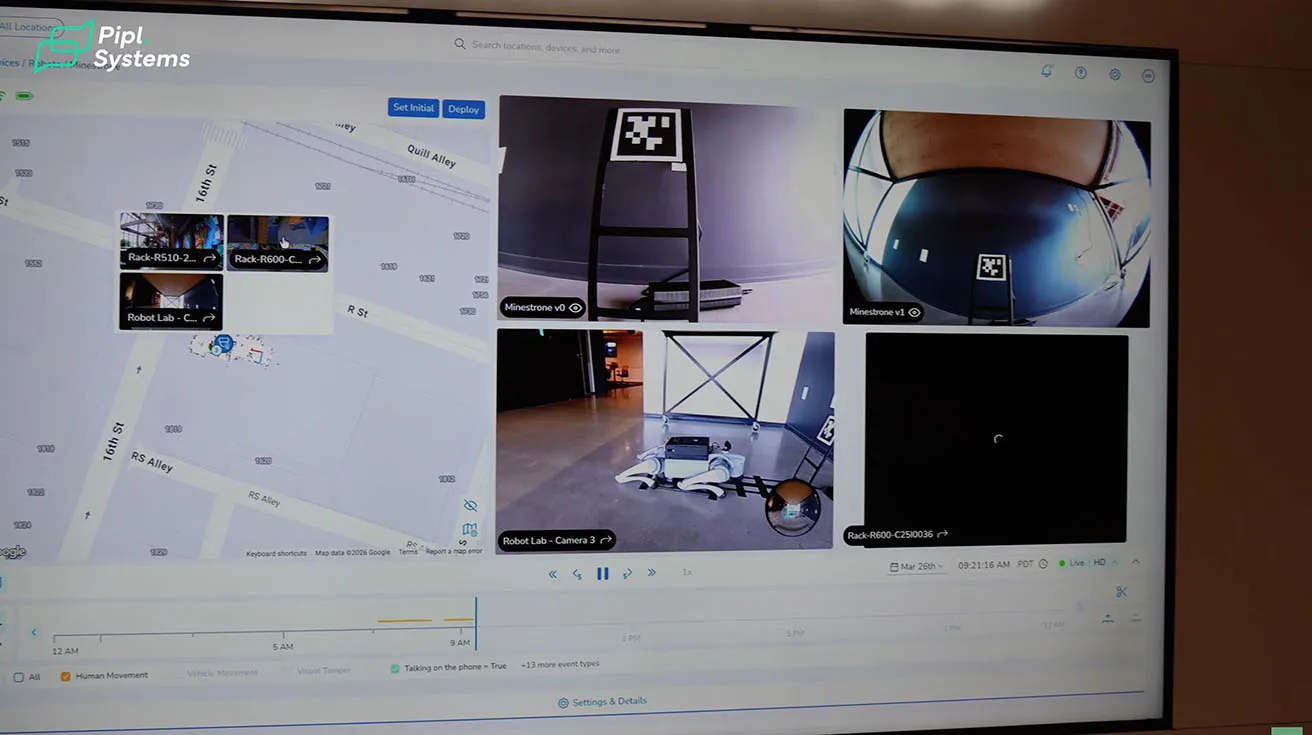
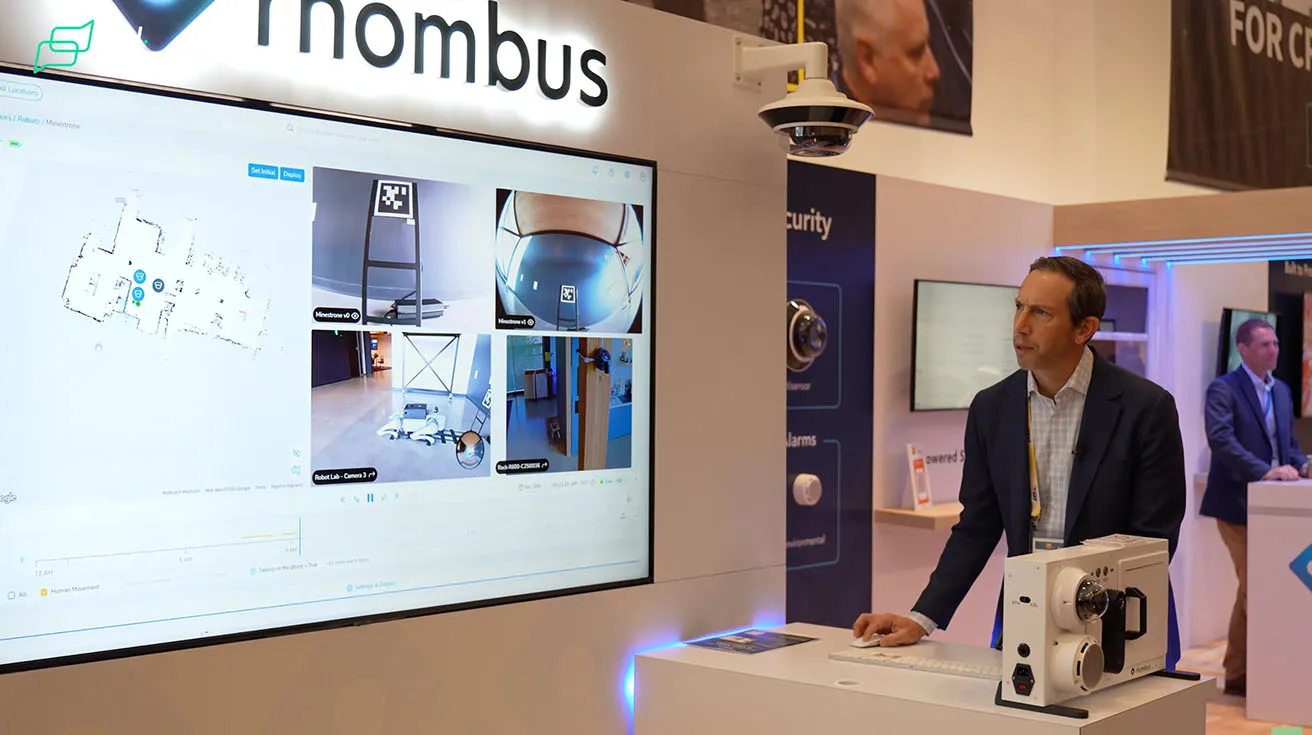
Manual control is useful, but autonomy is where this system truly scales. Looking at the feed from another robot currently working at our office, you get a feel for the multi-camera view. You can set the robot to run an autonomous patrol around a fence line at a school or a corporate business. You can also deploy it to specific waypoints. For example, I can click a spot on the map and command Recon to walk there. We can even have it run a Large Language Model (LLM) prompt at that location. If you need to inspect a gas meter or verify if a door is propped open, the robot travels there, runs the prompt, and identifies the situation without human intervention.
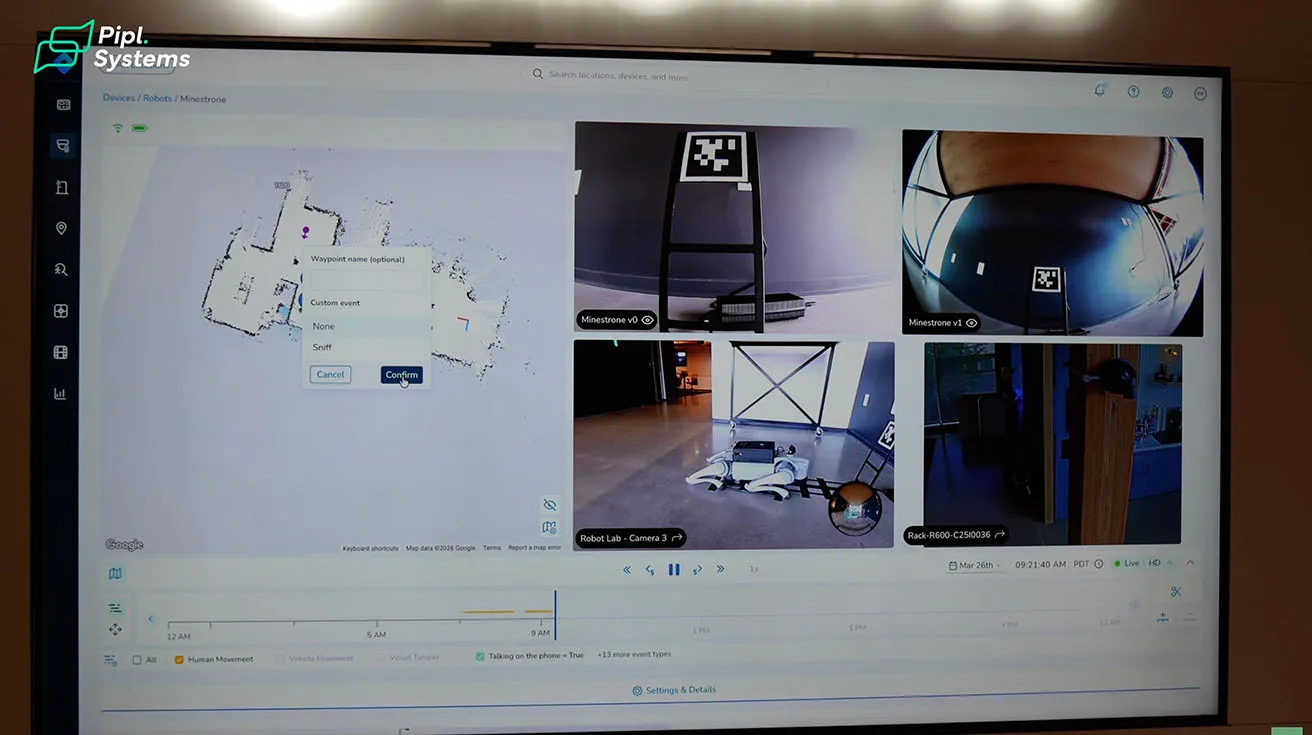
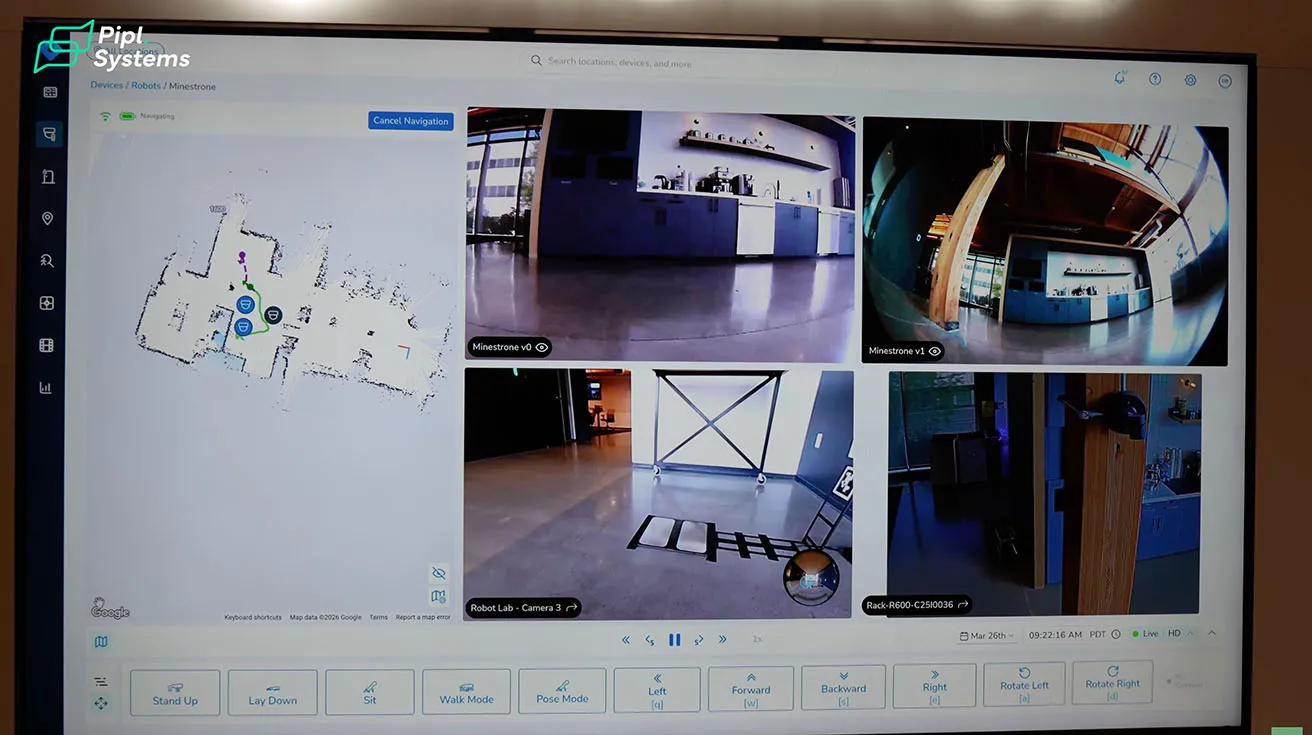
1 / 4
Reviewing Routes and Past Footage
When the robot completes a route, it pulls all that gathered data directly into the Rhombus system. You get a full, permanent record of the event. If an incident occurs in a far parking lot, you do not have to spend time and energy walking out there. The robot gathers the information for you. Later, you can go back in time within the dashboard. You can review the exact route, watch the past footage, and track everywhere Rhombus Recon has been.
Security Camera Lineup and PTZ Plans
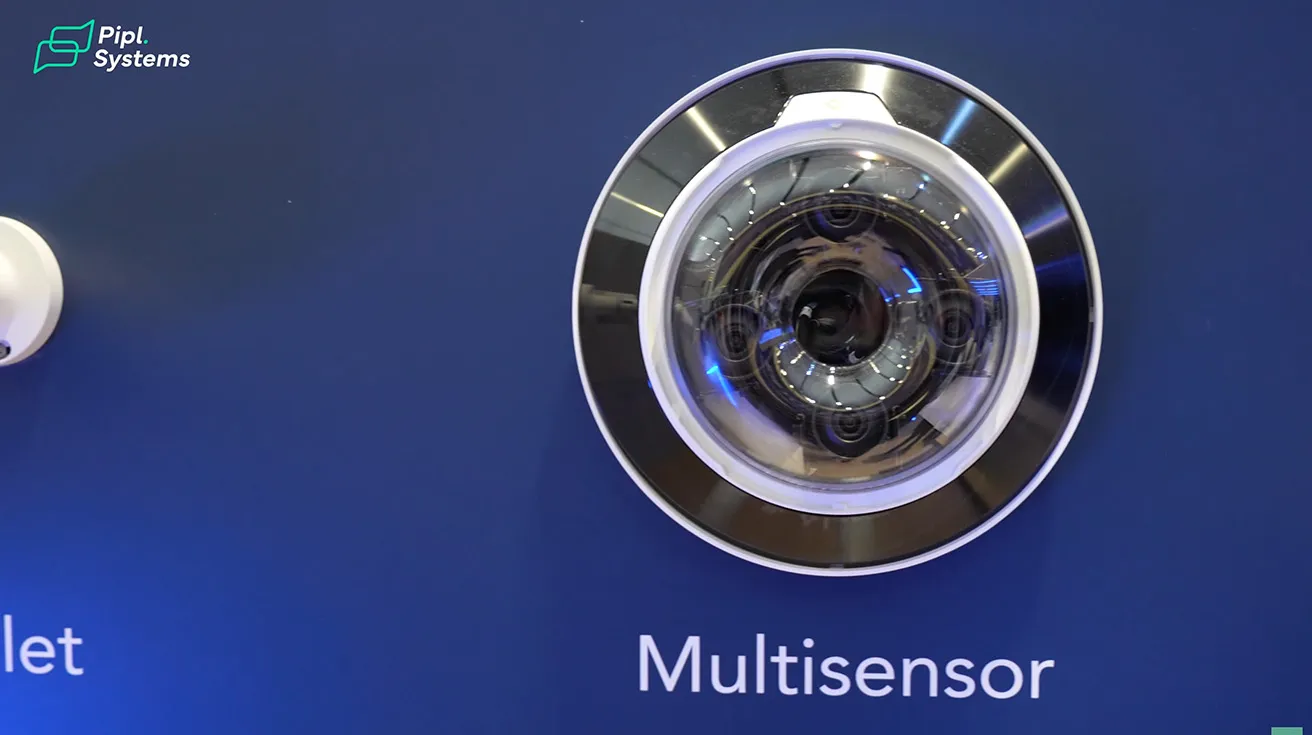
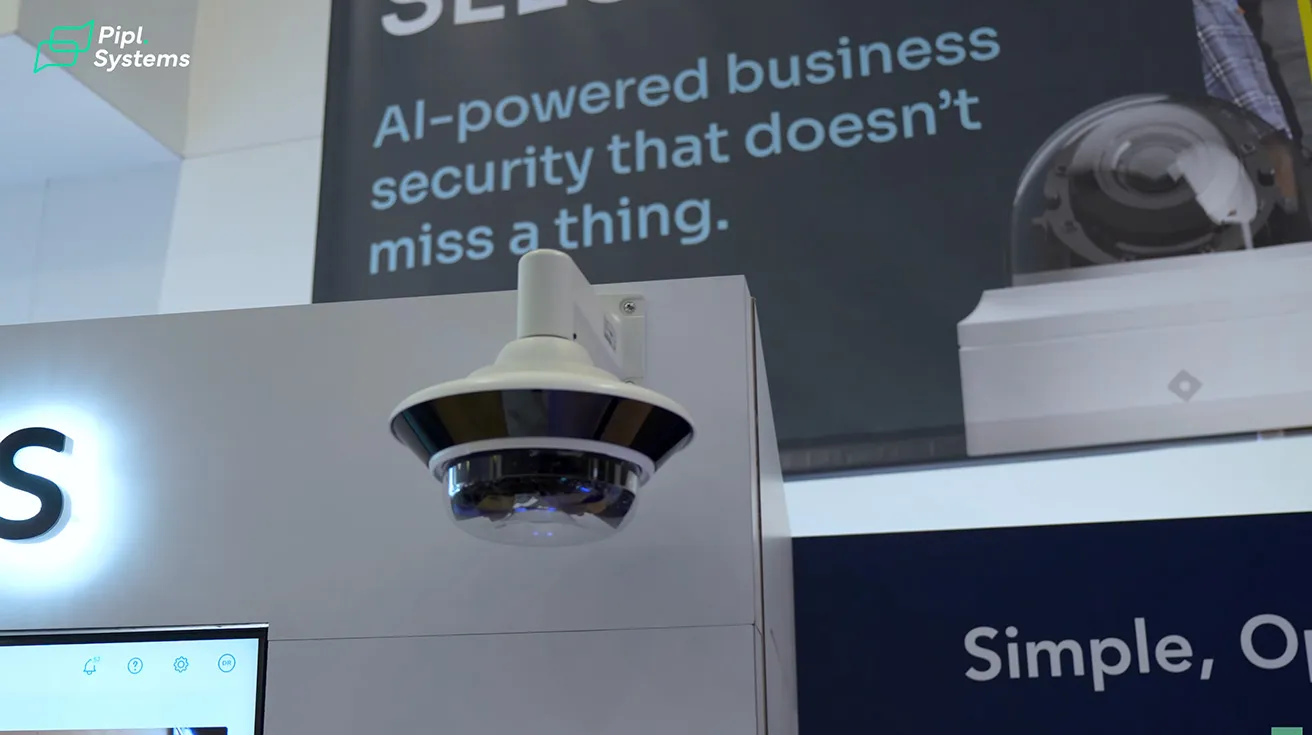
While Recon is our newest platform, we continue to expand our core hardware. Our current lineup covers every variation of camera that makes sense for enterprise deployments. This includes dome, fisheye, bullet, and multisensor models. Right here at the booth, we are displaying the R600. It is a four-lens camera designed for situations where you need multiple views of a wide area. We are also actively developing a new PTZ camera to give operators even more active, targeted control.
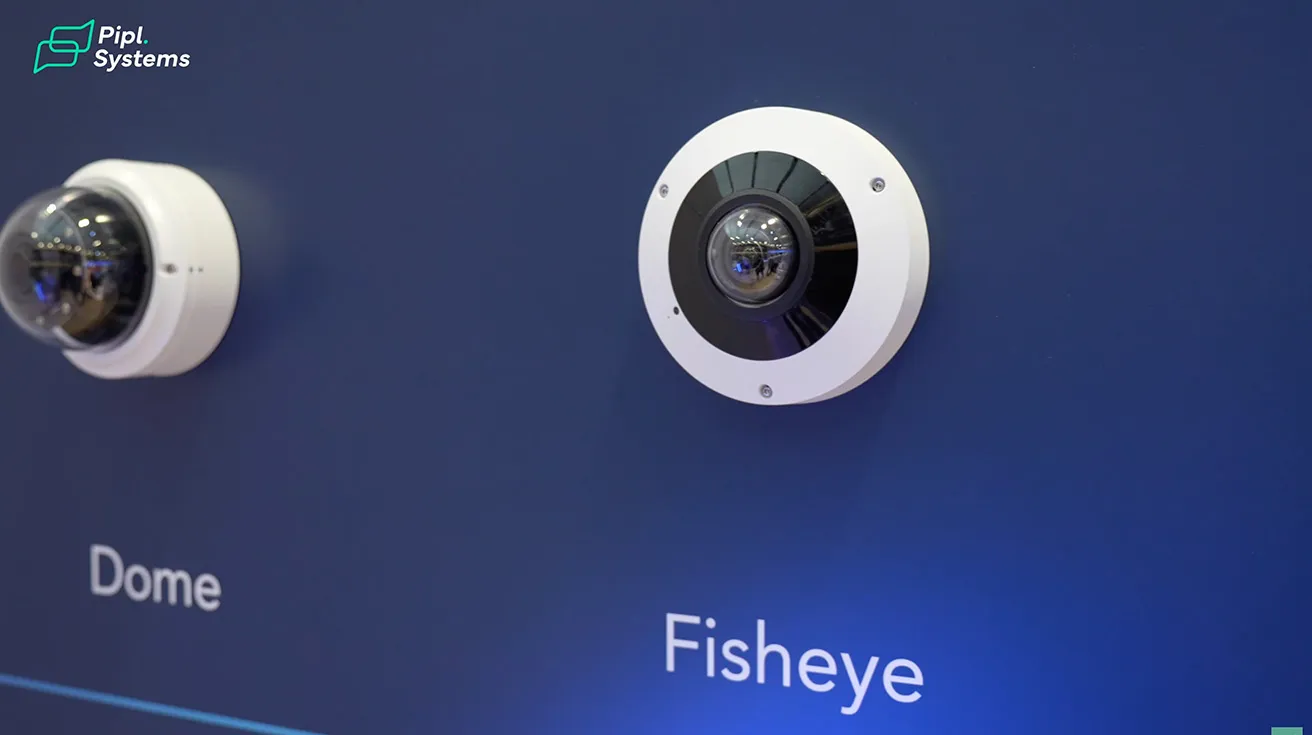
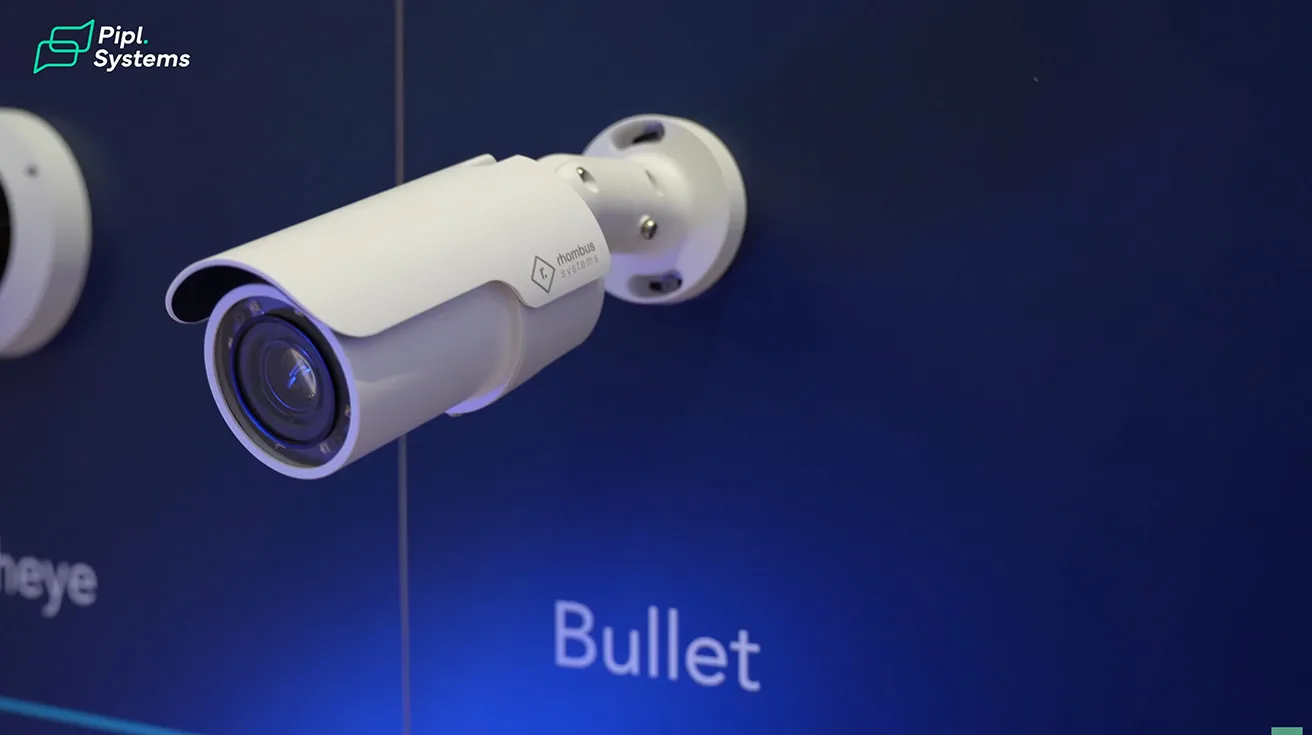
1 / 4
Access Control and Intercom
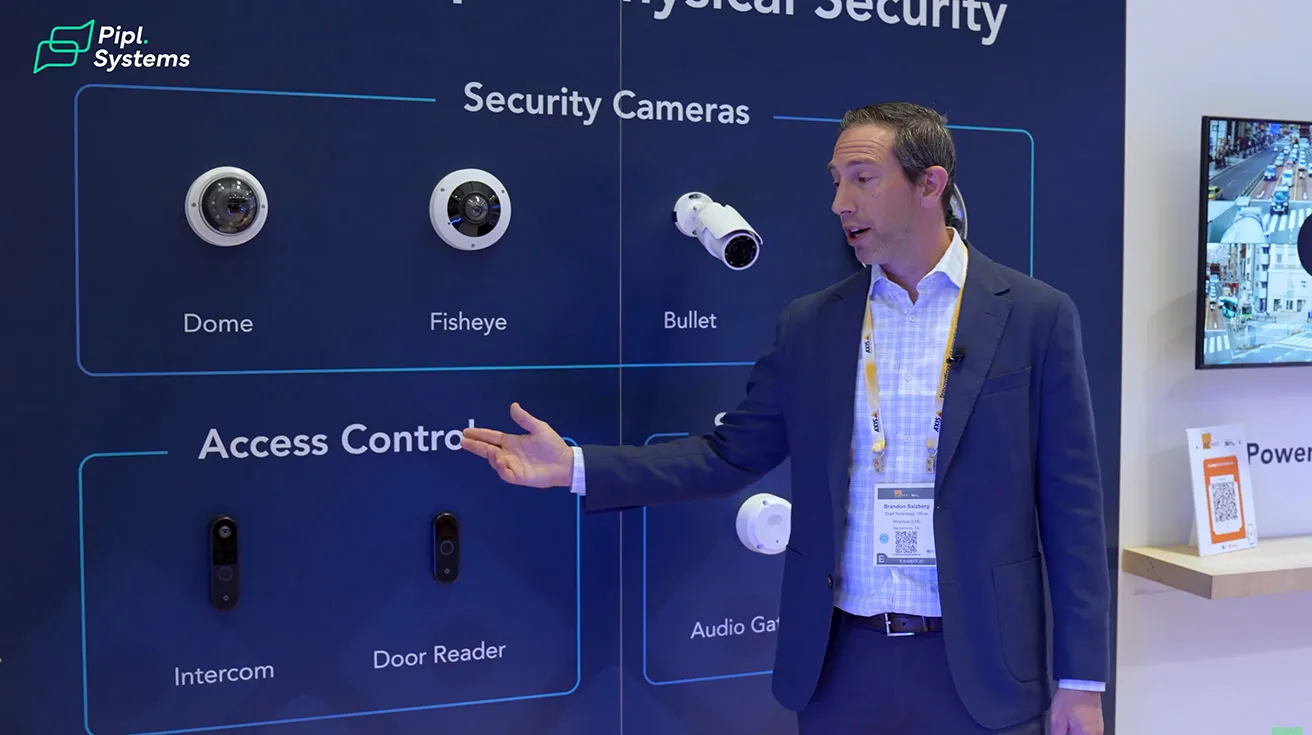
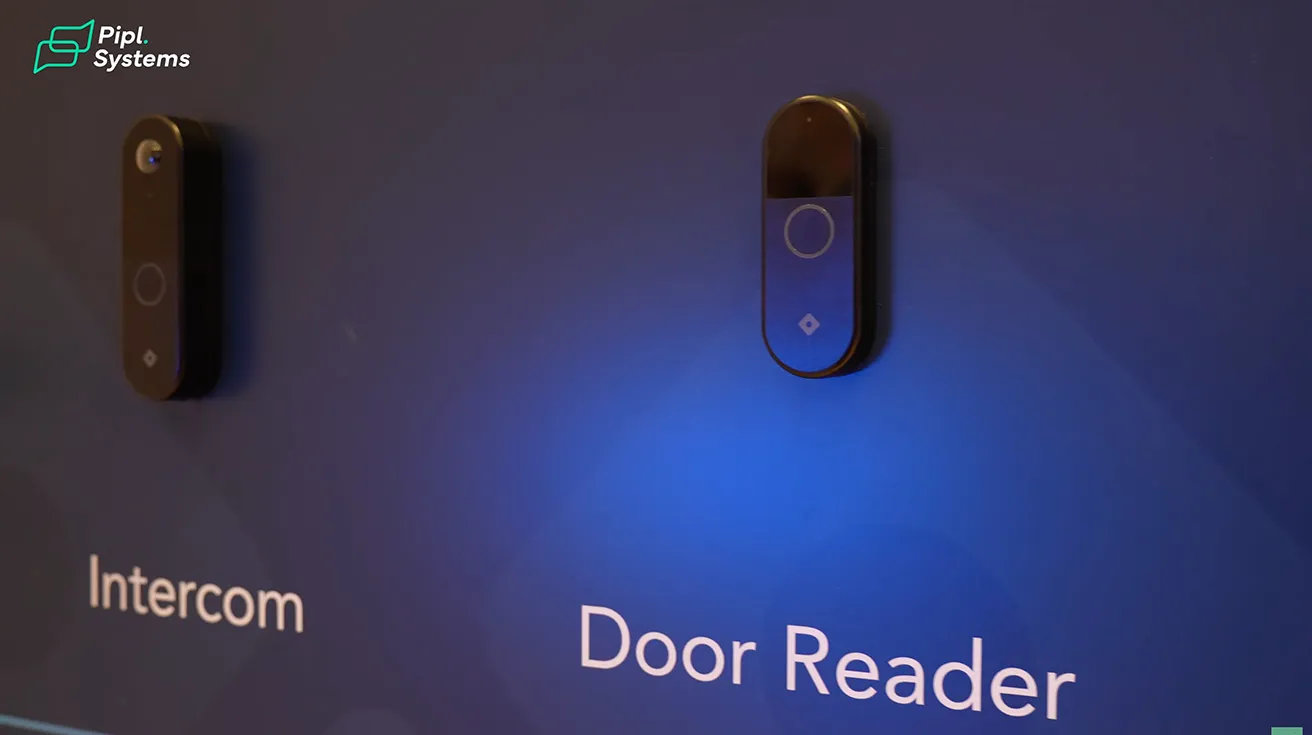
Our video platform integrates seamlessly with our access control hardware. We offer door readers and intercoms equipped with two-way talk. These intercoms also feature a built-in badge reader. If someone approaches a front door, you can verify their identity and grant access quickly from the same unified dashboard.
1 / 2
Audio Gateway and Environmental Sensors
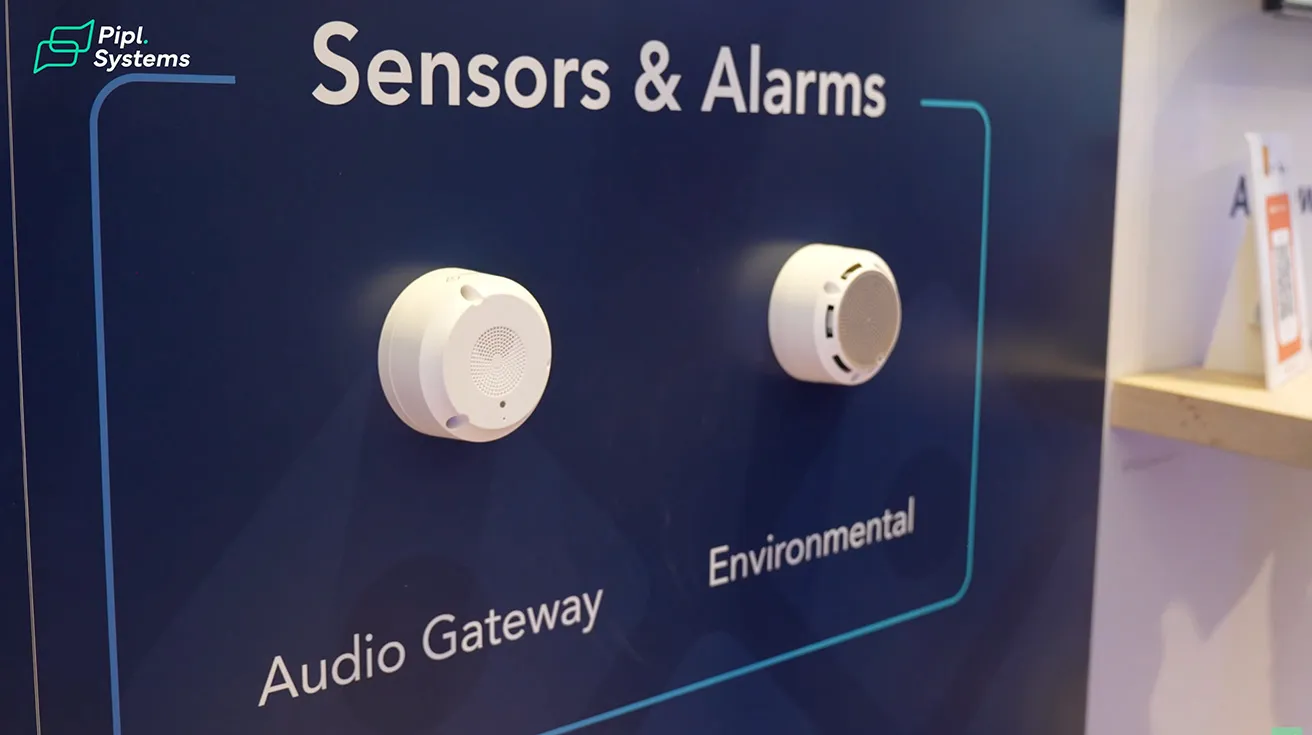
Sometimes, a camera is not the right fit. For those specific areas, we built the Audio Gateway. It is a two-way audio device that detects activity in spaces where it is not safe or appropriate to install video surveillance. We also utilize environmental sensors. These devices monitor temperature, humidity, and VOCs. If there is a sudden change in the environment that warrants attention, the system alerts you. You can learn more about how these devices communicate in this complete guide to Rhombus cameras and sensors.
Integrations and PoE Lighting
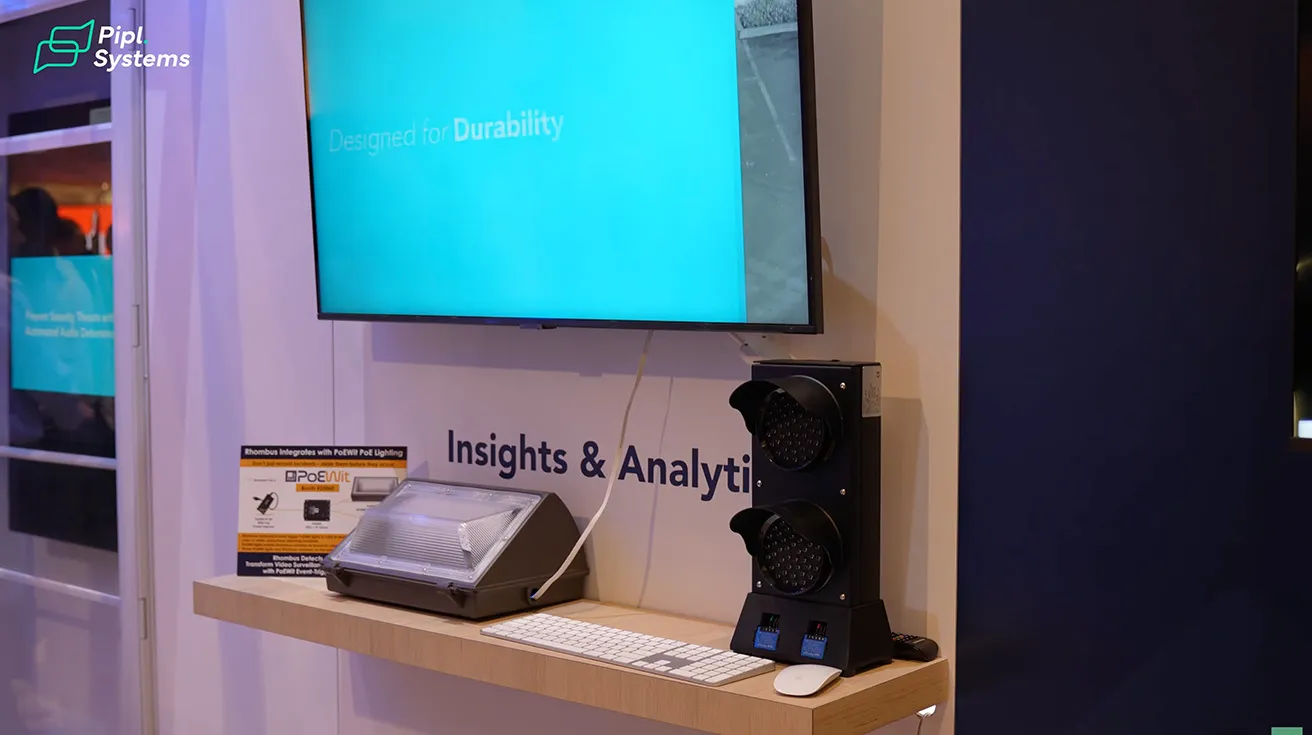
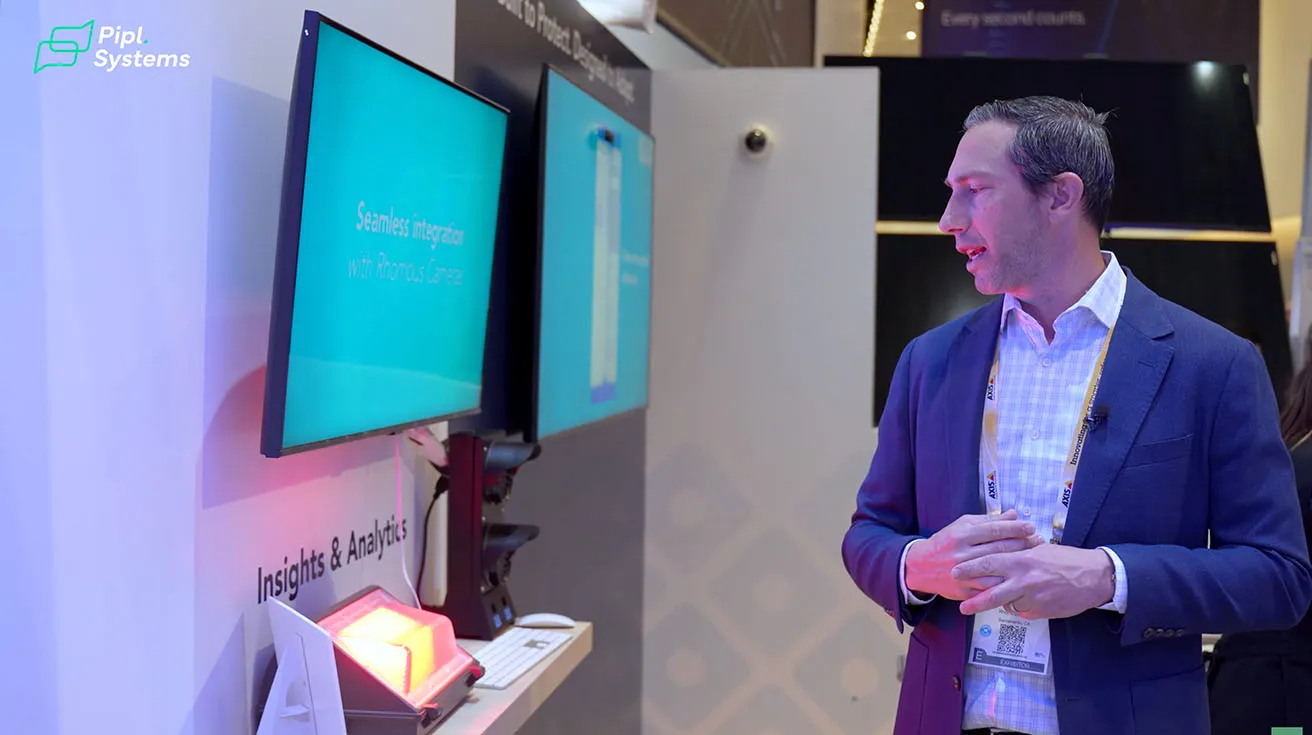
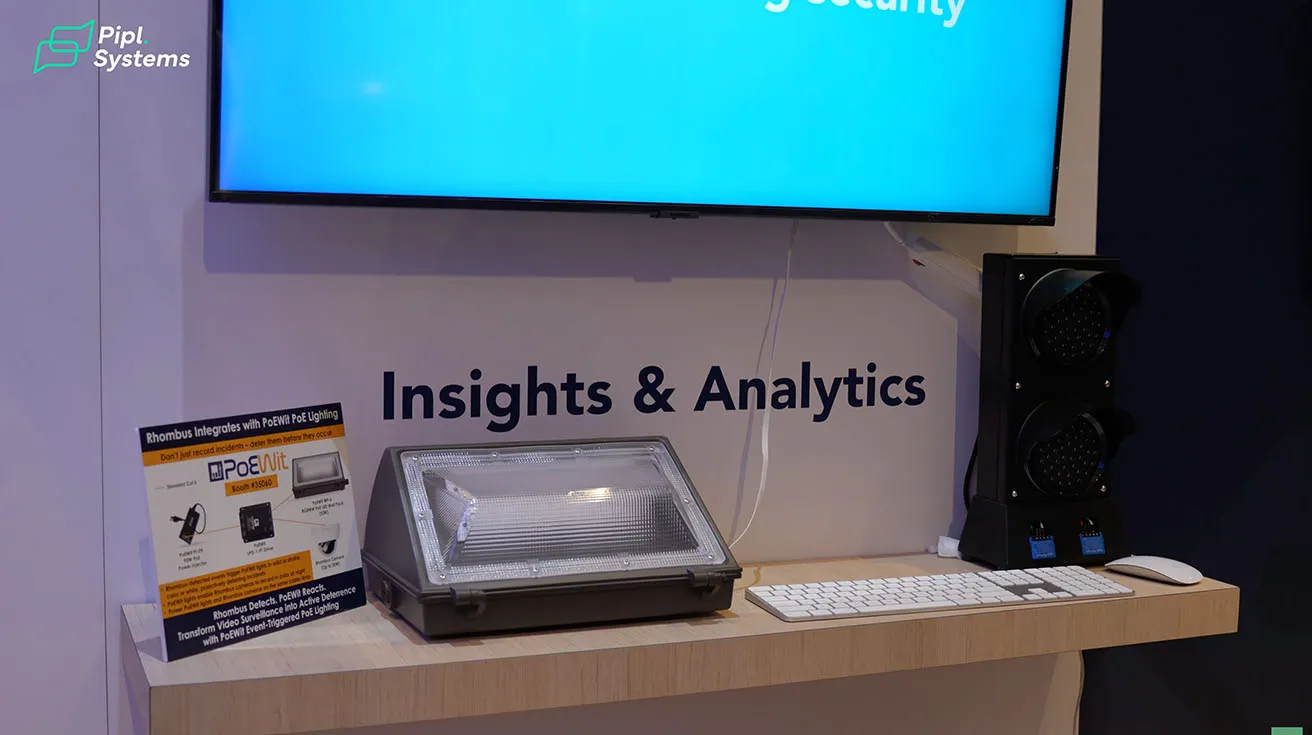
A major differentiator for Rhombus has always been our integrations. We maintain hundreds of open API integrations. We recently announced the ability to control PoE lighting directly through our software. Imagine a situation where someone approaches a restricted perimeter at night. You can program the system to turn on a floodlight or trigger a strobe light to scare them away. Whether you are integrating third-party alarms or tying in a Rhombus Relay Core N100, the goal is to physically interact with the environment, not just record it.
1 / 3
The Rhombus Approach to Physical Security
At Rhombus, we are entirely focused on solving physical security issues. We help customers identify pain points and make their businesses more efficient. We want to improve operational awareness across the entire physical space. If you are looking to better understand, monetize, and secure your environments, reach out to us at rhombus.com. We are always looking for partners and security installers who want to improve the efficiency of their clients' facilities with reliable, cloud-based solutions.
Partner Perspective: A Shift in the Market
Oleg Bordiian, Founder of Pipl Systems, shared his thoughts on the new robotic platform after touring the booth:
"Over the past few years, at Pipl Systems we’ve filmed a lot of content around the Rhombus ecosystem - their cloud platform and how cameras, sensors and access control all come together in one system. At ISC Security Events #ISCWest2026, the team showed new integrations, but what really stood out to me was something different - Rhombus Recon. We had a chance to go through it with Brandon Salzberg."
"It’s a mobile autonomous platform (essentially a robotic patrol unit) that expands how we think about security. Instead of relying only on fixed cameras, this adds mobility - the ability to patrol, respond, and collect data in areas that were previously blind spots. And the key point is that it all works inside the same Rhombus platform. I’m pretty sure we’ll see more manufacturers moving in this direction. For integrators, this is already something to keep in mind these types of solutions are becoming real and ready to be deployed."
Read the full post on LinkedIn
Conclusion: The Future of Unified Physical Security
The Rhombus booth at ISC West 2026 proved that the company is fundamentally shifting the paradigm of physical security. They are moving the industry away from passive, stationary recording and toward proactive, mobile response. By integrating their robust lineup of fixed cameras, access control, and environmental sensors with the autonomous capabilities of Rhombus Recon, they have created an ecosystem that leaves no blind spots. They are giving facility managers and security teams unprecedented flexibility to physically interact with their environments in real time.
For security integrators, this unified approach is a massive advantage. Deploying a robotic patrol unit that seamlessly connects to the exact same dashboard as a standard dome camera eliminates the complexity of managing siloed systems. Whether a client needs to run LLM prompts to inspect a remote gas meter, verify an alarm in a dark parking lot, or trigger PoE lighting to deter an intruder, Rhombus is delivering a scalable, cloud-managed solution that actively prevents incidents and optimizes operations.
Frequently Asked Questions (FAQ)
1. What is Rhombus Recon and how does it work?
Rhombus Recon is a mobile, autonomous robotic patrol unit—essentially a robotic security dog—that integrates directly into the Rhombus cloud platform. It acts as a dynamic, mobile camera system that can be manually controlled via a dashboard or programmed to perform autonomous patrols along specific routes.
2. How does a robotic patrol dog improve physical security?
Unlike fixed security cameras that have limited fields of view and create blind spots, a robotic patrol unit provides mobility. It allows operators to dynamically investigate incidents, patrol expansive perimeters like school campuses or enterprise parking lots, and get "eyes on the ground" without sending human guards into potentially dangerous situations.
3. Does Rhombus Recon require a separate management software?
No. The primary advantage of Rhombus Recon is its unified integration. Security integrators and end-users can manage the robotic unit, fixed surveillance cameras, access control, and environmental sensors all from the exact same Rhombus cloud-managed dashboard.
4. Can the Rhombus robot perform automated inspections?
Yes. Operators can assign specific waypoints and command the robot to run Large Language Model (LLM) prompts upon arrival. For example, the robot can autonomously navigate to a utility area, inspect a gas meter, or visually verify if a secure door has been propped open, and immediately log that data into the system.
5. What other hardware connects to the Rhombus ecosystem?
Beyond mobile robotics, the platform supports a comprehensive lineup of physical security hardware. This includes dome, bullet, fisheye, and multisensor cameras (like the R600), as well as access control intercoms, audio gateways, environmental sensors, and integrations for third-party systems like PoE lighting.
6. Is a cloud-managed security platform right for large enterprise deployments?
Absolutely. The cloud architecture makes it highly scalable. Businesses can deploy hundreds of fixed cameras and sensors across multiple global locations and augment them with mobile robotic units, managing the entire fleet effortlessly from a single, centralized web interface.