
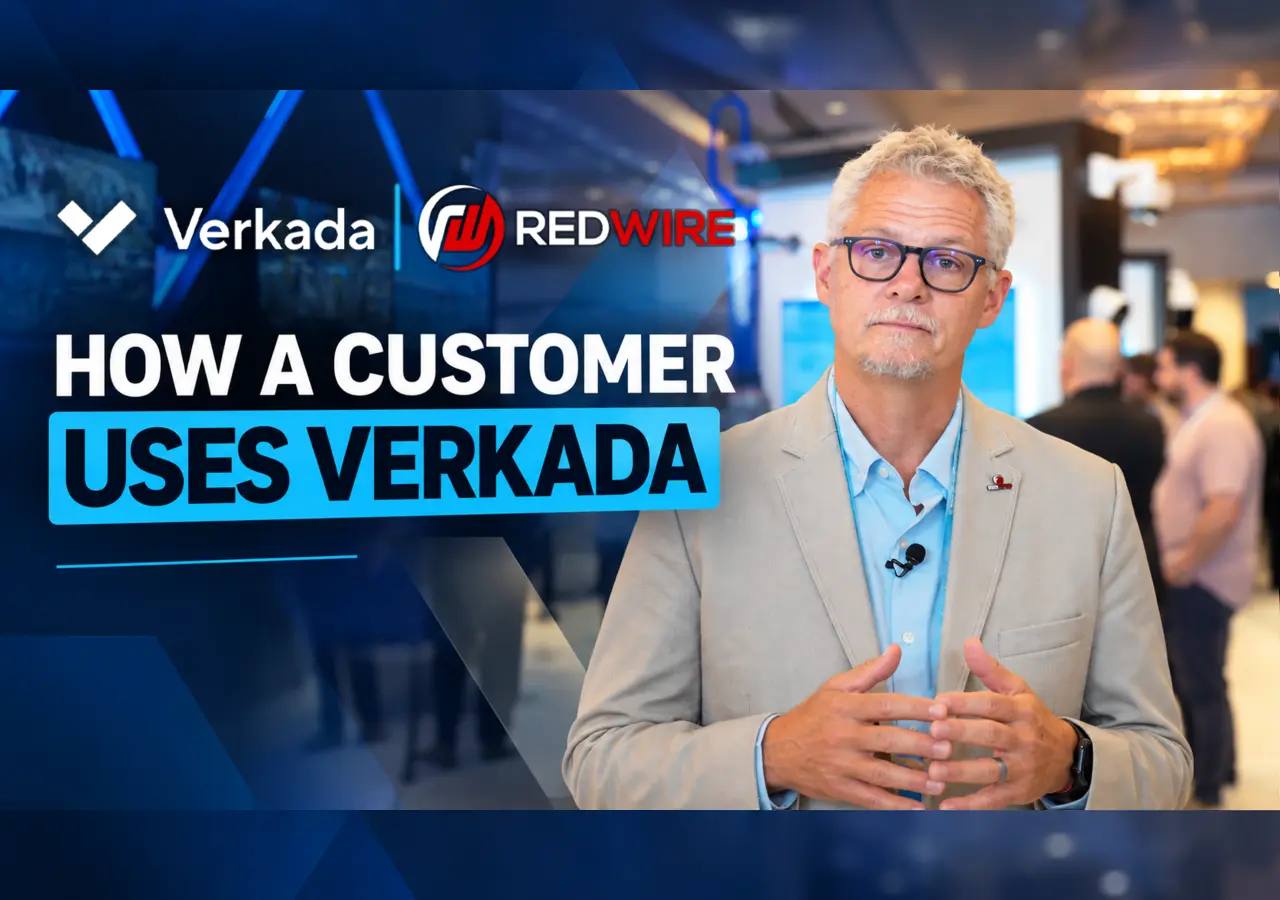
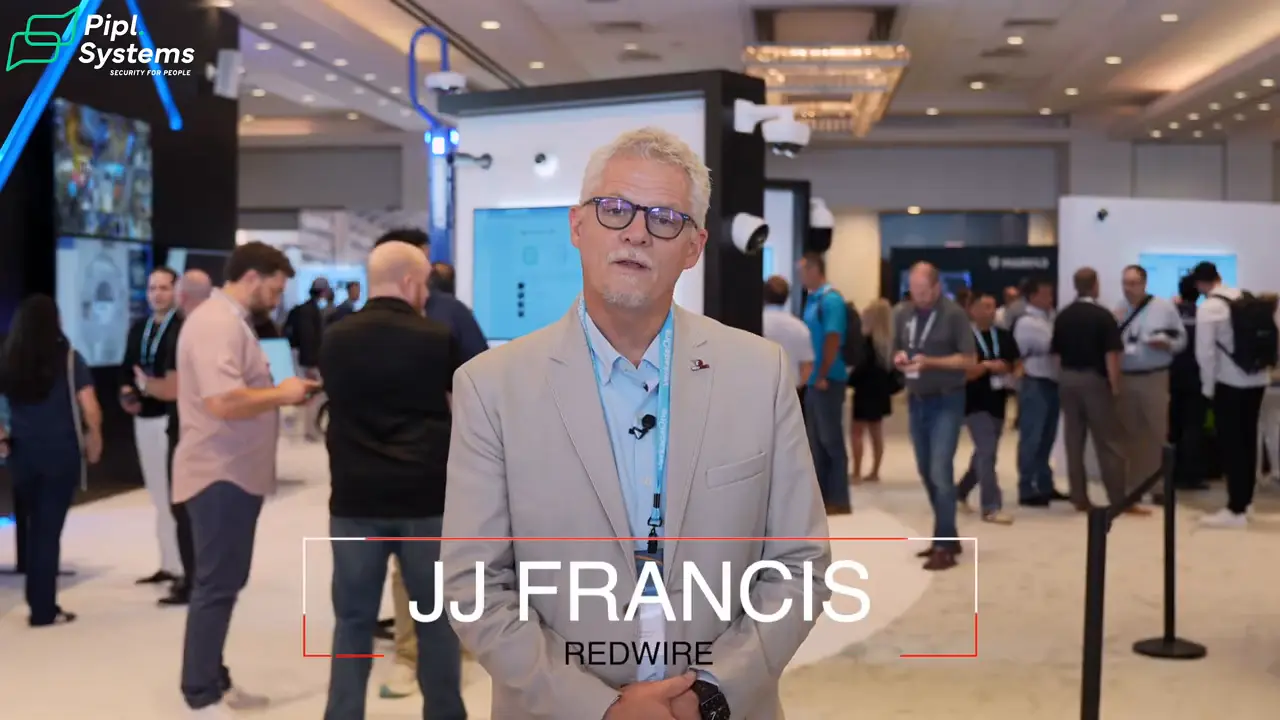
At VerkadaOne 2026 in Miami Beach, I spoke with JJ Francis, Senior Vice President of Global Real Estate & Workplace Operations at Redwire, about the work behind a unified security operation. His team uses Verkada across approximately 30 buildings in four countries, covering nearly one million square feet.
For Redwire, the challenge extends from controlling entry to understanding what happens across production spaces, clean rooms, and visitor areas. Francis described how bringing video, access control, visitor management, and alarms into one platform helps his team manage those responsibilities.
Our conversation offers a practical look at multi-site physical security through the experience of an aerospace and defense company.
Watch the interview
Video chapters · 6:09
Interview recorded at VerkadaOne 2026. The video also includes a separate introduction to Pipl Systems’ case study video services.
Redwire’s Physical Security Challenge
Redwire develops aerospace and defense technologies. Francis describes spacecraft structures, mechanisms, sensors, and power sources, mentioning the ISS, moon bases, and orbital data centers. He also describes an acquisition that expanded the company into uncrewed aircraft for civil and defense applications.
That mix creates different access requirements within the same organization. Employees, customers, and visitors do not all need to enter the same spaces. Production areas and clean rooms require controlled access, while the team needs records of who entered and where they were authorized to go.
Francis identifies CMMC, the Cybersecurity Maturity Model Certification program, and ITAR, the International Traffic in Arms Regulations, among the requirements shaping Redwire’s approach. He also emphasizes managing visitor access, including access by foreign nationals, in environments supporting NASA and defense customers.
The operational takeaway is clear: access decisions need to reflect the work taking place in each area. Technology supports that process; compliance also depends on the organization’s policies, procedures, and applicable requirements.
Why Separate Systems Became a Problem
Before engaging with Verkada, Redwire used separate systems for access control, cameras, and visitor intake. Francis says that fragmentation made scalability and the collection of useful intelligence more difficult.
His team needed information for both audits and business decisions. Records had to help explain activity across facilities and support conversations about safety and operations. Separate platforms made it harder to assemble that view.
Francis also identifies the licensing and physical servers required by earlier on-premises systems as operational challenges. For a team evaluating a replacement, the comparison should include both server maintenance and ongoing platform licensing. Verkada’s published pricing lists hardware and additional licensing requirements.
The Verkada Systems Redwire Uses
Francis says Redwire now uses nearly all the solutions Verkada provides. He specifically names the following systems:
| Solution | Role in Redwire’s operations |
|---|---|
| Video security | Visibility across facilities and documentation of incidents. |
| Access control | Access levels and groups that govern entry to different areas. |
| Verkada Guest | Visitor intake as part of the wider security operation. |
| Alarms and monitoring services | After-hours intrusion detection and engagement of emergency services when needed. |
| Environmental sensors | Part of the deployed suite Francis names. |
Verkada Guest is the platform’s visitor management solution. In this story, its significance is the connection between the arrival process and the team’s broader responsibility for access and oversight.
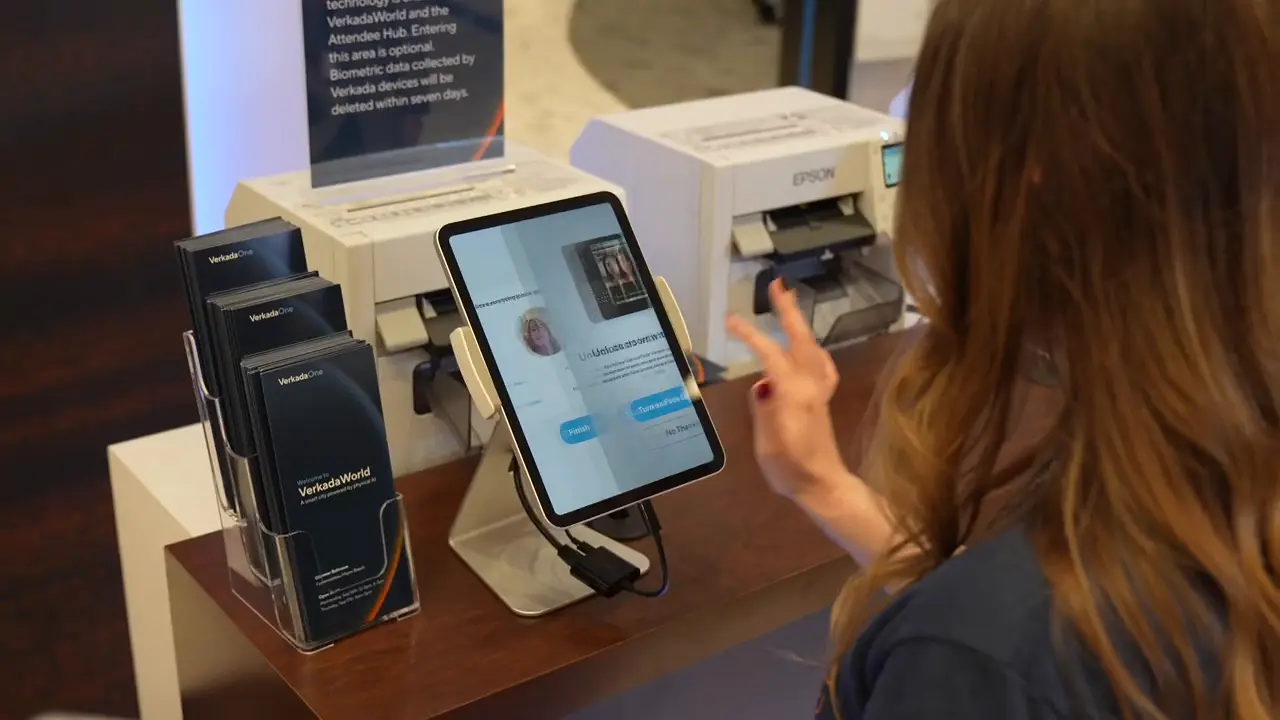
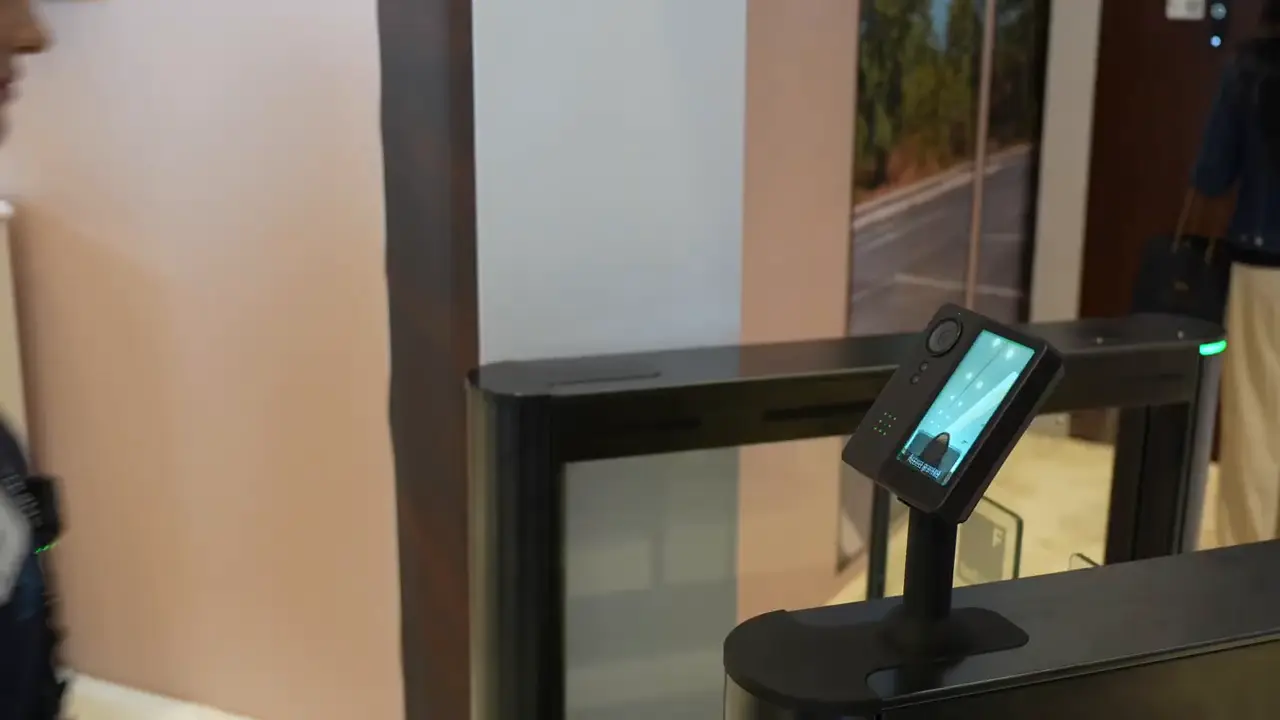
A visitor check-in demonstration at VerkadaOne 2026. This event footage illustrates the interview’s visitor-management theme; it was not filmed at a Redwire facility.
1 / 2
Francis also expresses interest in Maps and newly announced access-control form factors. He describes those as technologies his team wants to try. Our VerkadaOne 2026 coverage explores the event’s product announcements separately.
How the Team Uses Verkada Every Day
Redwire uses the system to secure perimeters and apply access levels and groups across its spaces. Francis describes separating visitor access from other activity and restricting entry to production areas or places containing sensitive information.
Auditability matters alongside entry control. The team uses the platform to review movement through its spaces and determine who is permitted to enter particular areas.
Facilities and safety are part of the same operational picture. Francis says Redwire has started using fall detection. He also describes documenting and archiving incidents such as accidents or fires so the team has a record to review.
Verkada separately documents AI-powered activity detection, including alerts for individuals falling. The capability adds a safety use case to the security conversation.
Outside working hours, alarms and the monitoring services he describes support intrusion detection and engagement of emergency services when required.
One Platform Across Multiple Locations
The scale of Redwire’s estate makes consistent oversight important. At the time of the interview, Francis puts that estate at approximately 30 buildings across four countries, covering nearly one million square feet.
“We use Command as our single point of viewing.”
JJ Francis, Redwire — interview published October 15, 2026, 4:17–4:28
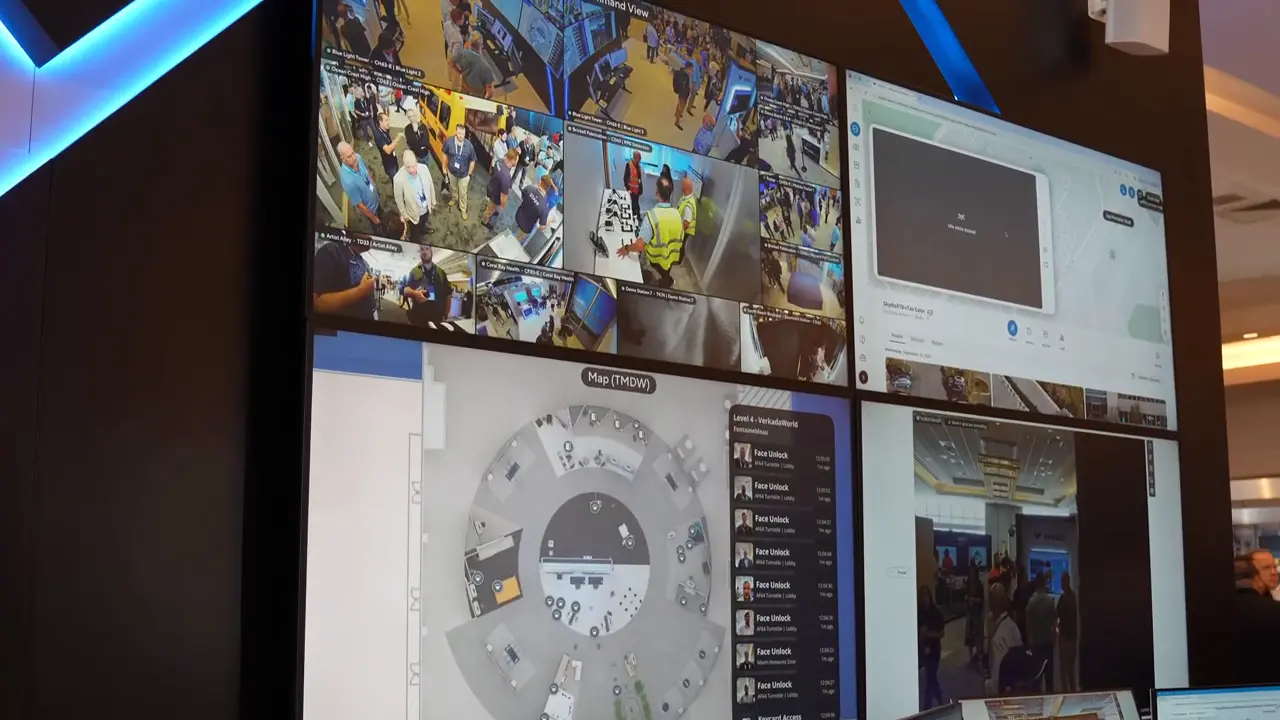
That shared view brings visitor intake, access control, video, and alarms into Verkada Command. Francis says managing the estate would be difficult without a standard solution and one platform.
Redwire is also creating a security operations center, with Command planned as a main component for monitoring operations in one place.
What Other Organizations Can Learn
When I asked what stood out most, Francis focused on usability. He contrasts his experience with earlier platforms that were difficult to navigate and did not communicate with other systems. He describes Verkada as “the easiest thing to navigate and train others on.”
For a corporate security or facilities team, that makes the evaluation broader than a list of cameras and readers. Redwire’s experience suggests three useful questions:
- Can your team connect the records it needs? Ask how visitor, access, video, and alarm information support daily work and audits.
- Can you apply a consistent approach across locations? Evaluate both centralized oversight and the access requirements of individual sites.
- Can people use the system confidently? Include navigation and staff training in your assessment.
For Redwire, Francis’s account centers on bringing previously separate responsibilities into a shared operating environment. If your organization faces similar challenges, use those workflows to shape your platform evaluation and your choice of security integrator.