
This article is sponsored by Verkada.
Key Takeaways:
- 💎 Unified Security Operations: Verkada expands Physical AI capabilities across Transportation, Sound Systems, AI-powered workflows, and more, all managed through the Verkada Command platform.
- 💎 Multi-Factor Authentication: Enterprise access control workflows utilize the AF64 Access Station Pro face unlock and the TD33 Intercom to seamlessly combine QR codes, facial recognition, and secure web links.
- 💎 Streamlined Visitor Management: Facilities can automate guest sign-in processes by issuing digital credentials directly to smartphones and instantly printing visitor badges.
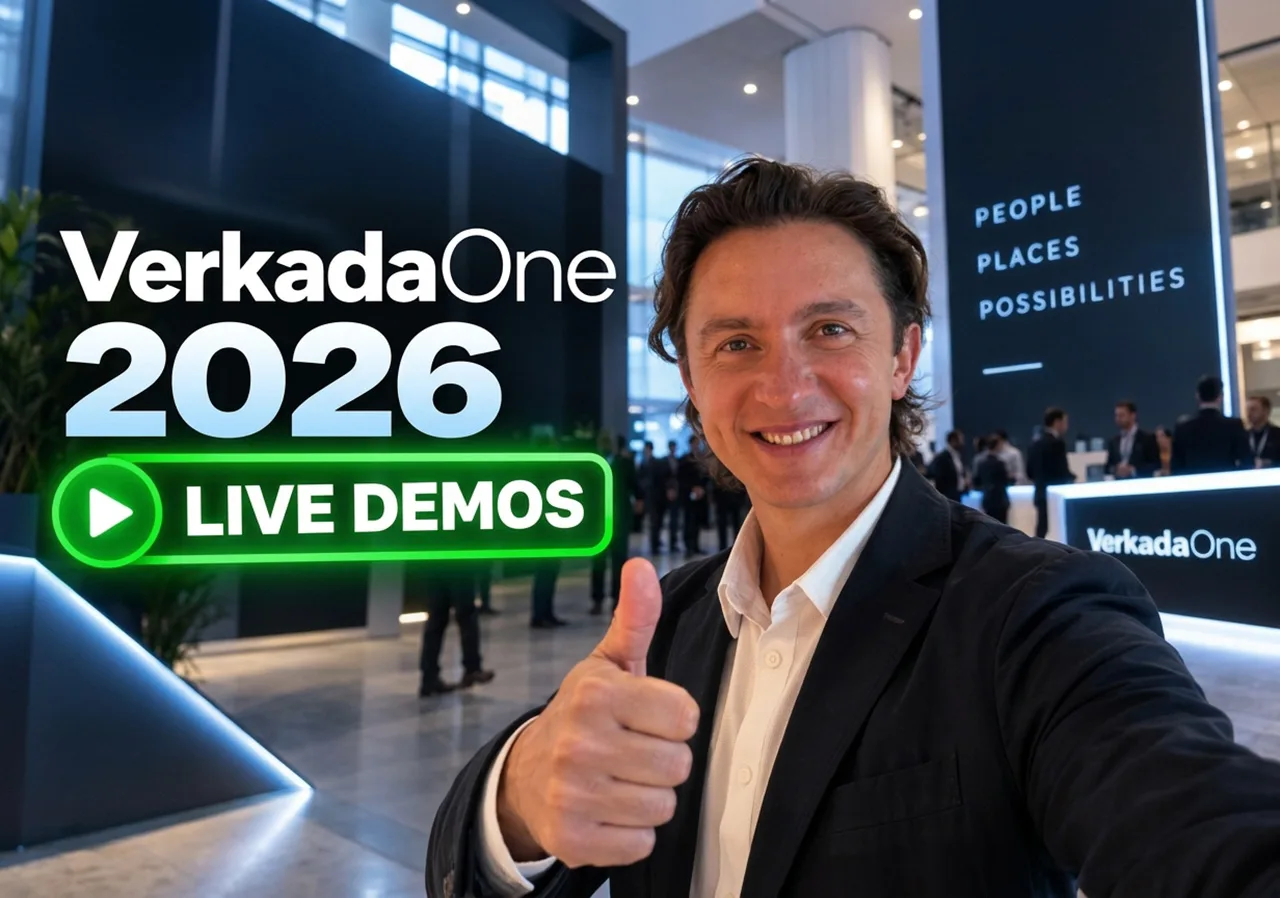
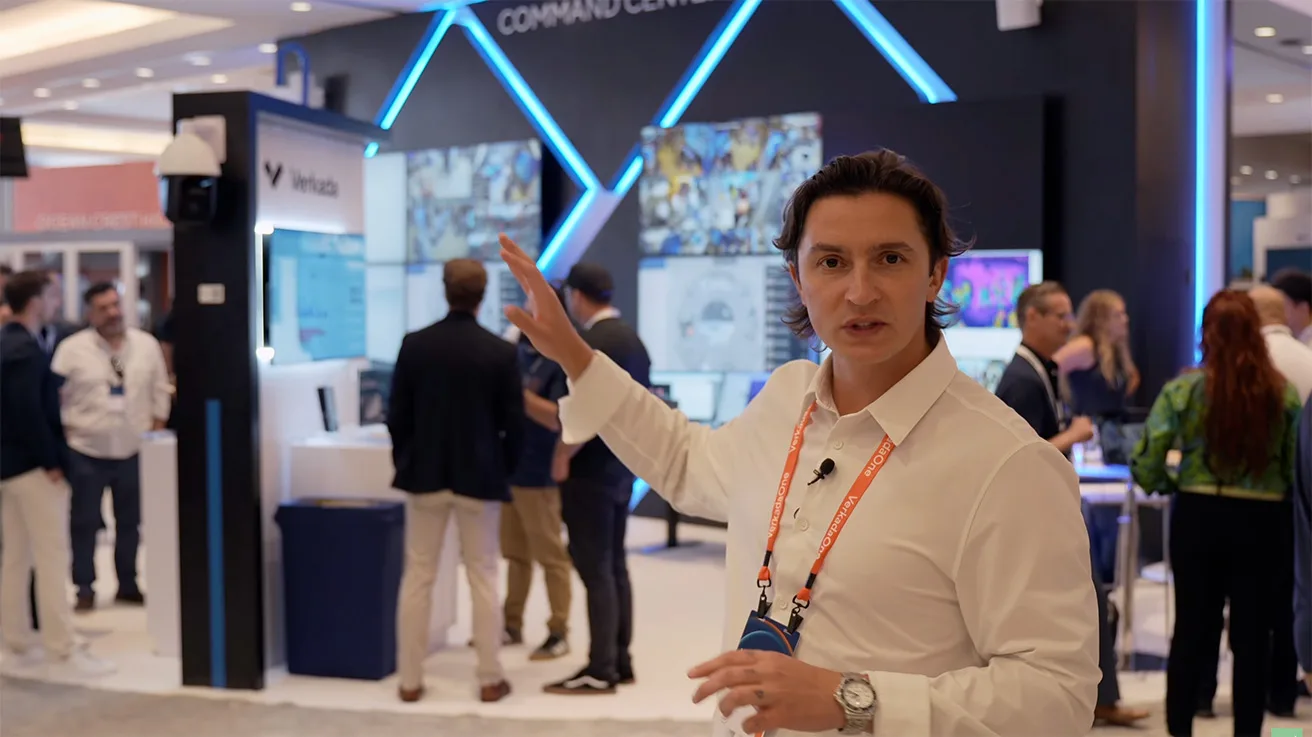
The Pipl Systems team attended VerkadaOne 2026 in Miami to examine the latest hardware and software additions to the Verkada Command platform. Rather than just covering the keynotes and announcements, we focused on how the new Verkada Transportation solutions, Verkada Sound Systems, and Physical AI capabilities operate in real-world commercial environments.
Building on the infrastructure evaluations we performed during the VerkadaOne Chicago conference, our goal is to document how these technologies actually perform on active sites. Understanding how physical AI functions during daily operations is critical for integrators and business owners who need to optimize their security architecture and solve practical facility challenges.
Guest Sign-In & Multi-Factor Access Control Demo
Managing access for both employees and visitors requires a strict balance between facility security and operational efficiency. The Verkada Access Control ecosystem streamlines this process through digital credentials and multi-factor authentication workflows.
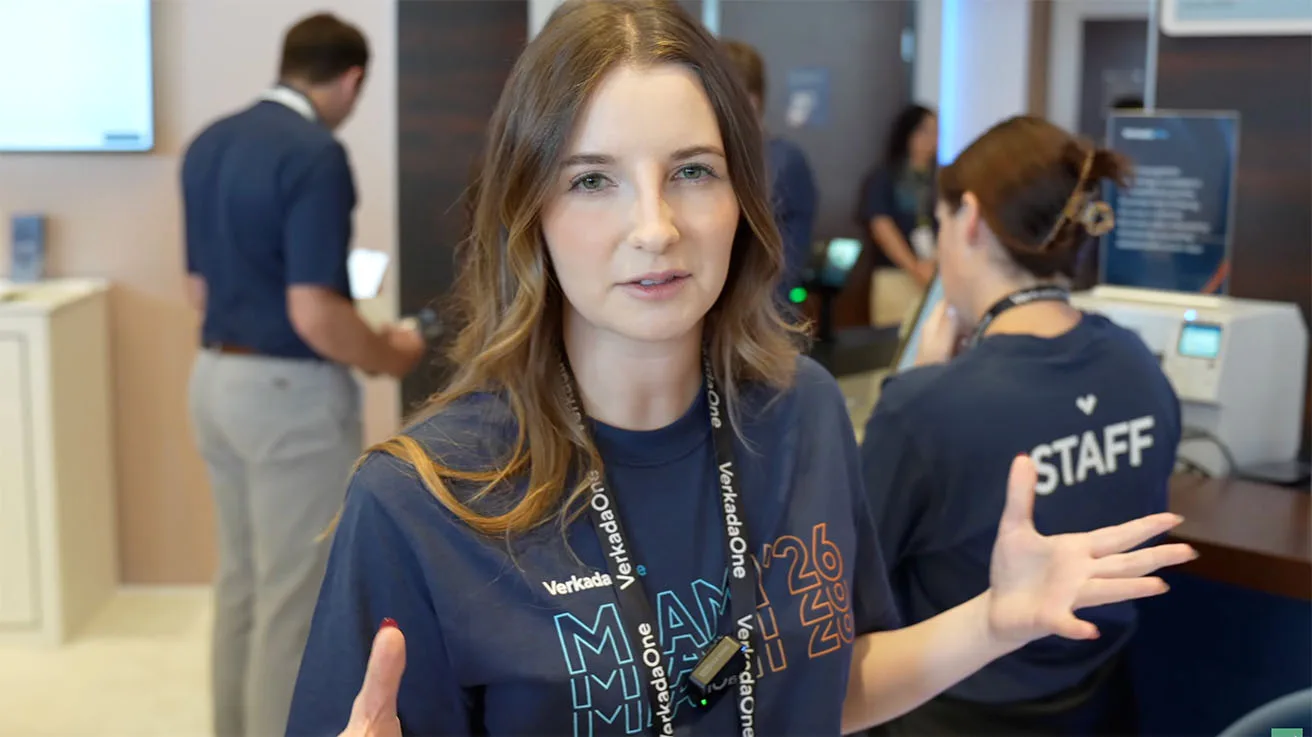
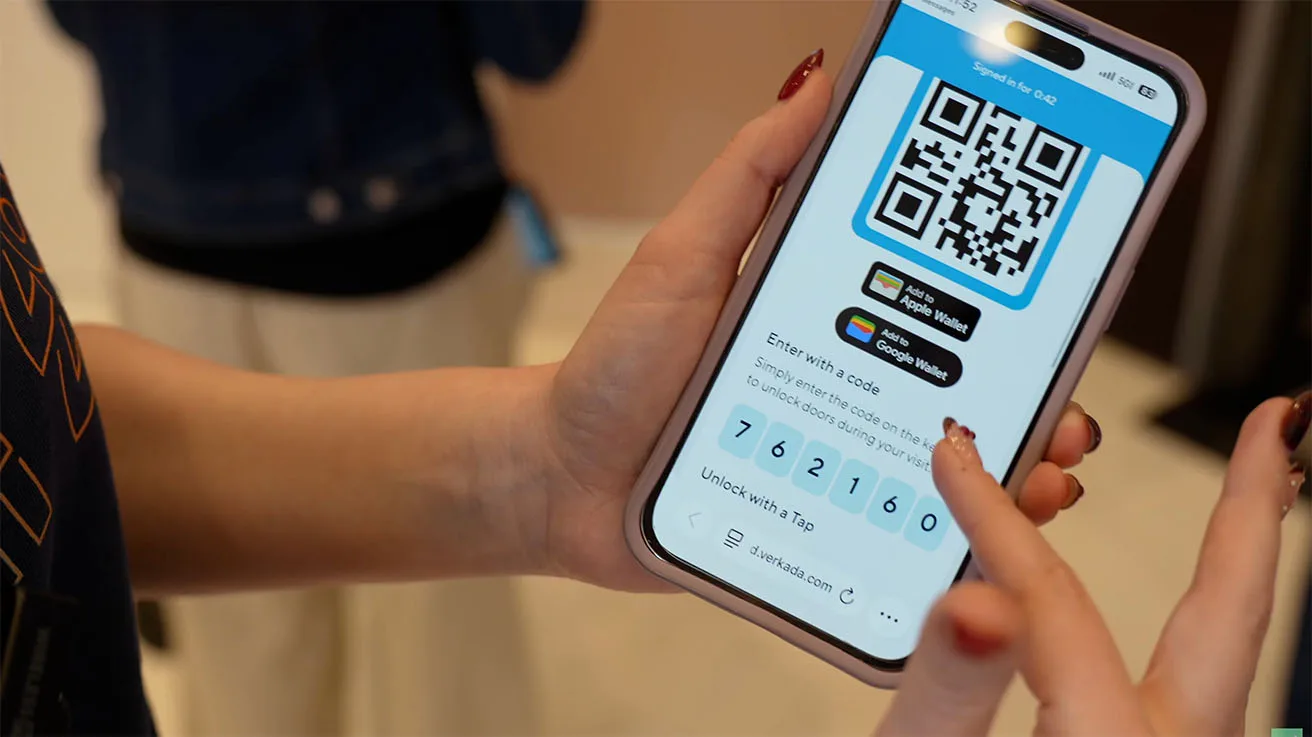
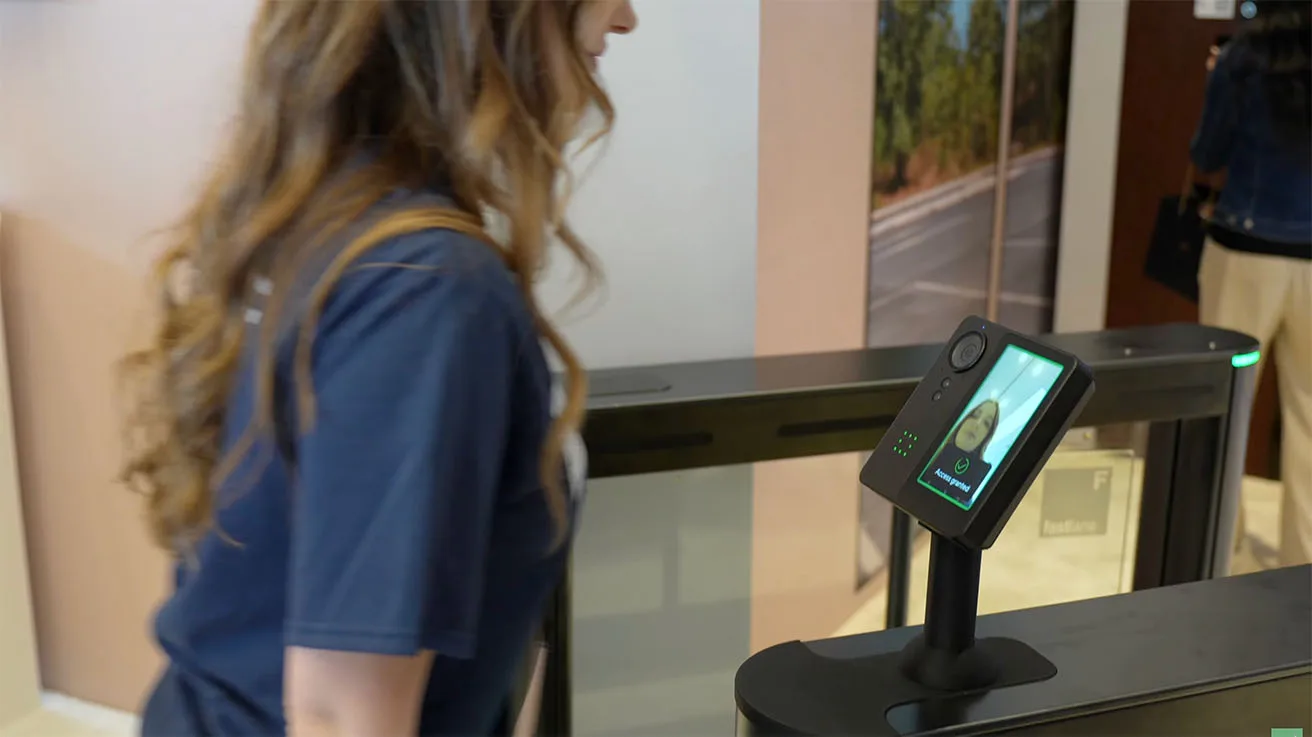
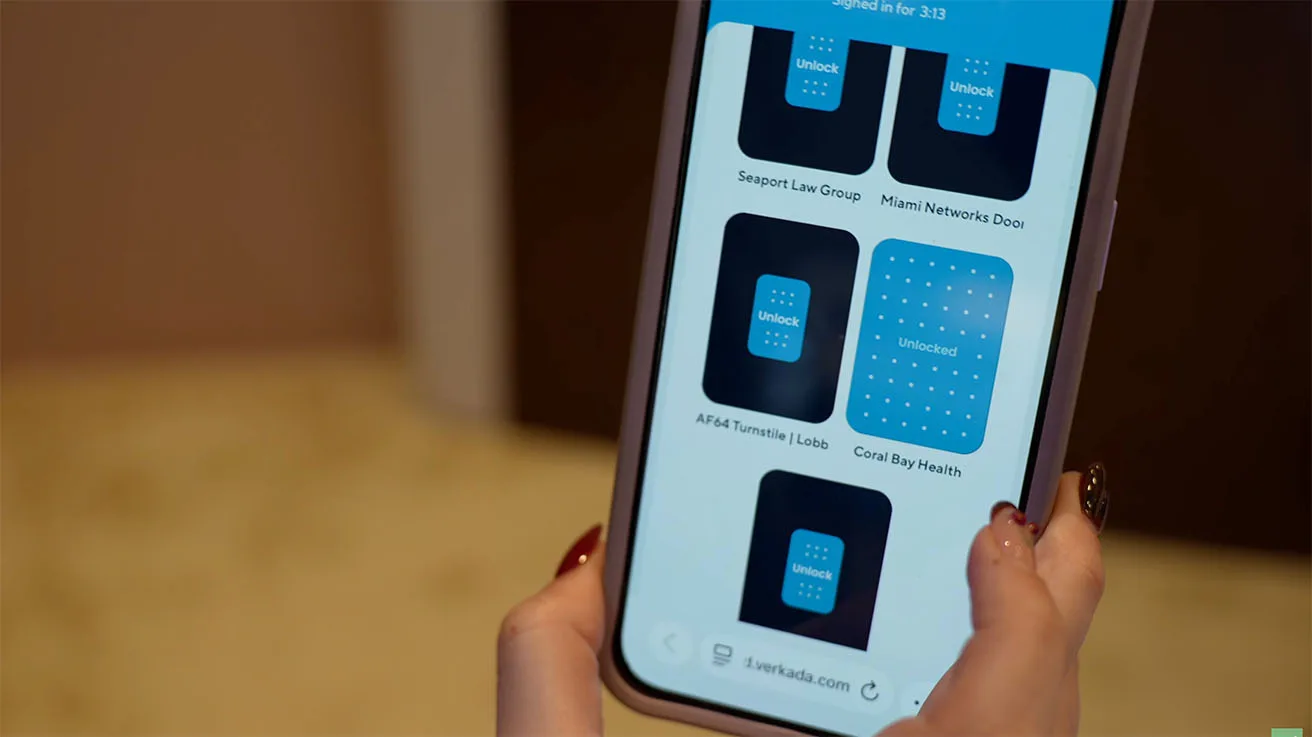
For visitor management, guests input their phone number to receive a digital credential directly on their mobile device. The system utilizes the AF64 Access Station Pro face unlock feature for rapid authentication and automatically prints a visitor badge, helping ensure that visitors are properly identified before entering the facility.
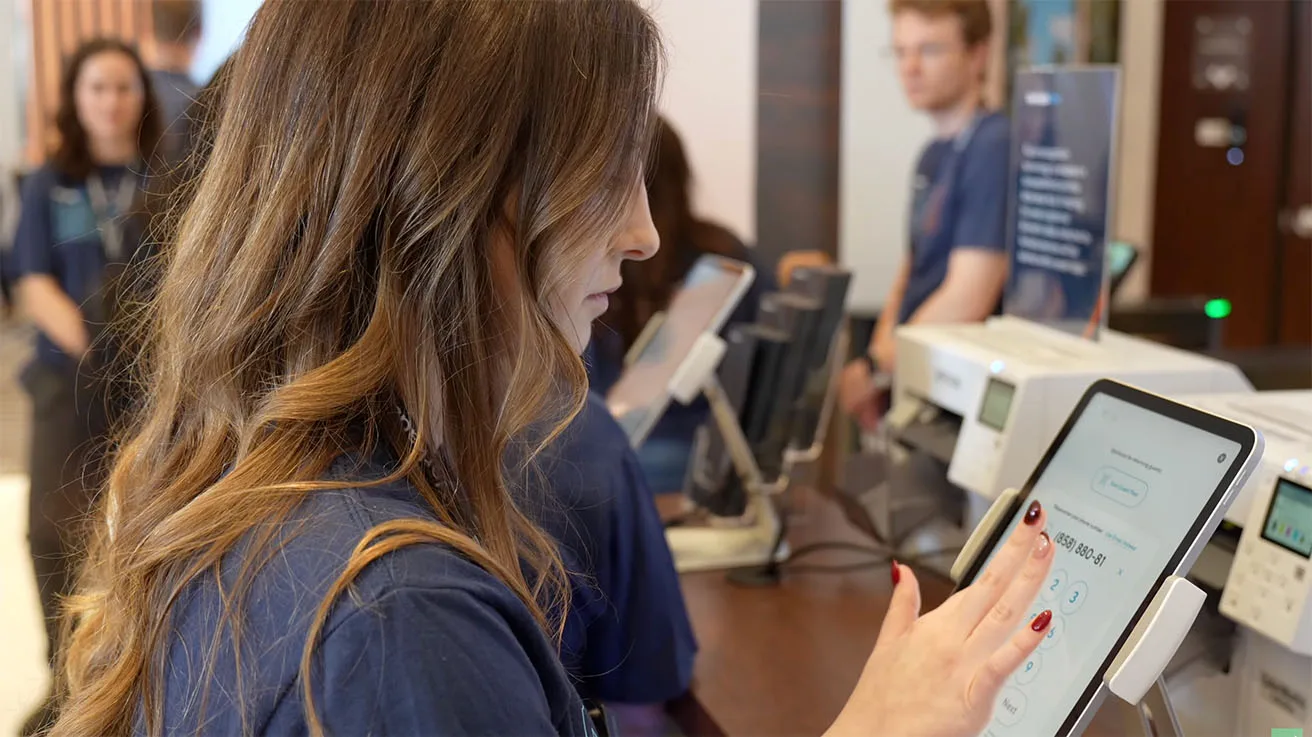
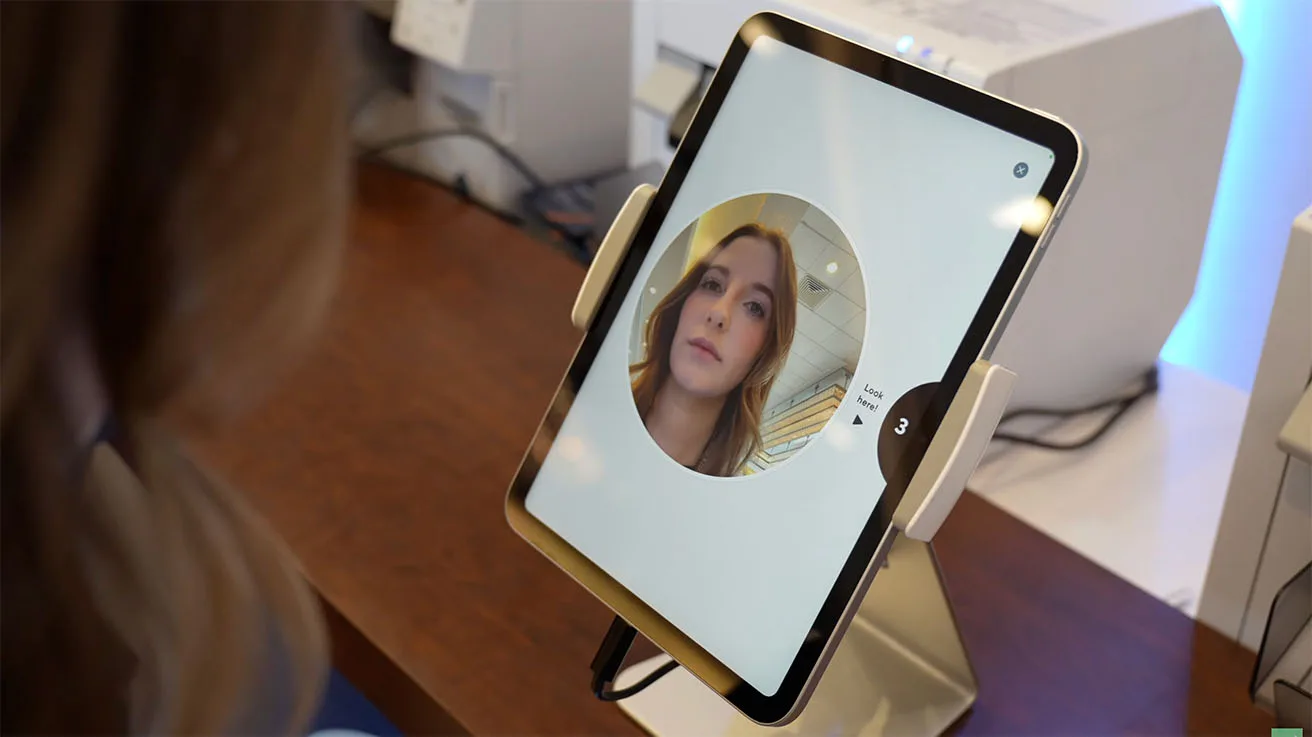
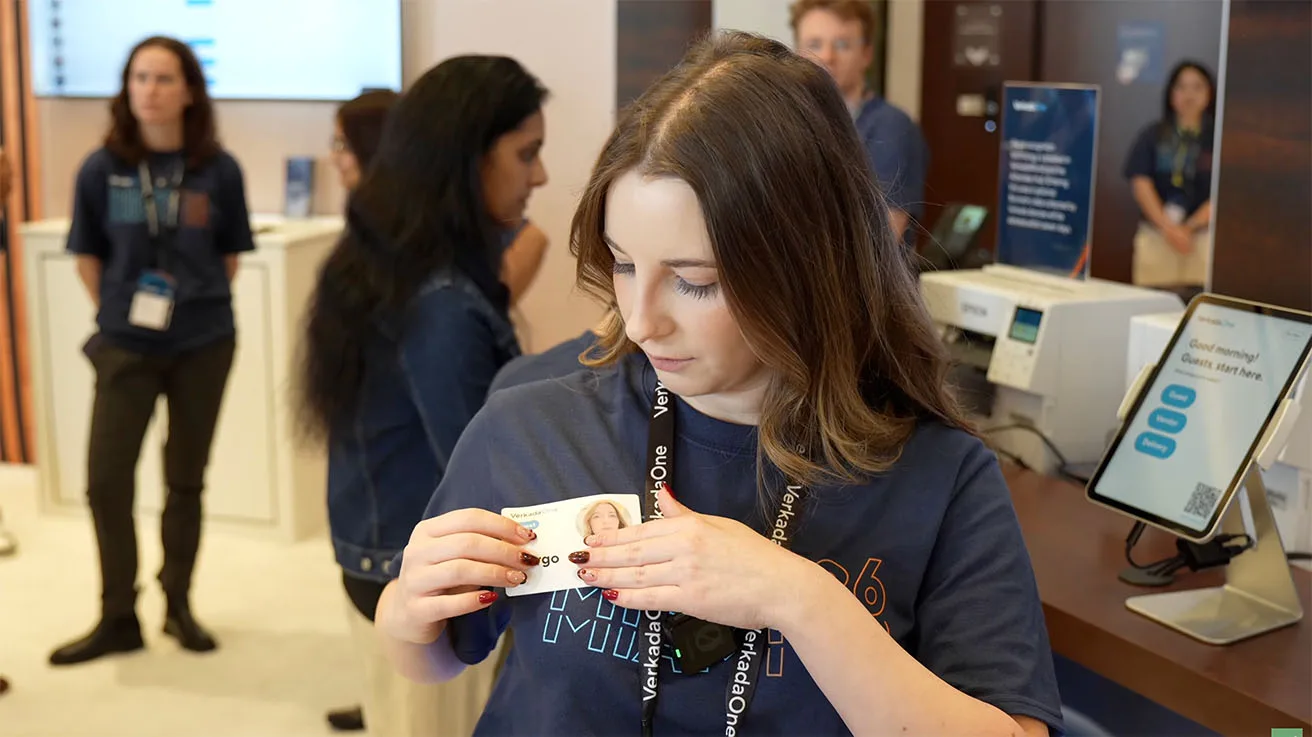
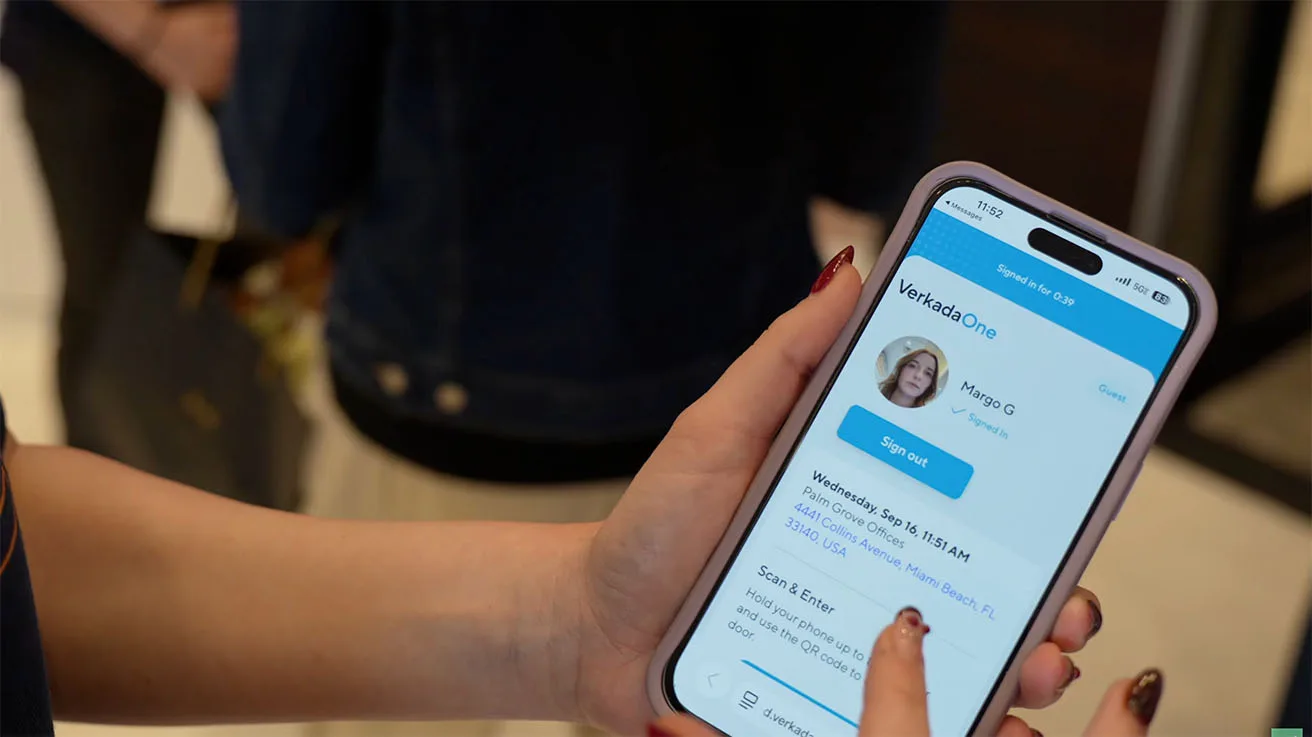
1 / 10
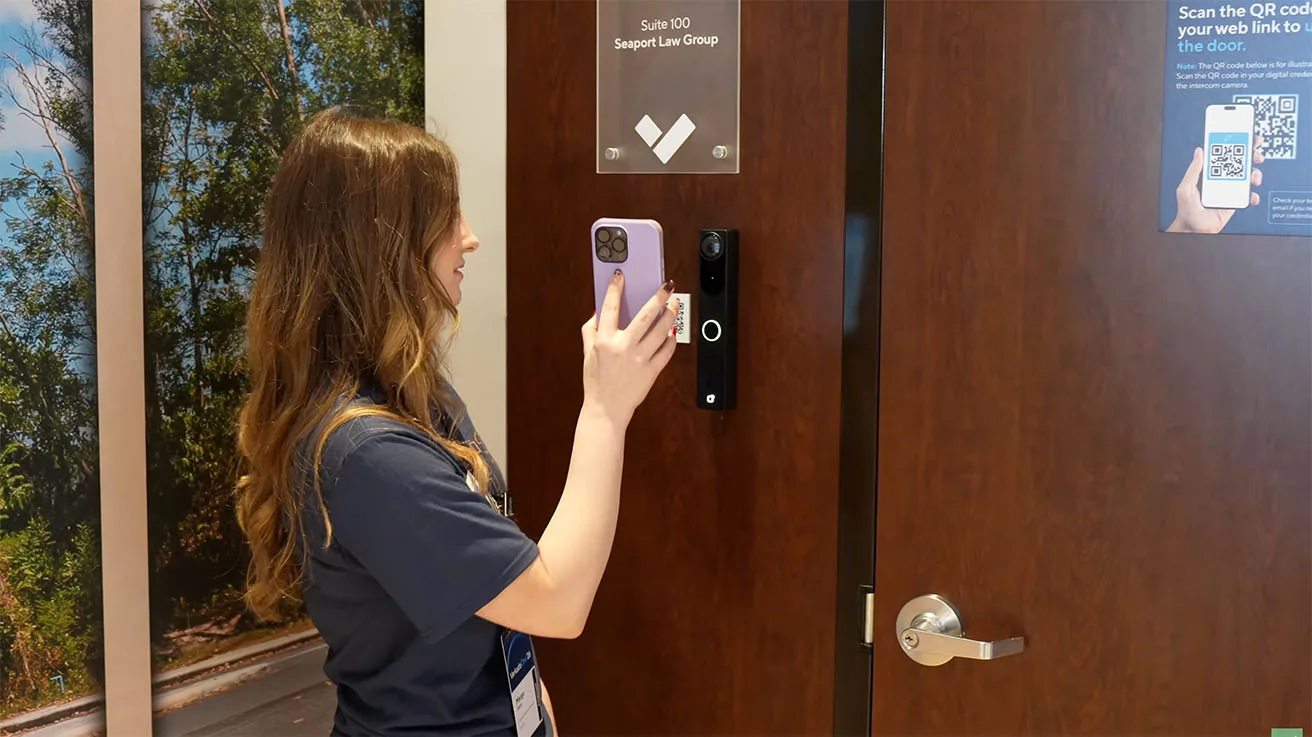
For authorized employees, Verkada consolidates multiple unlock methods into a single digital credential sent via text message. During the live demonstration at the Palm Grove Offices setup, we tested this multi-door workflow across different security layers. At the primary entry point, access was granted by scanning a QR code at a TD33 Video Intercom. The TD33 Video Intercom operates as a 3-in-1 device featuring a built-in access controller and a 5-megapixel camera.
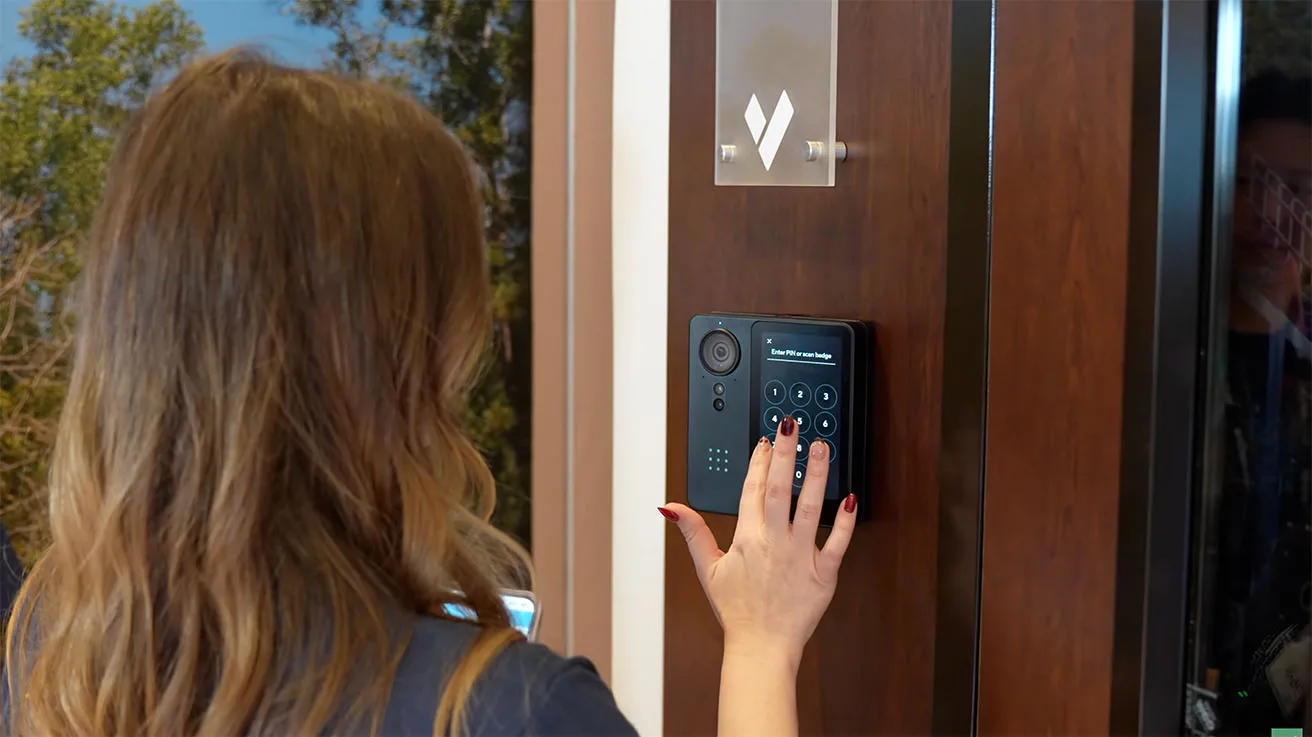
High-security areas, such as an IT closet, might require two-factor authentication. This level of security was achieved by combining facial recognition with a manual key code entry, preventing unauthorized access to sensitive infrastructure. Finally, remote unlock capabilities were demonstrated using a secure web link to open a secondary healthcare office door. This architecture allows IT and security teams to deploy multiple authentication methods through the Verkada Command platform while supporting efficient employee access.
Verkada Sound Systems: Cloud Audio & Network Speakers
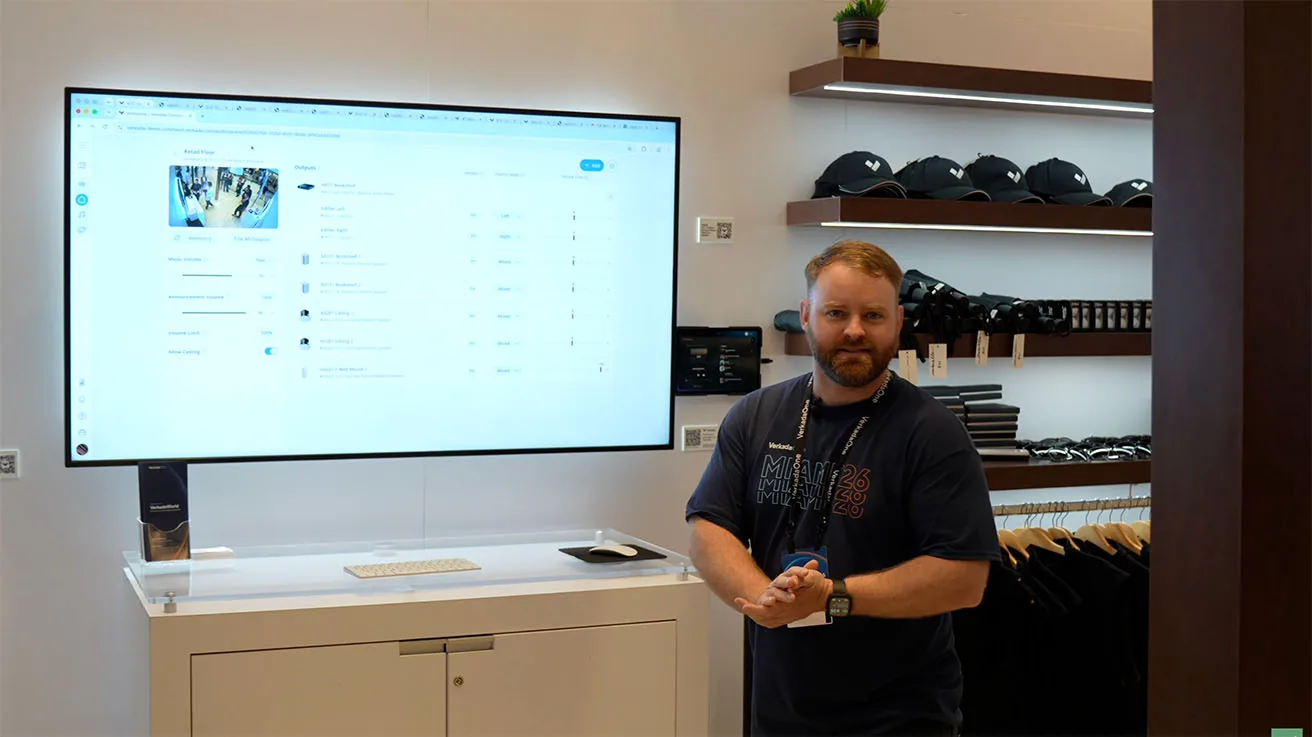
Verkada Sound Systems brings cloud-managed audio directly into the Verkada Command platform, reducing the need to manage audio through separate consoles and vendor platforms.
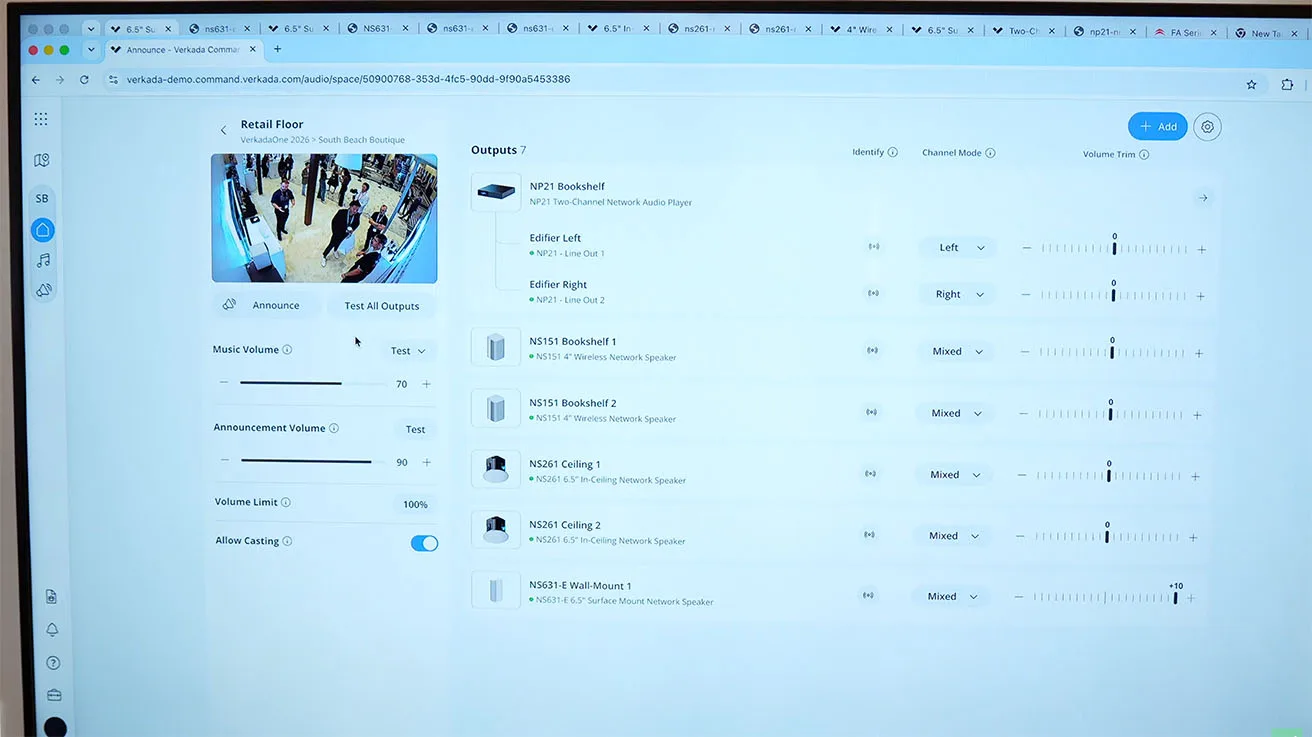
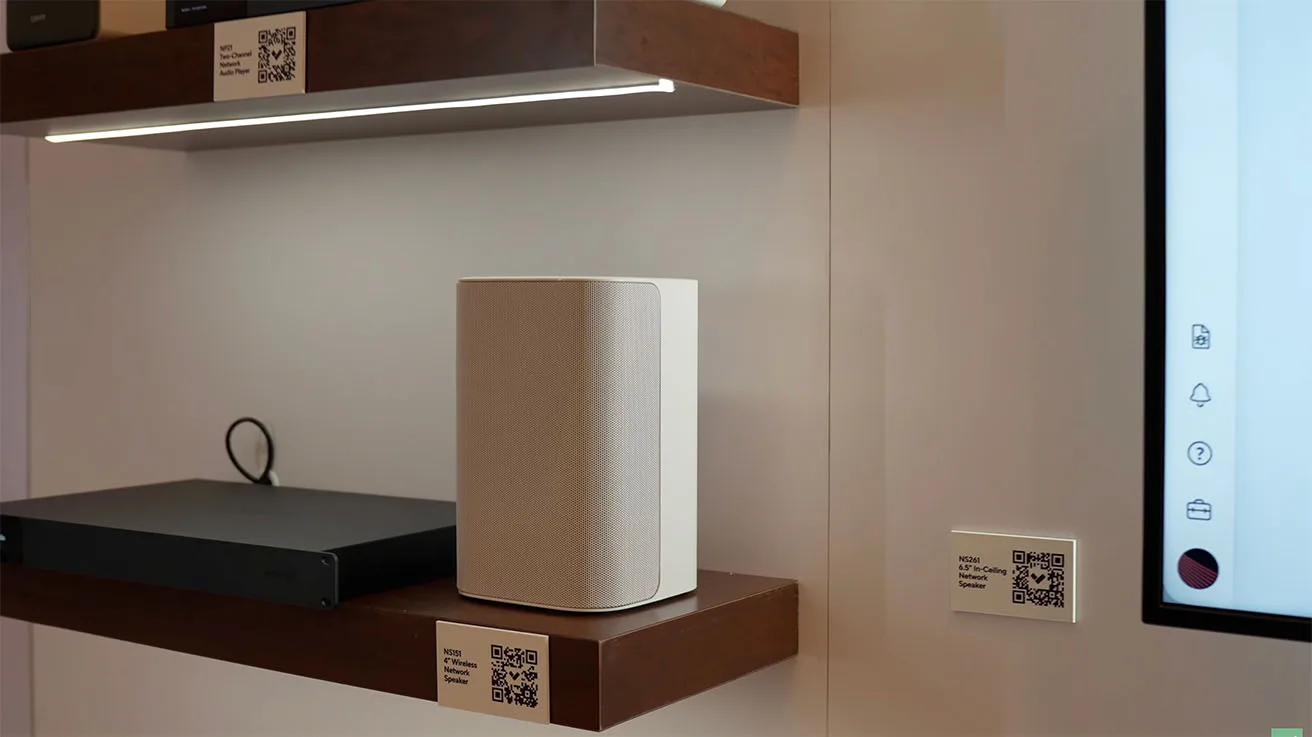
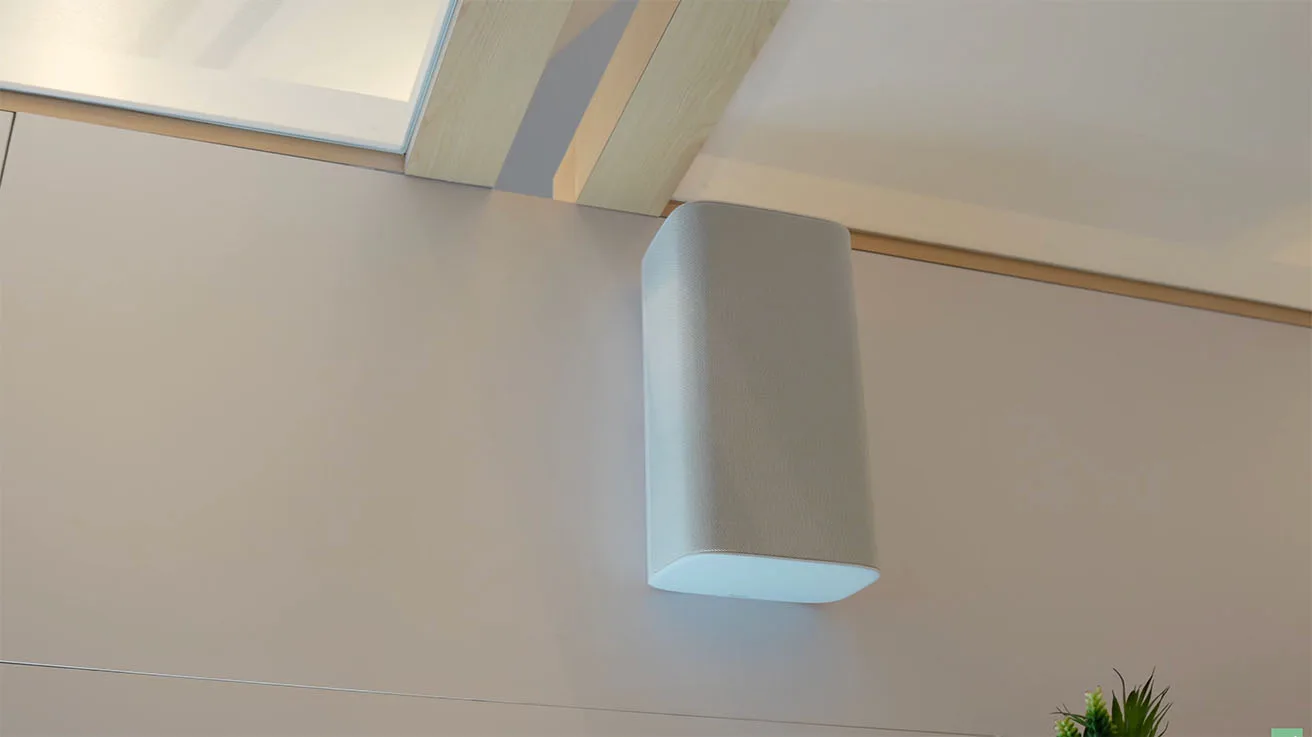
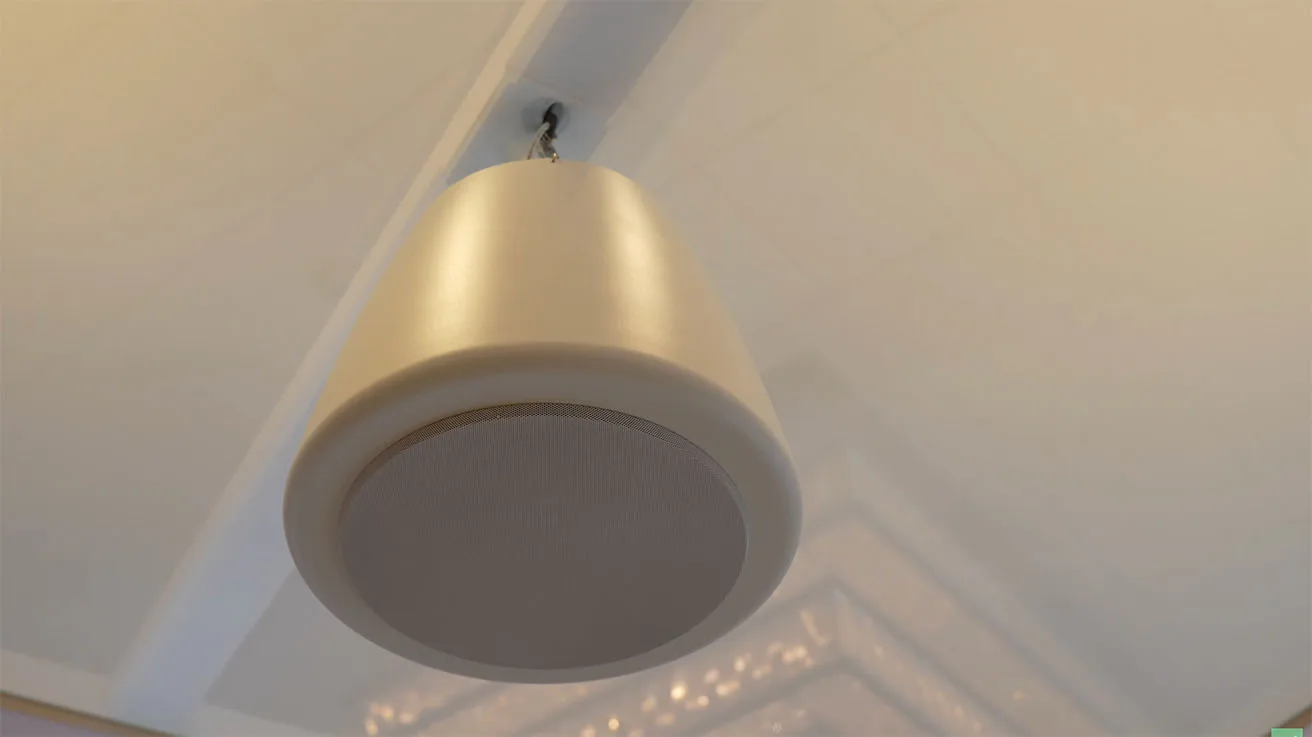
The new hardware lineup scales to fit various commercial environments. The NS151 is a compact wireless network speaker capable of receiving data and power over PoE or Wi-Fi, making it suitable for smaller retail or office spaces. For outdoor or high-noise areas, the NS631 provides a weather-resistant, daisy-chainable solution built for louder environments. Verkada also offers a dedicated in-ceiling speaker that supports pendant mounts for standard drop-ceiling deployments.
1 / 10
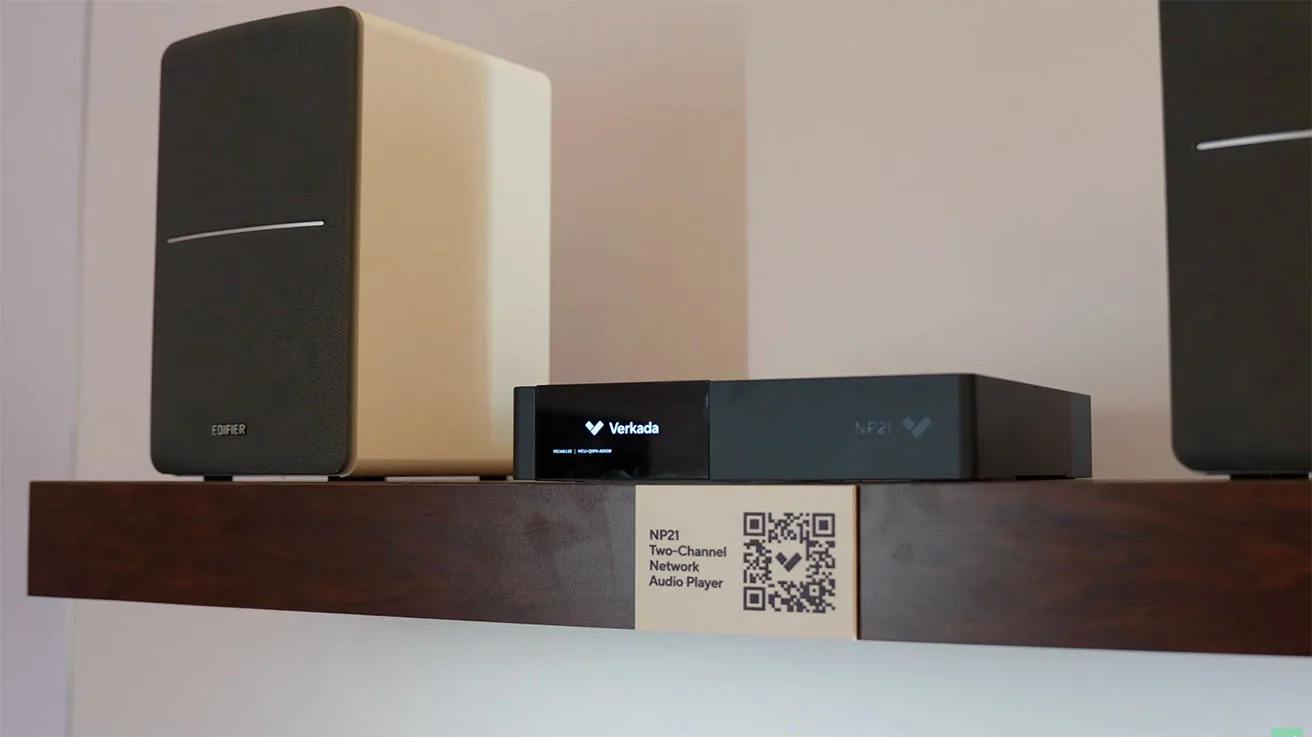
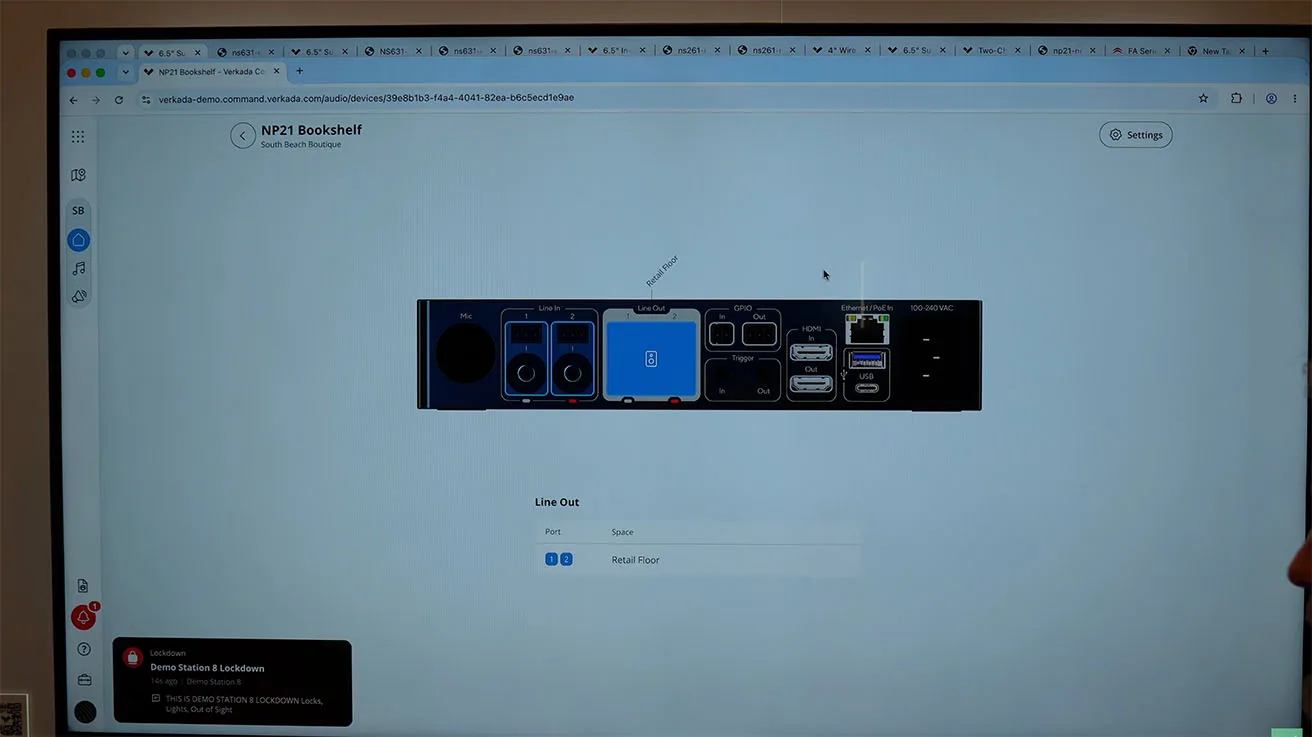
Facilities with existing audio infrastructure do not need to replace all their speakers at once. The introduction of 2-channel and 16-channel Network Audio Players allows organizations to connect legacy third-party amplifiers and speakers directly into Verkada Command.
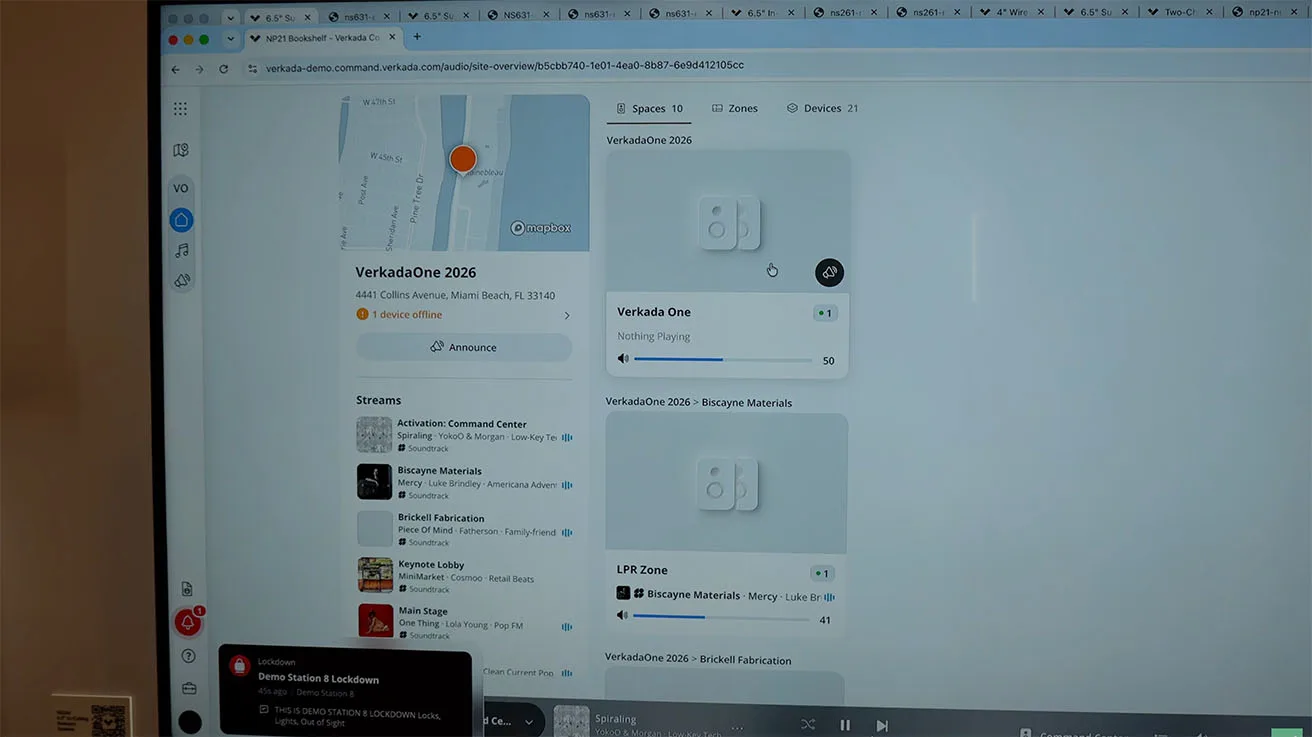
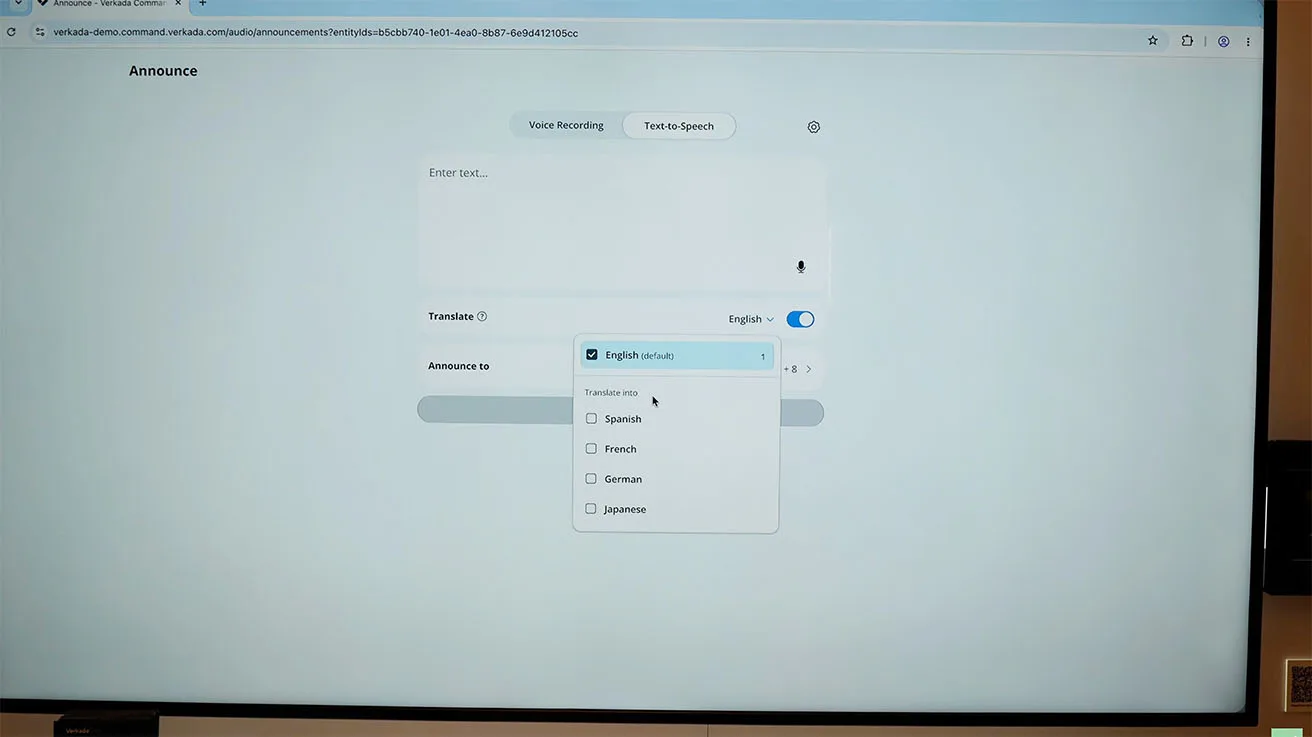
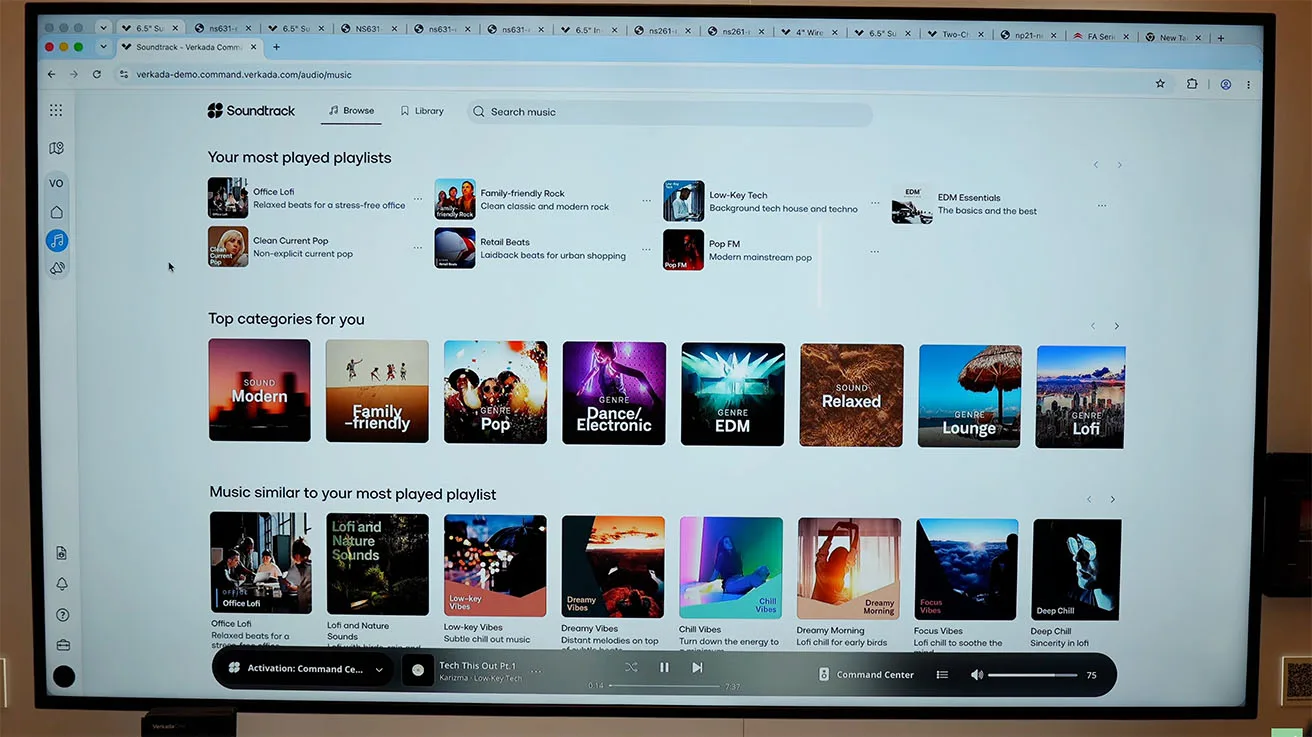
Inside the Command interface, administrators receive a visual representation of all audio inputs and outputs. They can group speakers into specific zones, broadcast text-to-speech announcements, and automatically translate those messages into other languages for clear communication across large sites. Through a native integration with Soundtrack, a leading provider of commercially licensed music, businesses can stream curated music without managing separate licensing agreements. Store managers or employees on the floor can use a dedicated iPad app to change playlists on demand or make live voice announcements.
New Unified Timeline Functionality: Live Mode & AI Investigations
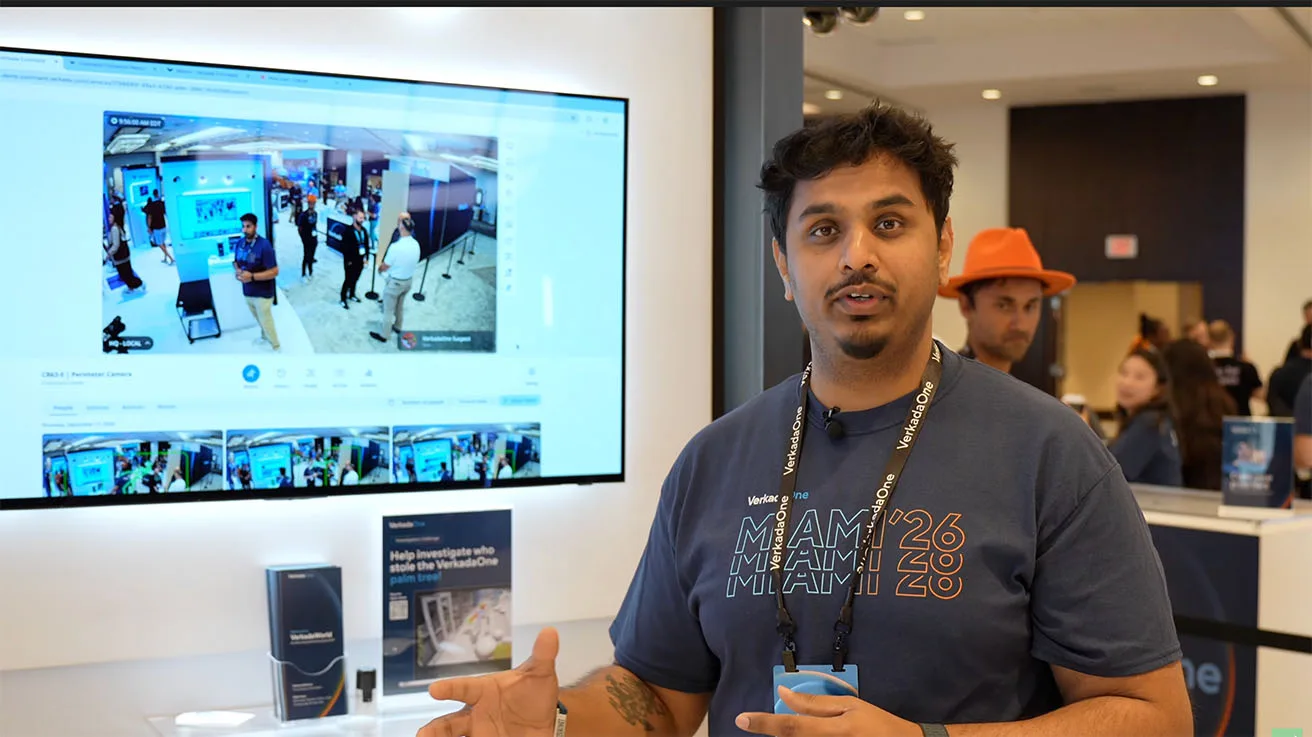
The new Unified Timeline functionality in Live Mode helps security teams monitor an incident as it actively unfolds across multiple cameras. Previously, operators had to manually review individual camera feeds to track a person of interest. In Live Mode, operators can enter a live view from real-time camera footage, the Alert Inbox, or an existing Unified Timeline. As the subject continues to move through the property, new sightings are automatically added as cameras detect them, with near-real-time detection and minimal latency.
The interface maps the individual's location on a digital floor plan, giving security teams spatial context to understand which cameras captured the subject and how they moved through the facility. As we also observed during our comprehensive Verkada security system review, bringing relevant video events from multiple cameras into a single timeline provides a unified view of an investigation.
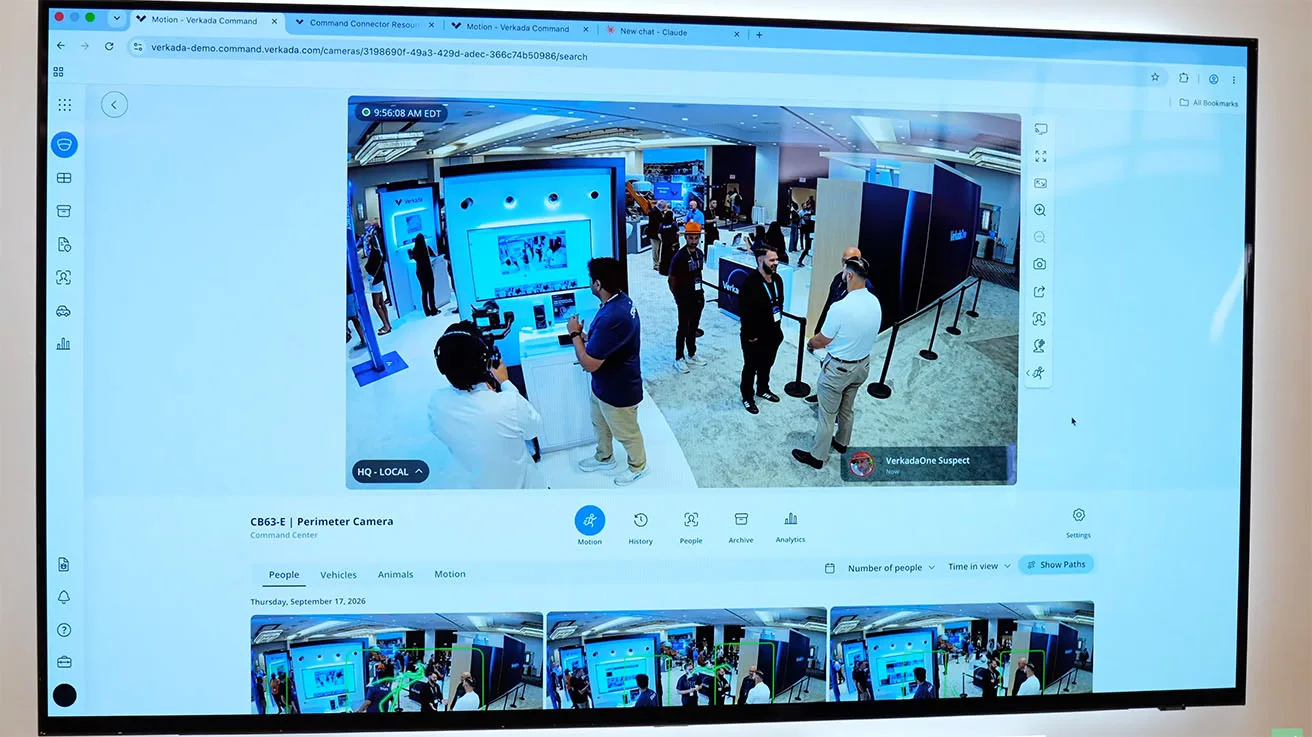
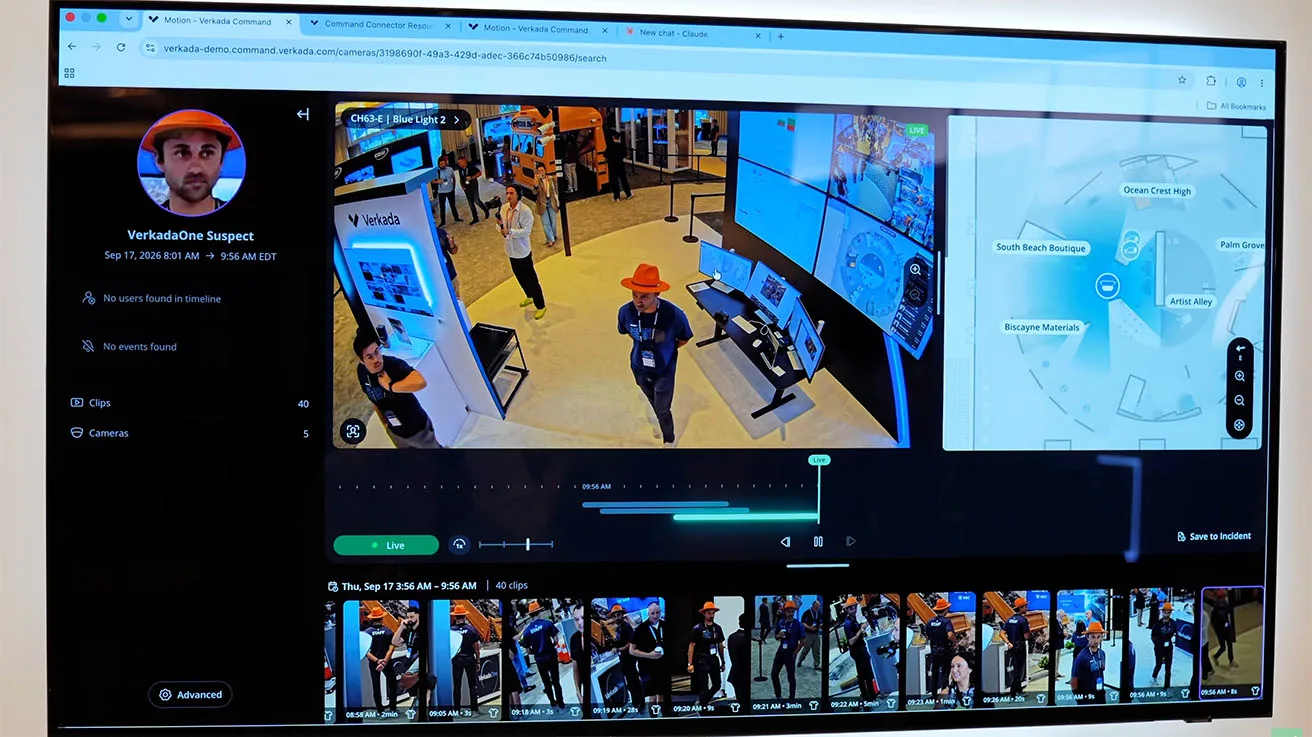
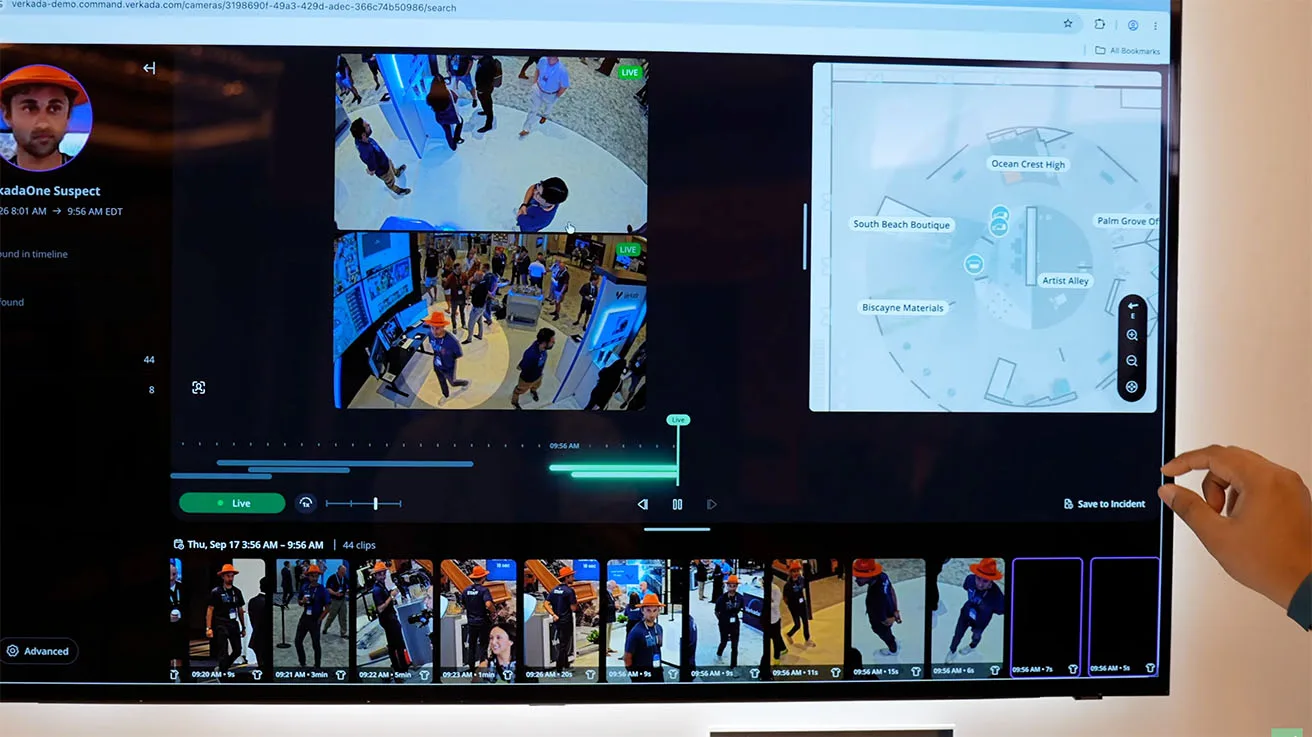
1 / 4
The AI-Powered Unified Timeline builds on this workflow by offering the option to convert the relevant video events into an incident report. For instance, if a person was captured across 10 different cameras, those 10 clips are archived together, so authorized users can review and share them as needed. The AI engine can then generate an automated text summary of the event, reducing the need for security teams to write incident reports. Verkada also gives organizations granular control over these features, allowing administrators to choose which features to enable and which Command users have access to sensitive Unified Timeline data.
Natural Language AI Search: People, Vehicles & License Plates
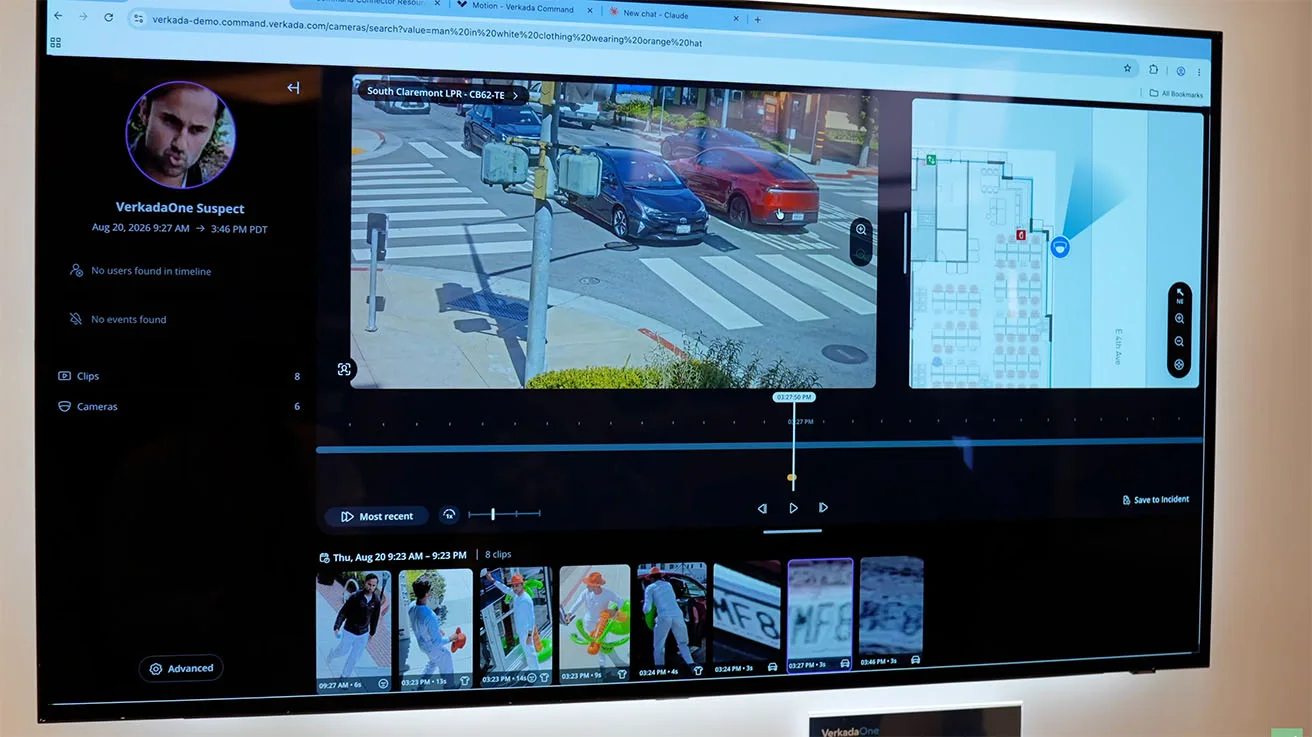
Historic investigations rely on the AI Search tool within Verkada Command. Instead of manually reviewing hours of footage, security operators can use natural language prompts to search for specific people or vehicles. For example, entering a description such as "man in white clothing wearing orange hat" allows the system to search historical footage and surface relevant visual matches.
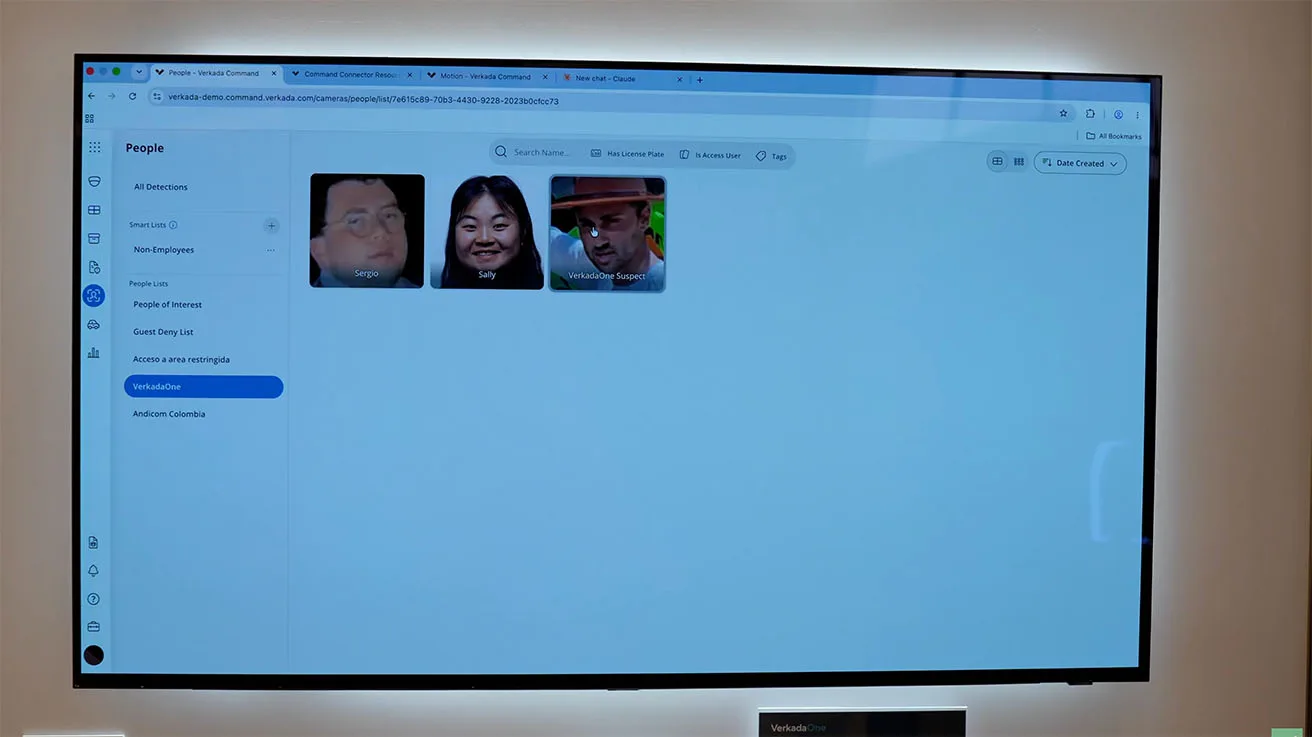
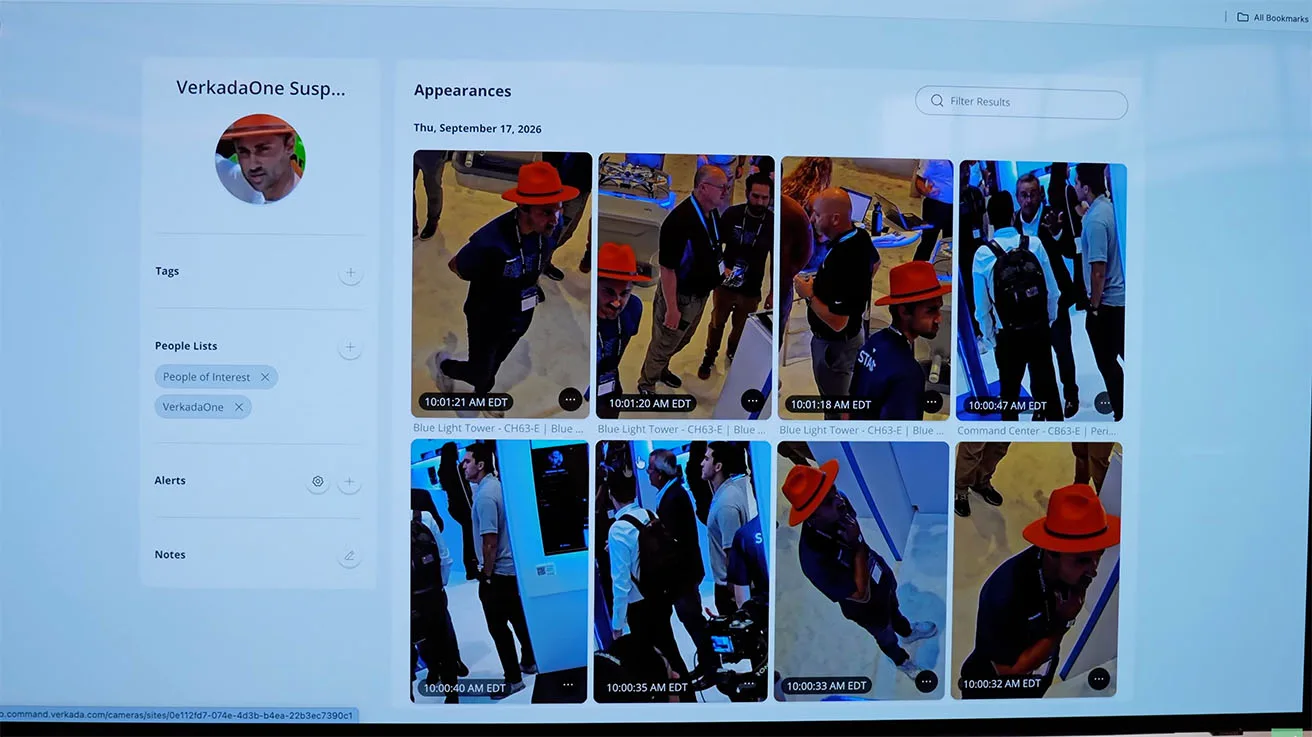
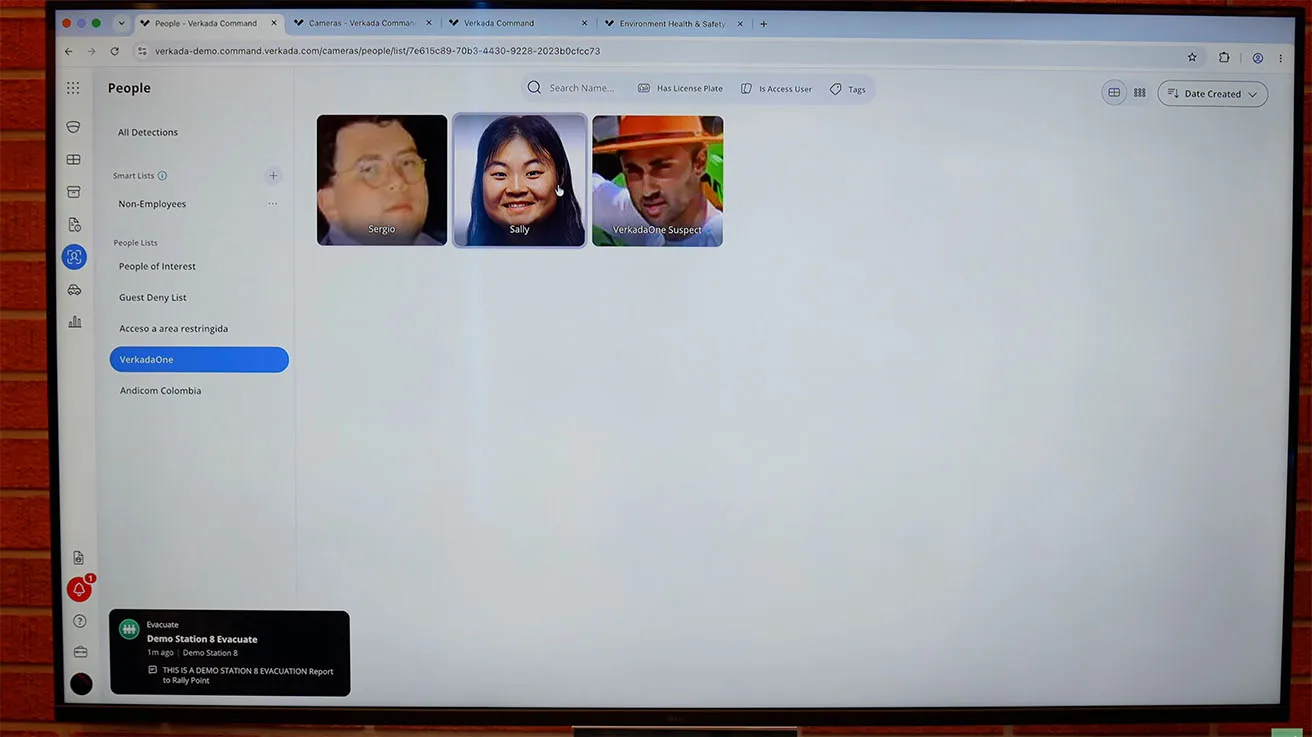
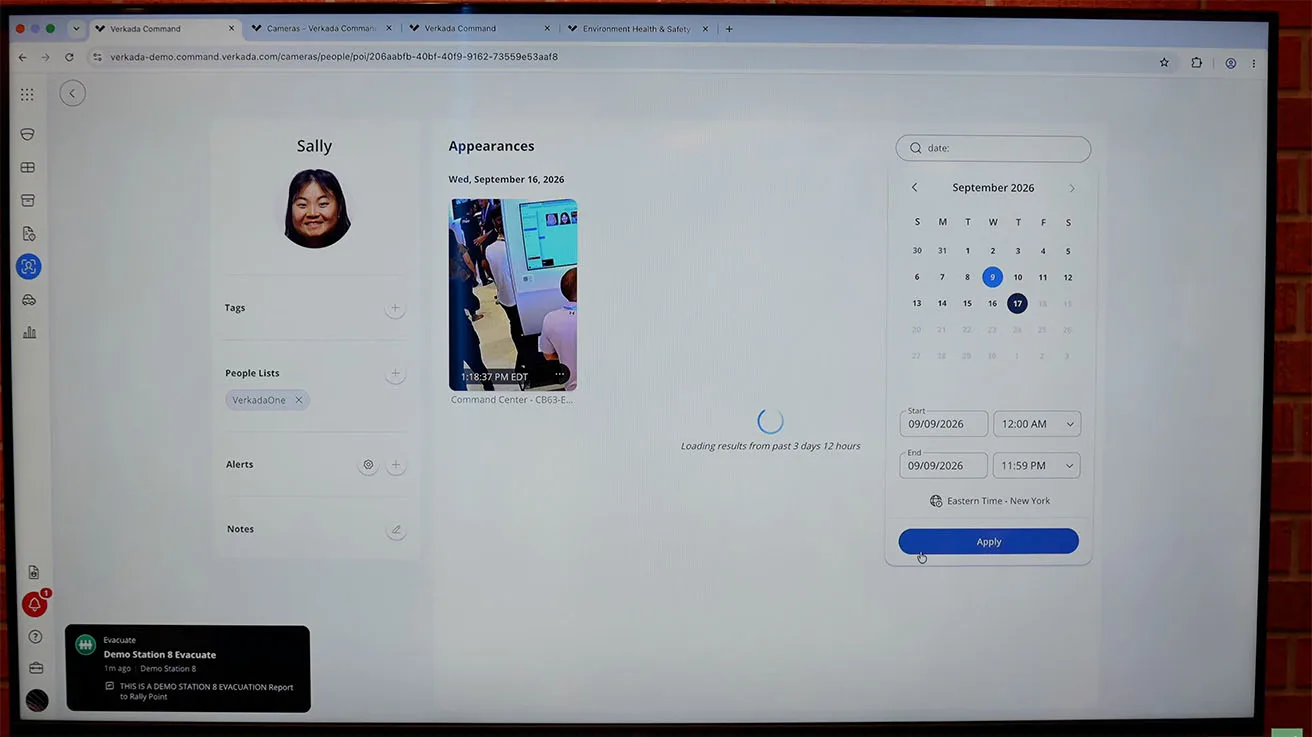
When a person of interest is identified, the AI-Powered Unified Timeline can compile relevant video events into a chronological timeline and offer the option to convert them into an incident report. Operators can set the person up as a Person of Interest (POI), while an associated license plate can be added as a License Plate of Interest (LPOI) or to the POI profile. Alerts can then be configured from the POI or LPOI profile.
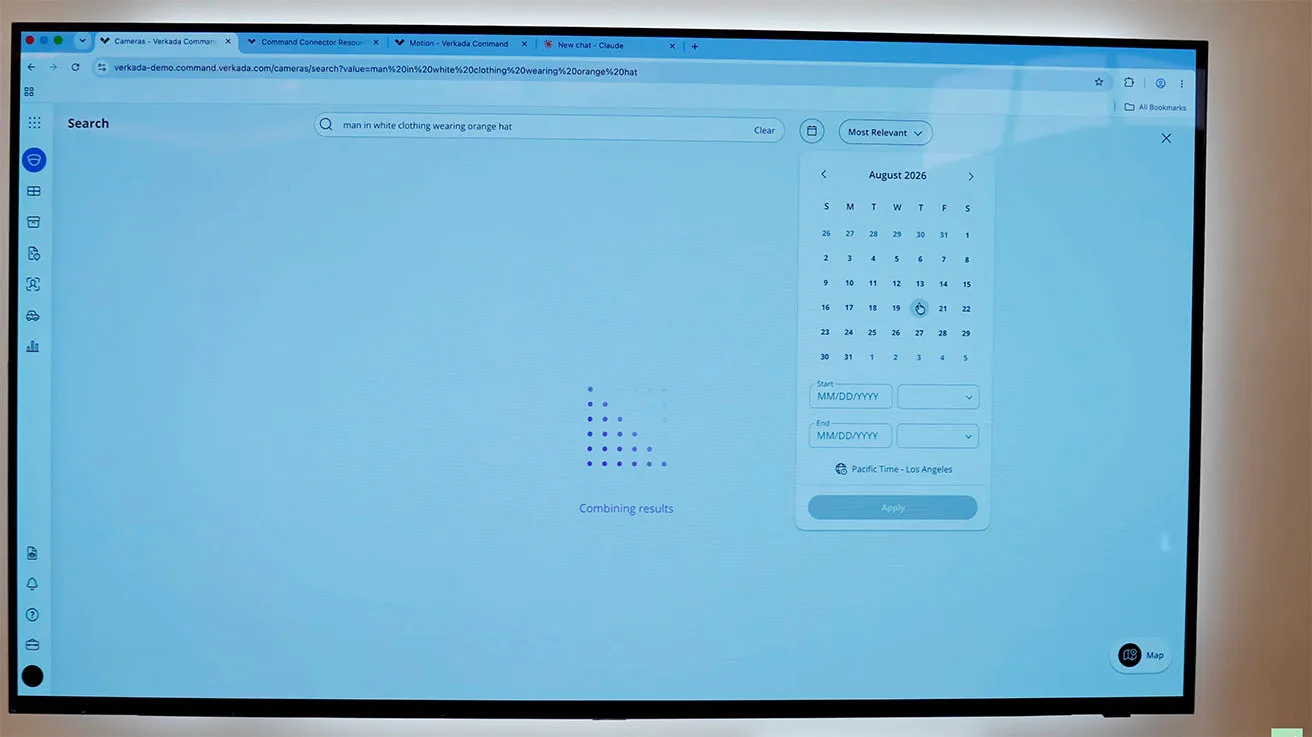
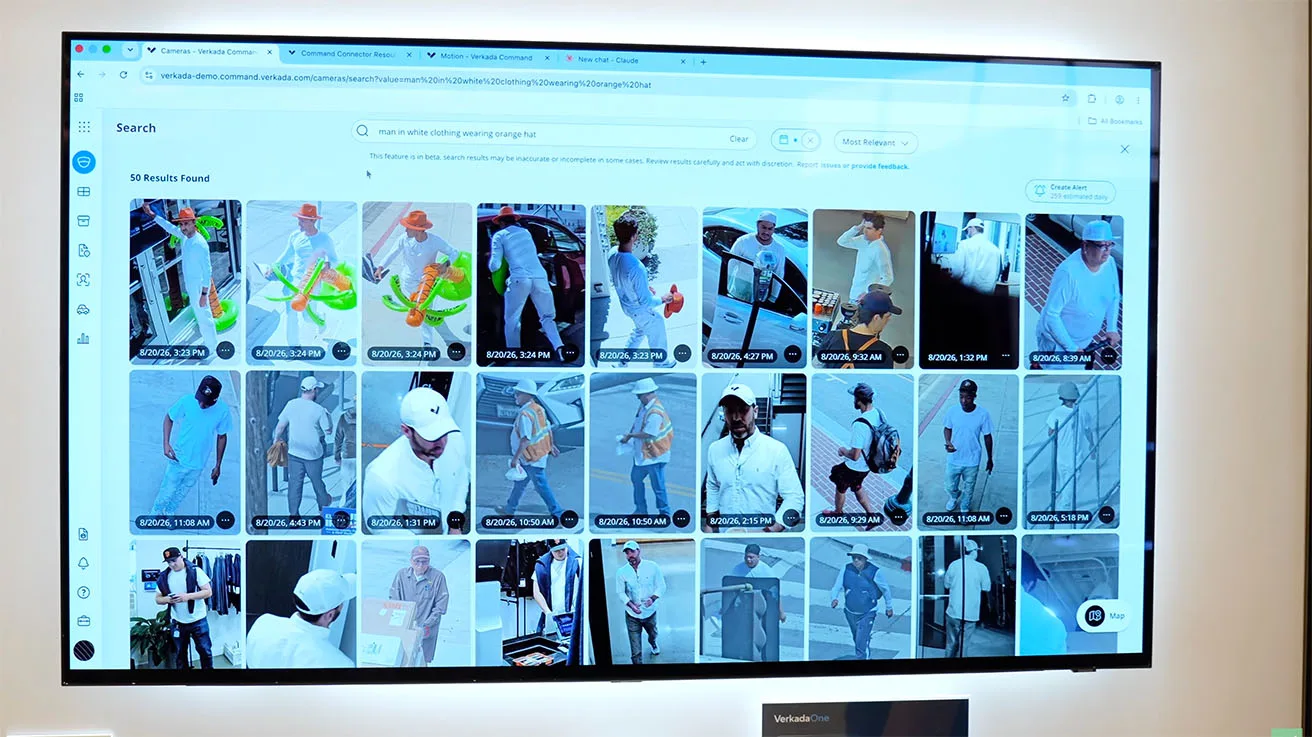
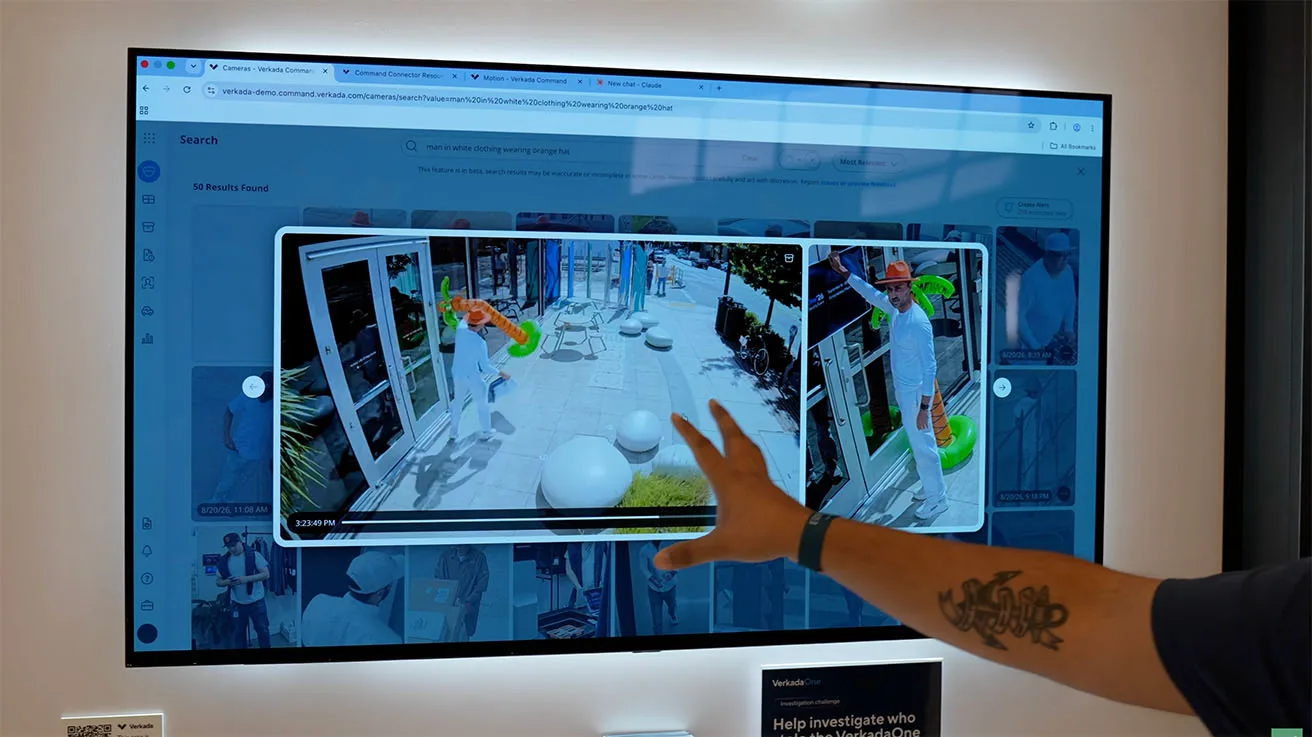
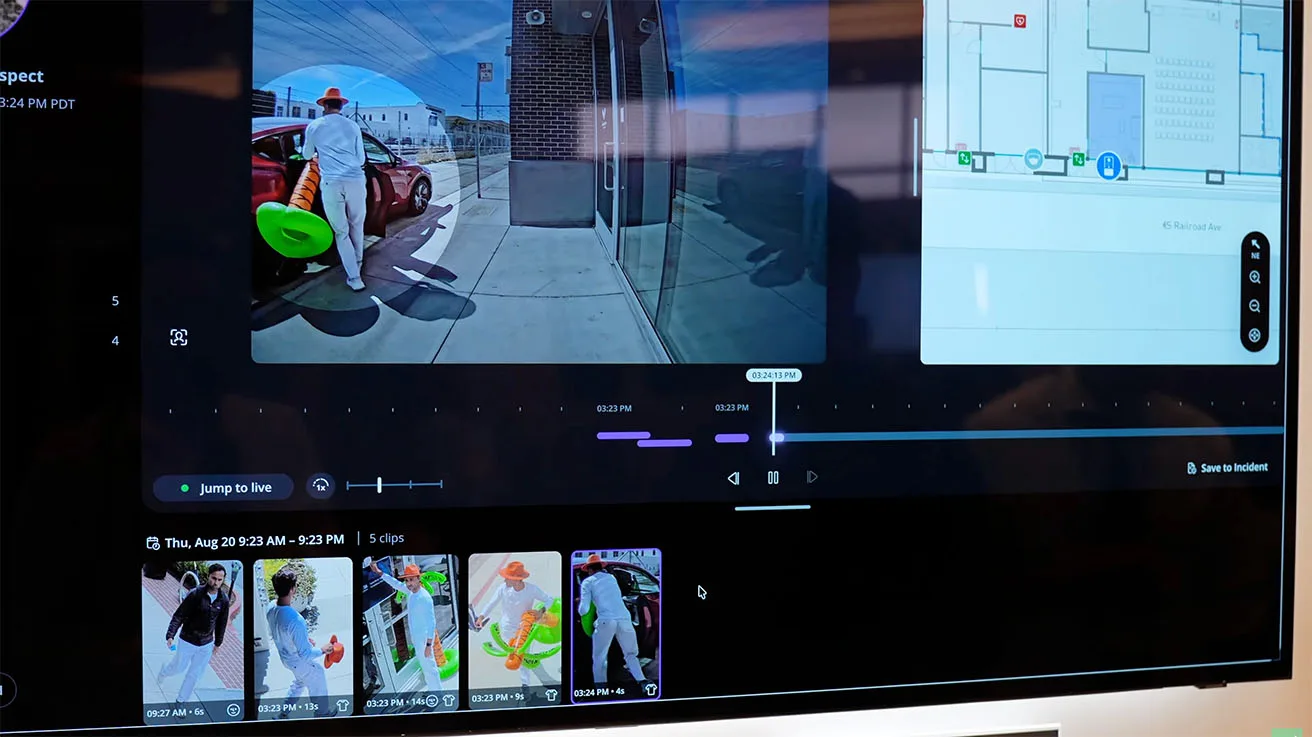
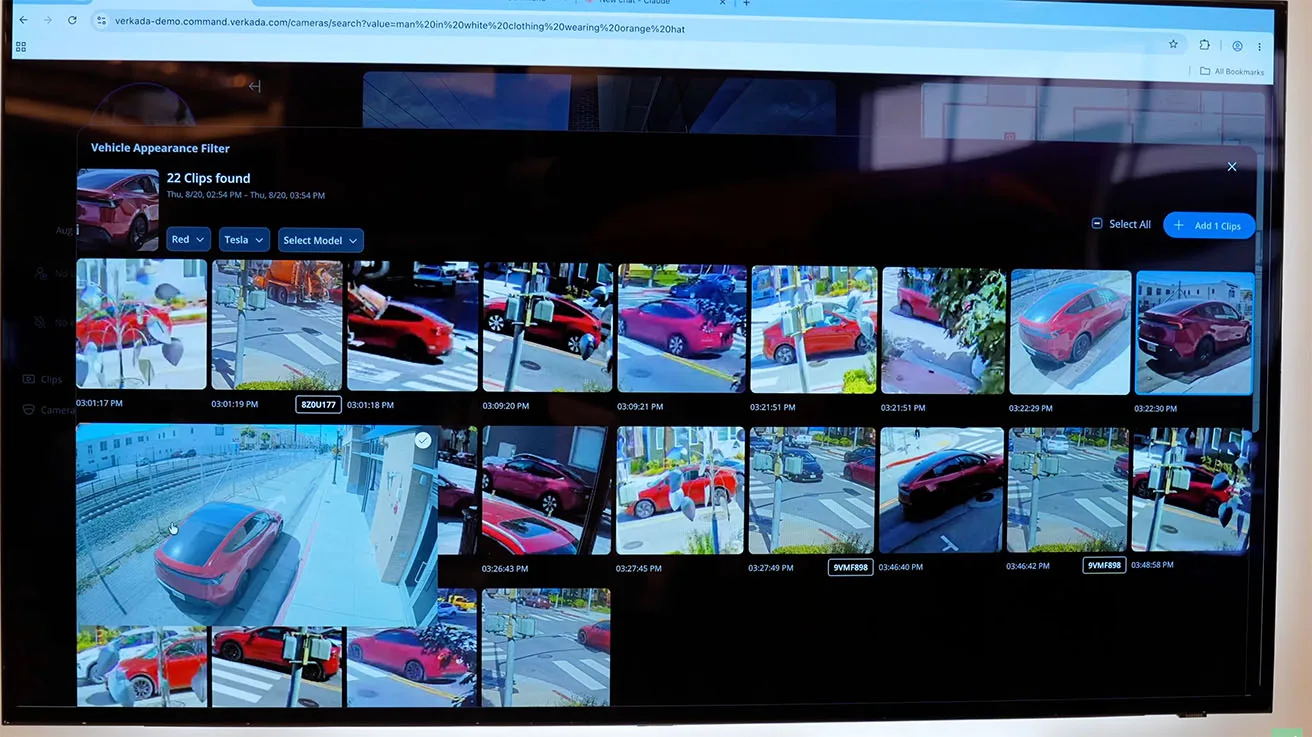
1 / 8
The same workflow can be applied to vehicles. If a suspect enters a vehicle, the platform can help identify that vehicle across the customer's cameras. If a Verkada LPR camera is available, the associated license plate can also be added to the timeline, helping narrow the investigation from a generic vehicle description to a specific vehicle.
Security teams can then use identified people and license plates to configure proactive BOLO (Be On the Lookout) alerts. Notifications can be delivered to authorized users through several channels:
- SMS and email
- Microsoft Teams and Slack
- Custom webhooks tied to third-party mass notification systems
Operational Dashboards & Claude AI Data Analytics (Private Beta)
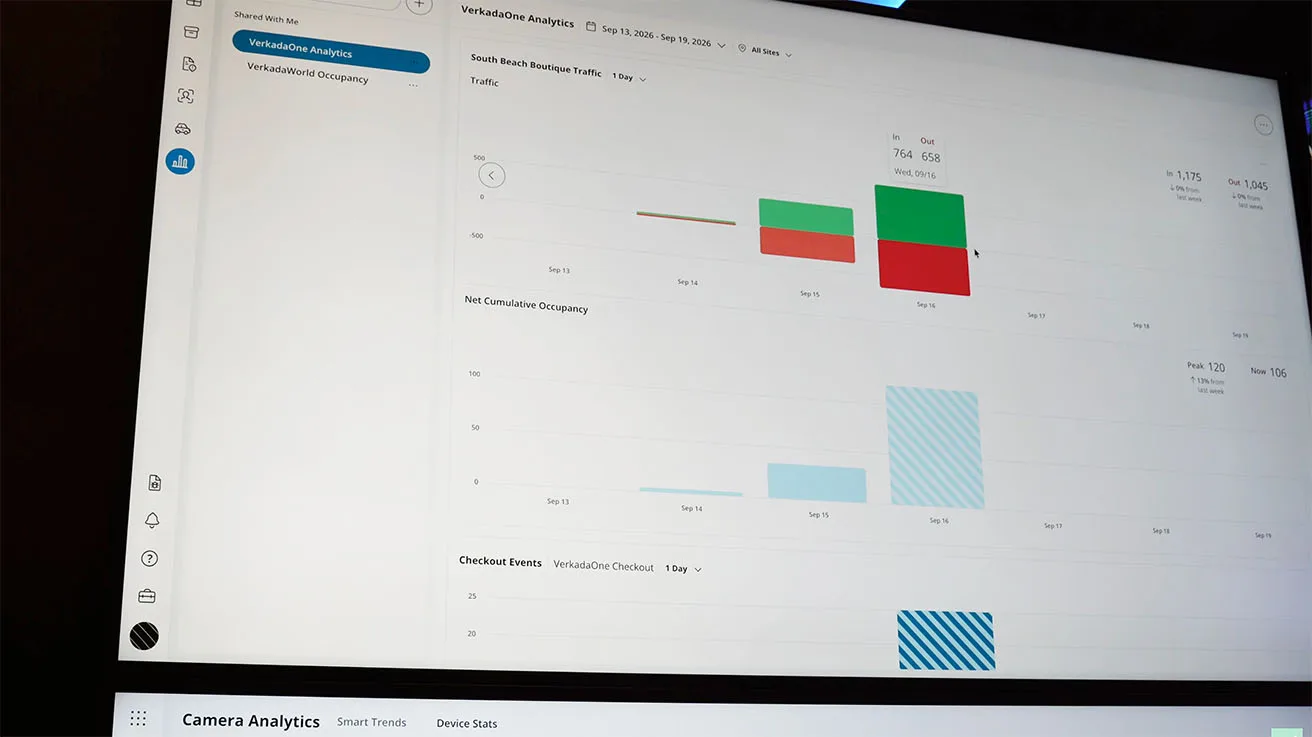
Beyond physical security, the Verkada platform provides customizable Command dashboards designed to improve IT and operational efficiency. These dashboards offer real-time visibility into facility metrics and hardware status without requiring external reporting tools.
Key data points monitored within the dashboards include:
- Foot-Traffic Analytics: Real-time tracking of how many people enter and exit specific zones.
- Queue Monitoring: Alerts for inactivity detection, such as notifying managers when multiple people are waiting in line while adjacent retail registers remain idle.
- Device Health: Automated tracking of camera uptime, offline status, cloud backup integrity, and firmware updates for IT administrators.
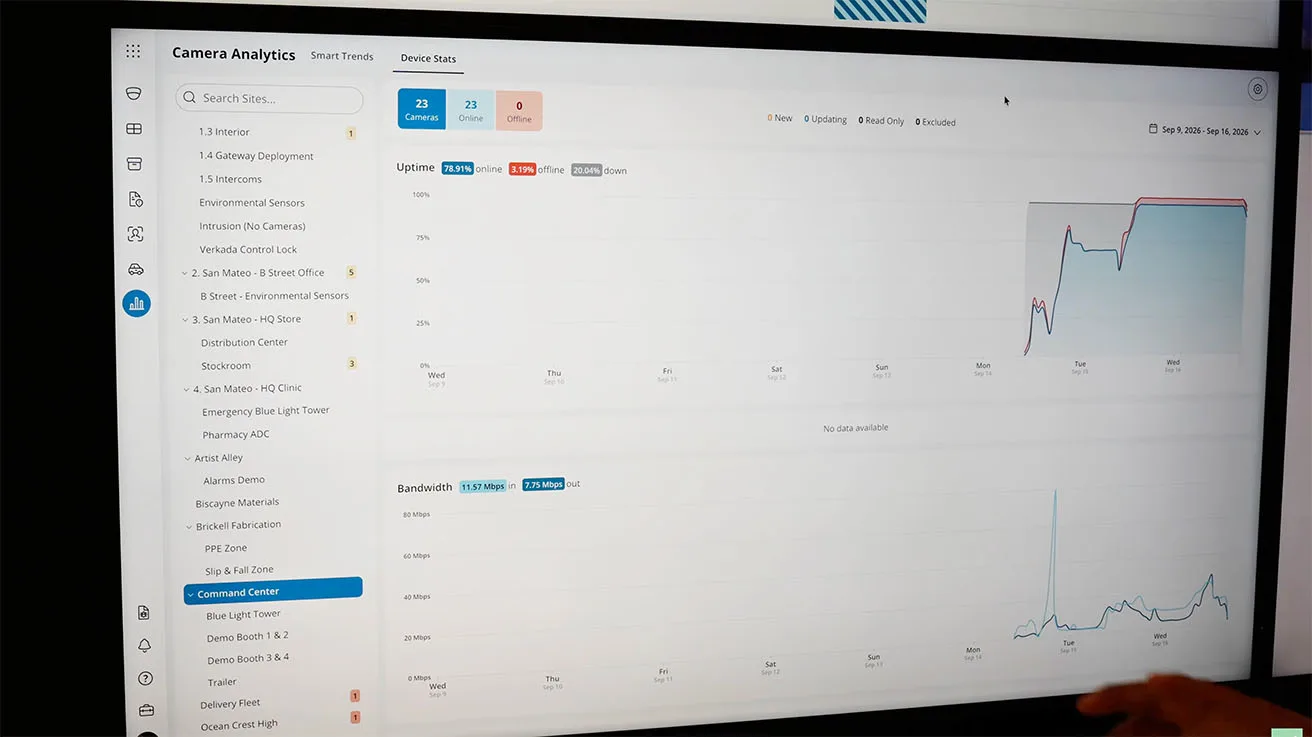
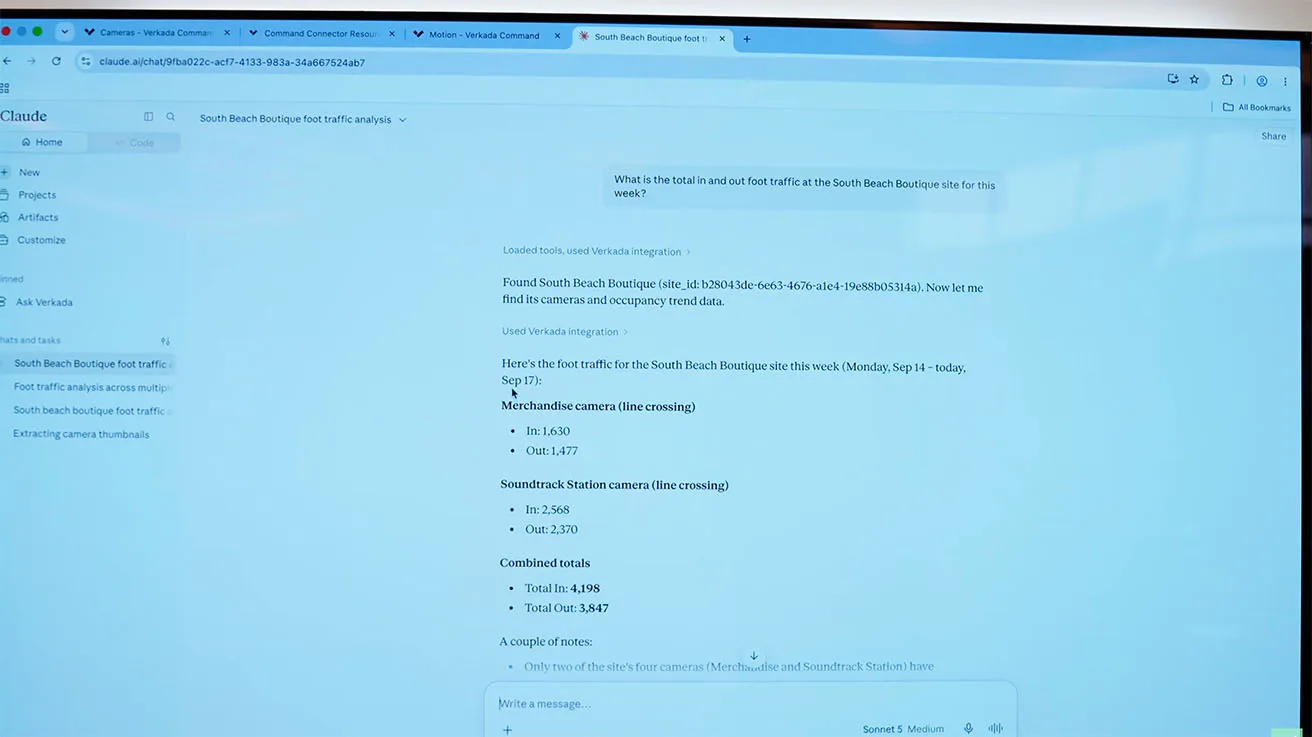
1 / 3
To process this data, Verkada introduced Catalyst, a read-only Model Context Protocol (MCP) integration. Catalyst connects Verkada Command to approved third-party AI platforms such as Claude, ChatGPT, and Gemini. Users can query the system using natural language, asking Claude to analyze foot traffic for a specific area and instantly generate a clear pie chart of the results. All data remains accessible via APIs and webhooks, giving organizations full control to build custom operational workflows.
AI-Powered Deterrence & Talk-Down Demo
Perimeter security requires more than passive video monitoring. Verkada Alarms supports AI-Powered Deterrence workflows designed to address unwanted activity before an alarm is raised. When a person is detected in a configured deterrence area, the system can initiate a sequence of audio warnings that escalate if the person remains on the property.
The deterrence workflow can include:
- A user-prescribed warning when a person is first detected.
- AI-generated messages that can incorporate context from the scene.
- Additional warnings that escalate if the person remains on the property.
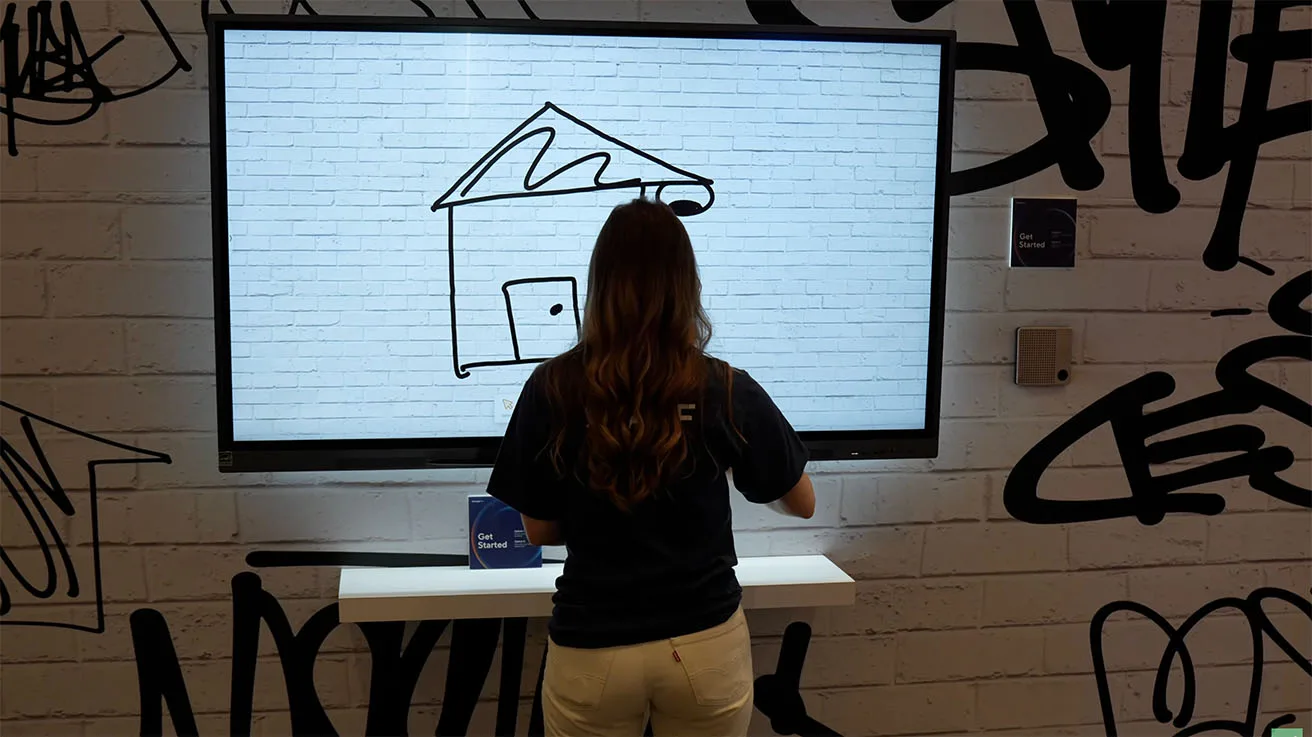
If the activity continues after the configured deterrence attempts, the system can raise an alarm and trigger configured responses such as a siren or strobe, live agent talk-down, notifications to a contact list, or police dispatch.
TK74 Touchscreen Intercom & AI Voice Directory Demonstration
For enterprise lobbies and multi-tenant facilities, Verkada introduced the TK74 Touchscreen Intercom. This device upgrades the standard access controller with a large touchscreen interface and advanced voice recognition capabilities.
The primary technical feature demonstrated at VerkadaOne 2026 is the AI Voice Directory. Visitors no longer need to manually scroll through hundreds of employee names on a digital keypad. The workflow operates as follows:
- The visitor taps the TK74 screen and states the name of the individual or department they are visiting.
- The onboard AI engine parses the natural language request and cross-references it with the facility's active user directory.
- The system automatically routes a two-way SIP call directly to the requested employee.
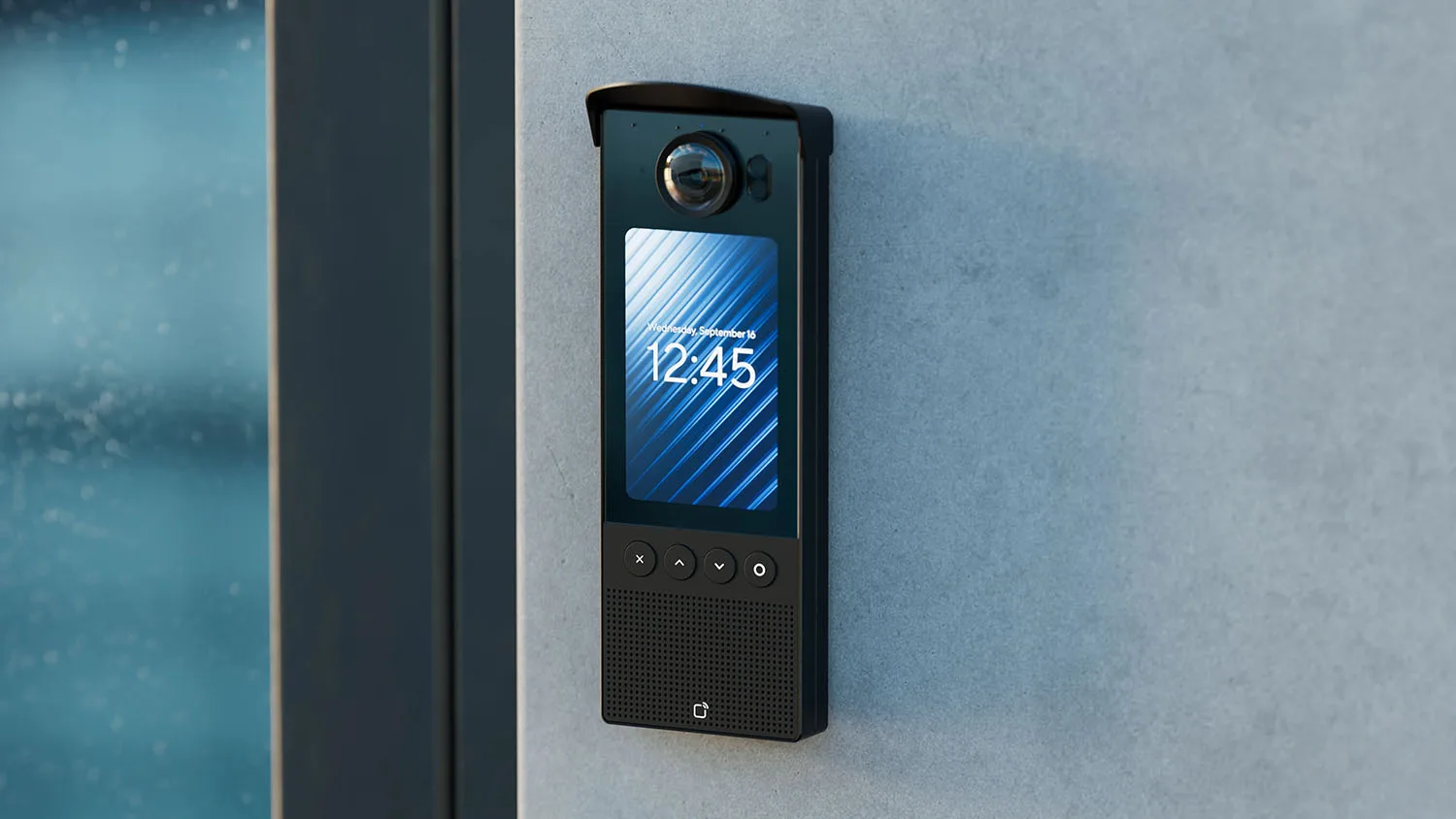
Employees receive this call via the Verkada Pass mobile application or through native integrations with Microsoft Teams and Slack. The employee can view a live 5-megapixel video feed of the visitor, engage in clear two-way audio communication, and remotely unlock the door from their current interface without requiring a dedicated receptionist on the ground floor.
Verkada Transportation: Vehicle Fleet Security & LPR
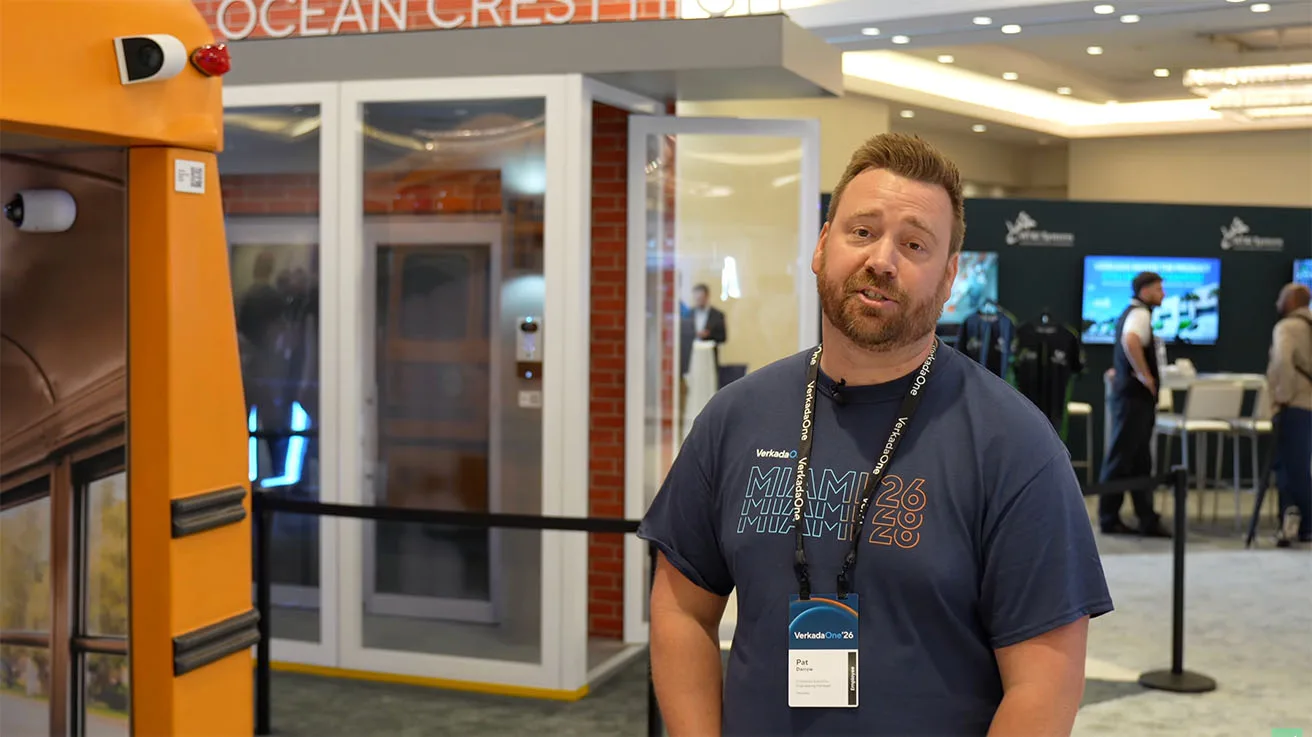
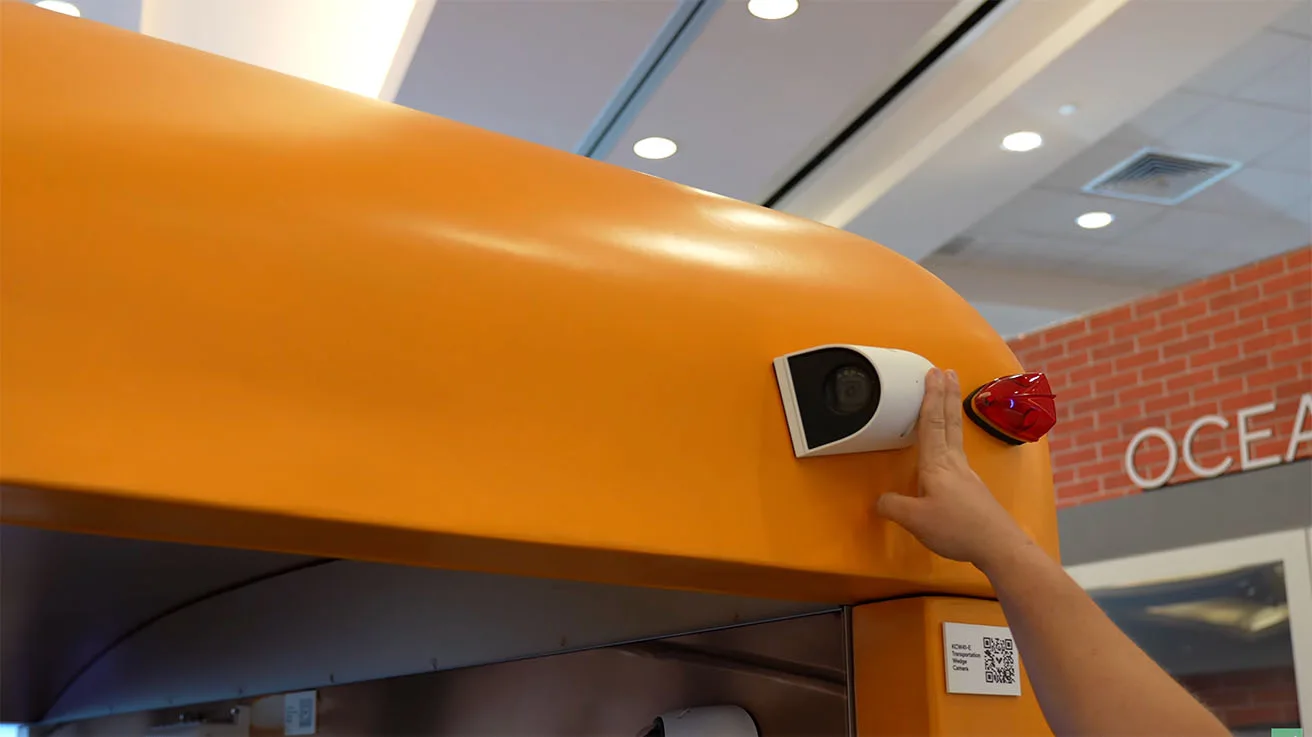
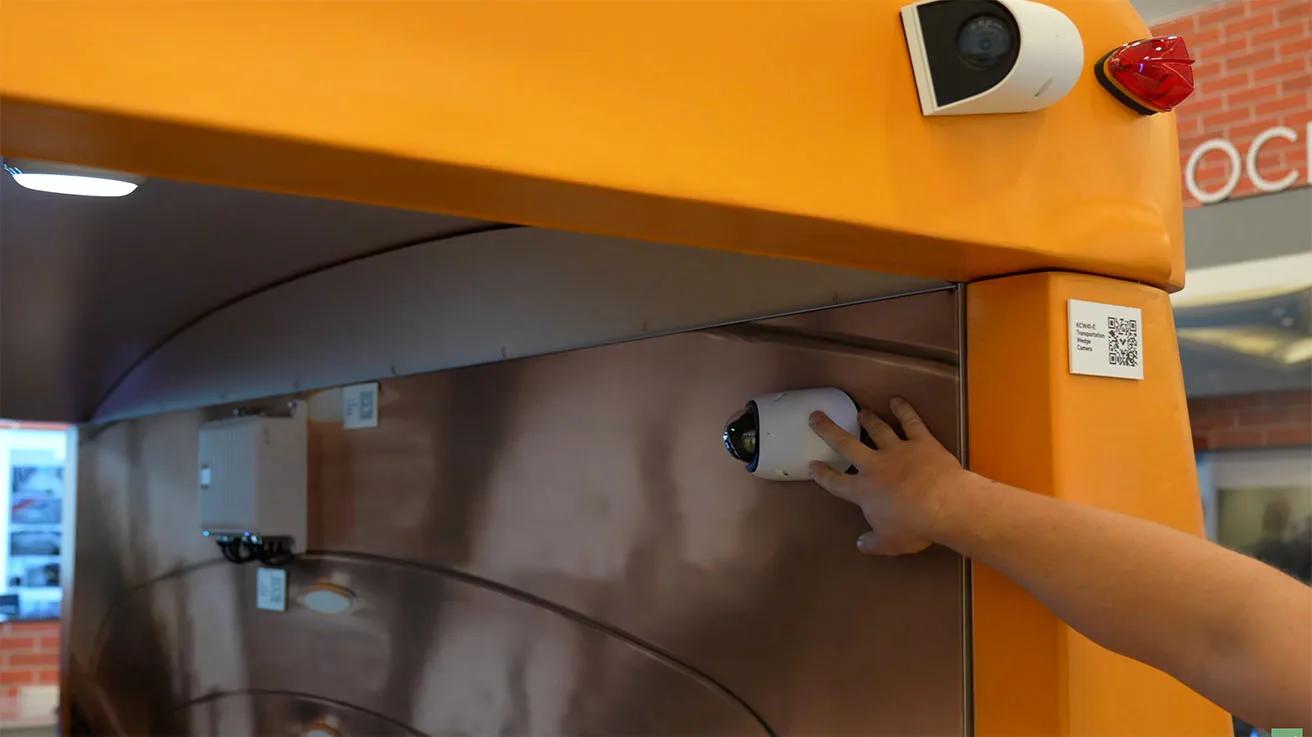
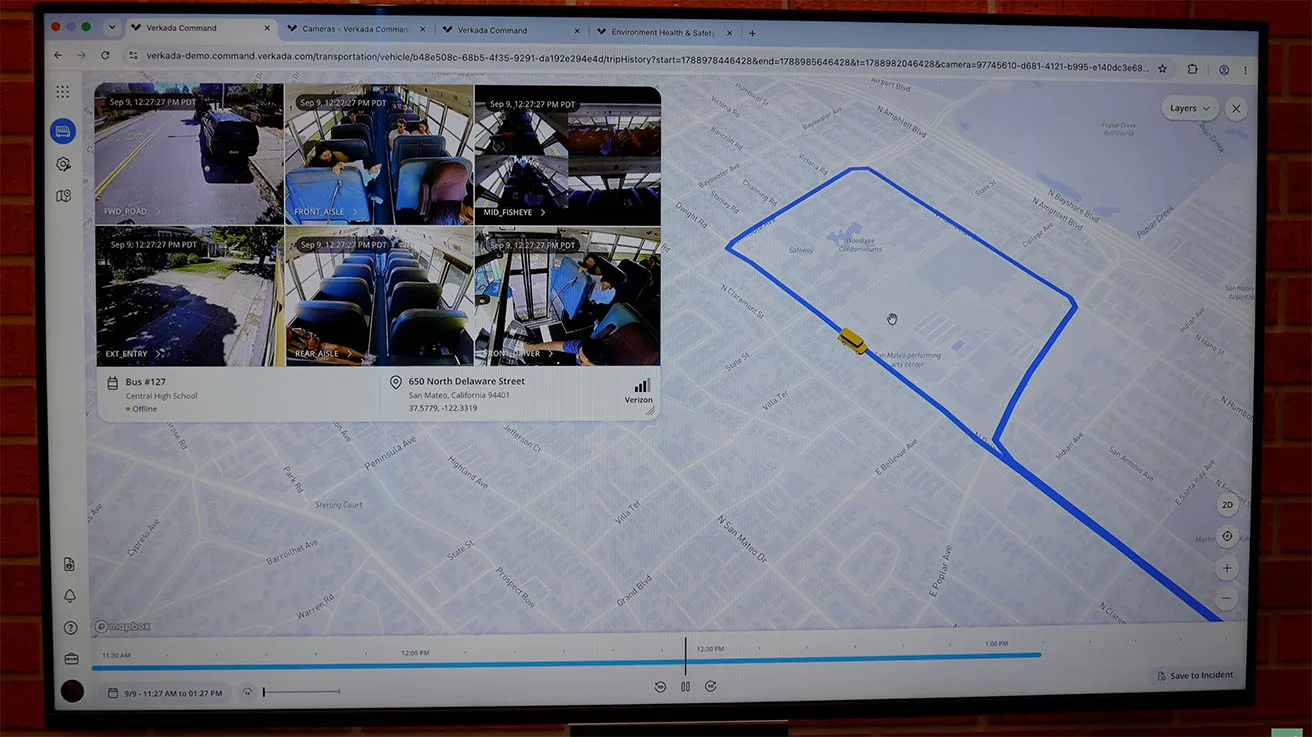
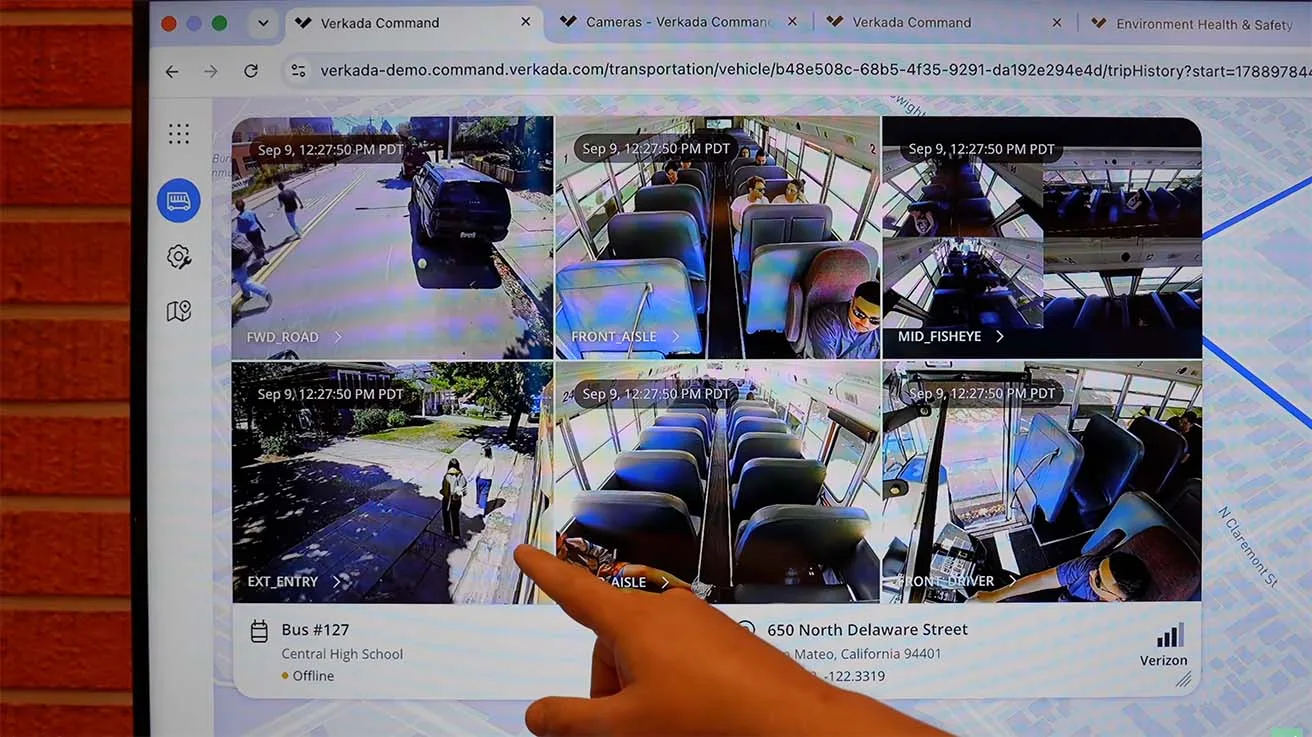
The Verkada Transportation module extends the Command platform beyond the physical boundaries of a commercial building and into mobile fleet operations. The solution combines vehicle video, location data, driving events, and fleet health information within a single Command interface.
1 / 5
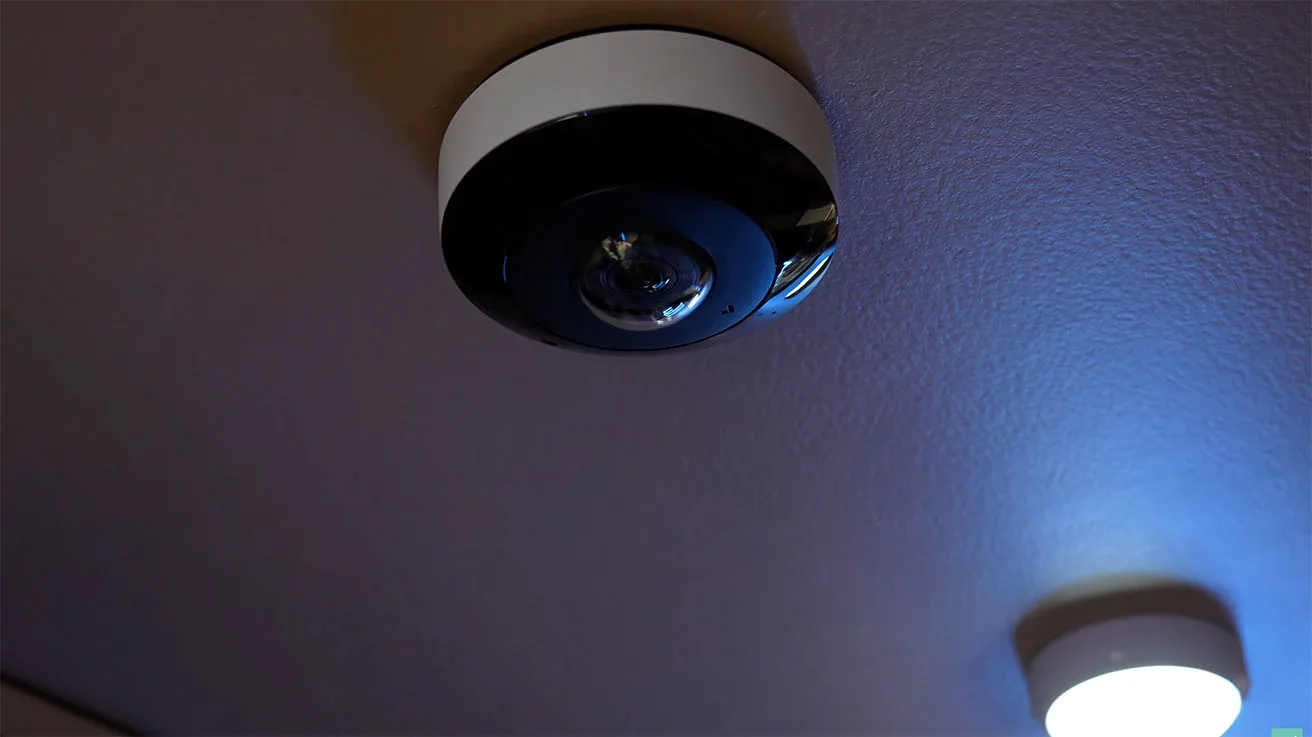
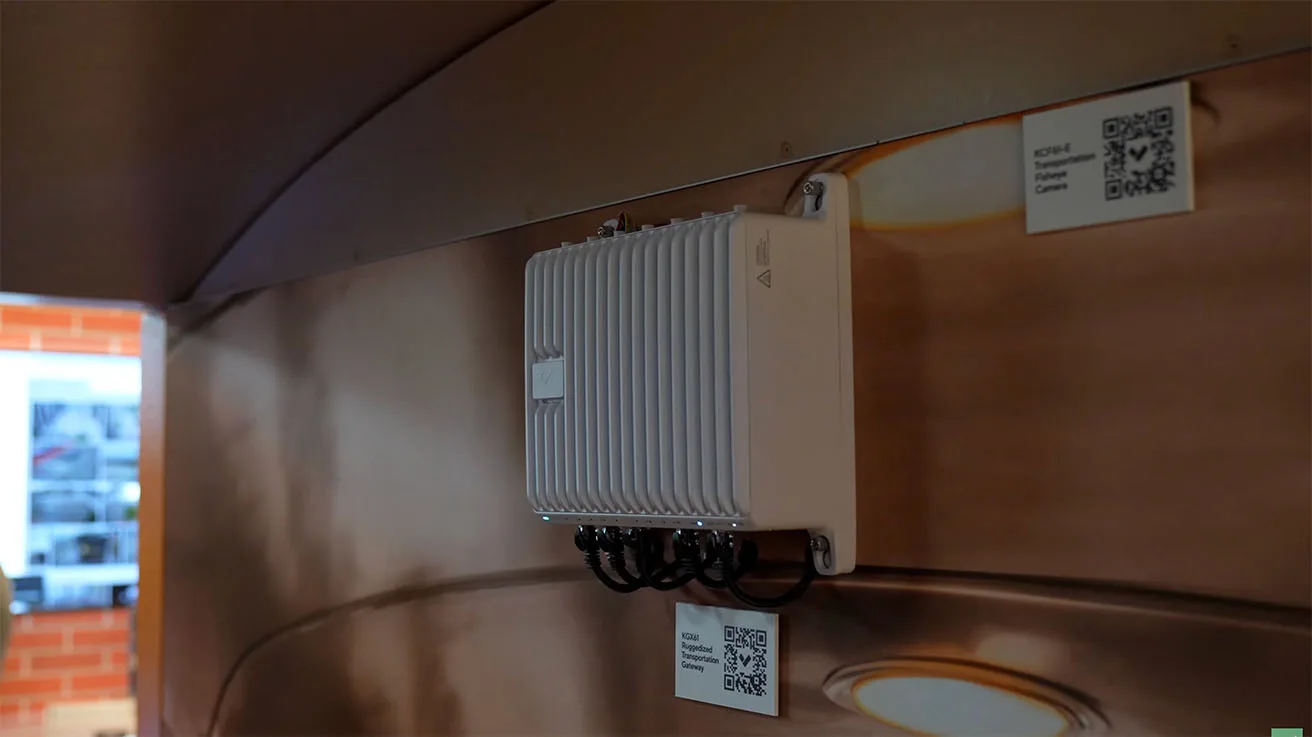
The system includes three ruggedized transportation camera SKUs, with two designed for flexible indoor and outdoor vehicle coverage and one specifically designed for vehicle exteriors. These cameras connect through the KGX61 Transportation Gateway, which provides connectivity, captures GPS location, and connects to the vehicle’s diagnostic system.
1 / 4
The gateway can automatically detect driving events such as sharp turns, harsh braking, and speeding. In Command, administrators can review these events alongside corresponding video footage and location data, providing additional context for fleet investigations.
This mobile infrastructure can also be considered alongside fixed-site security operations. Here’s a hypothetical example: when a fleet vehicle approaches a facility gate, a stationary License Plate Recognition (LPR) camera could capture the vehicle’s license plate. Organizations can use Verkada LPR to identify vehicles and support access-control workflows at gates and other entry points.
Final Thoughts: Exploring Independent Physical AI Solutions
The hardware and software capabilities demonstrated at VerkadaOne 2026 in Miami illustrate how Physical AI is being applied to enterprise security and operations.
Consolidating video security, multi-factor access control, cloud-managed audio, and fleet telematics into a unified interface reduces the administrative burden on IT departments. Features like New Unified Timeline Functionality: Live Mode and AI-Powered Voice Directories can help streamline investigations and daily facility access.
For integration firms and enterprise security directors, evaluating these platforms in live environments remains important before committing to a deployment. Testing the workflows demonstrated at VerkadaOne can help ensure that the selected architecture aligns with the operational requirements of a specific commercial site.
To see these hardware deployments and software interfaces tested in real time, watch our complete field report from the VerkadaOne 2026 exhibition floor below.
Frequently Asked Questions
What is Physical AI in enterprise security?
Physical AI brings AI into the physical world, giving organizations a way to understand and act on what is happening in their buildings, campuses, vehicles, and other physical environments.
For enterprise security, this can mean connecting AI with cameras, access control, sensors, intercoms, audio, and other systems that observe and interact with the physical world. Instead of simply collecting data or recording what happened, Physical AI can make physical environments searchable and queryable, surface insights from real-time and historical activity, and increasingly help teams respond.
Verkada’s approach is to build an intelligence layer across the physical environment, bringing these systems together through one platform. The goal is to move from seeing what happened, to understanding what’s happening, to helping organizations act on it.
Does Verkada Command require an on-premise server?
No. Verkada Command is a cloud-managed platform, while supported Verkada devices can perform local processing and storage functions depending on the product and configuration. Command manages system configuration, user access, and remote system management through the cloud, without requiring a traditional on-premises NVR or dedicated management server.
How does the Verkada Unified Timeline work?
The Unified Timeline is designed to help speed up investigations. The feature uses AI analytics to automatically locate and combine video events from different cameras into a single, map-based timeline. When an operator selects a person of interest or vehicle of interest, the system automatically compiles chronological video clips of that subject's movement and maps their path onto a digital floor plan.
Can Verkada access control integrate with existing hardware?
Yes. While Verkada manufactures proprietary readers and intercoms, their door controllers can integrate with legacy Wiegand and OSDP readers. This allows facilities to transition to the Verkada Command platform without requiring a complete hardware replacement at every access point.
What triggers an active deterrence response on Verkada cameras?
AI-powered deterrence uses AI-powered cameras to detect people in configured areas and automatically deliver a sequence of warnings. If the person remains after repeated warnings, the system can escalate to an alarm and trigger configured responses such as a siren or strobe, live agent talk-down, contact-list notifications, or police dispatch.
Is Verkada equipment NDAA compliant?
Yes. Verkada hardware components are manufactured to comply with the National Defense Authorization Act (NDAA), making the equipment suitable for deployment in federal, state, and local government facilities that require strict supply chain security standards.