

At Security Canada Central 2026 in Toronto, we followed Mike Puumalainen through the Secutron fire and life-safety lineup. The useful story was how the pieces fit together: a control panel receives information from detectors and other inputs, notification appliances alert occupants, and emergency lighting helps people find their way out.
Secutron fire alarm panels come in addressable and conventional configurations. The broader lineup also includes releasing controls and remote annunciators for additional project needs. Mike’s short walkthrough also covers outdoor notification equipment, residential sounder bases, duct smoke detection, a new ceiling-mount strobe and building-management integration.
What we covered: This is a trade-show portfolio walkthrough, not an installation or performance test. I have paired the booth explanation with Secutron’s documentation so you can distinguish a system’s headline capacity from the equipment a particular building needs.
Secutron at Security Canada Central 2026 — Pipl Systems. Sponsored by Secutron.
Video chapters · 2:35
Secutron Fire Alarm Panels: Addressable or Conventional?
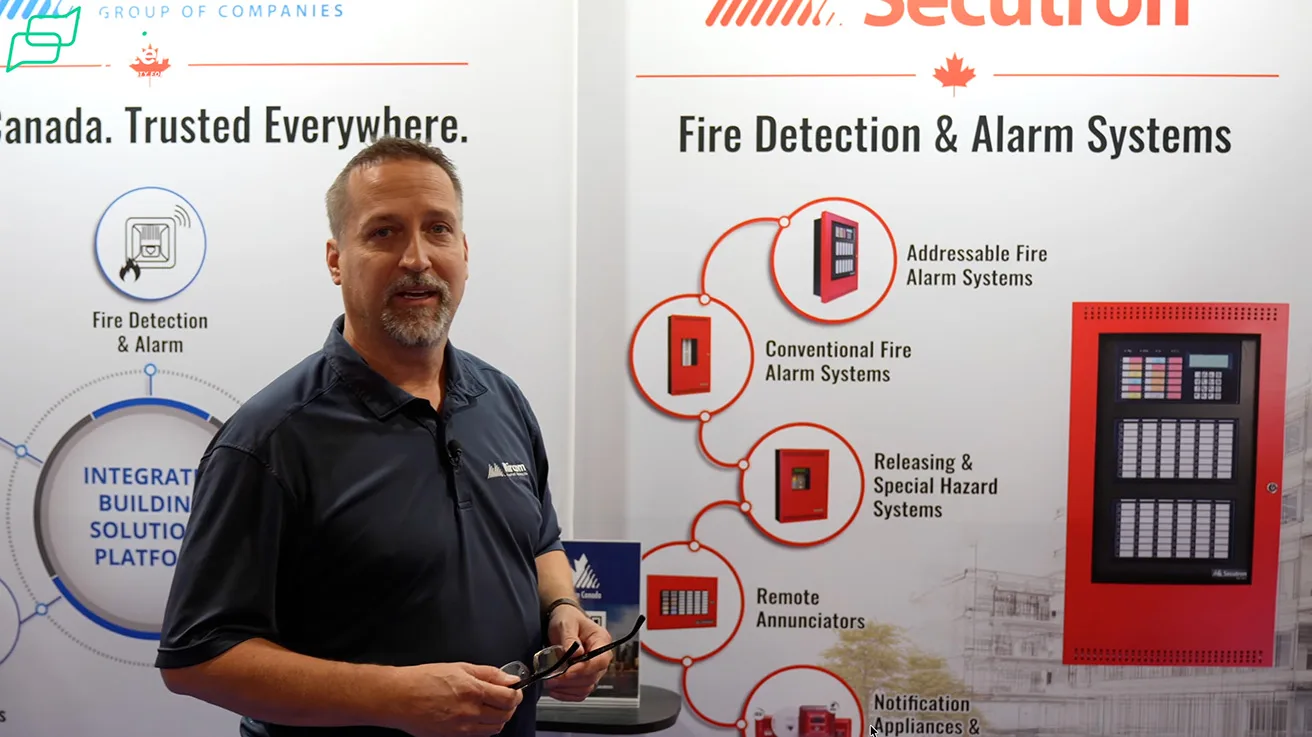
Mike opens with two approaches to fire alarm control. An addressable system communicates with individually addressed devices on a signaling line circuit, or SLC. A conventional system organizes initiating devices into circuits associated with zones. That changes how the control panel identifies the source of an alarm and how the installation is planned.
He highlights an addressable system supporting up to 720 devices across three loops, followed by eight- and 12-zone conventional panels. Those numbers measure different things: a zone is not a device, and 12 zones do not mean a limit of 12 detectors.
Secutron’s MR-2300 LED panel documentation confirms the eight- and 12-zone options. The LED designation matters because other MR-2300 variants have different configurations. For an existing building, I would start with the installed equipment, required alarm identification and planned expansion before comparing panel sizes.
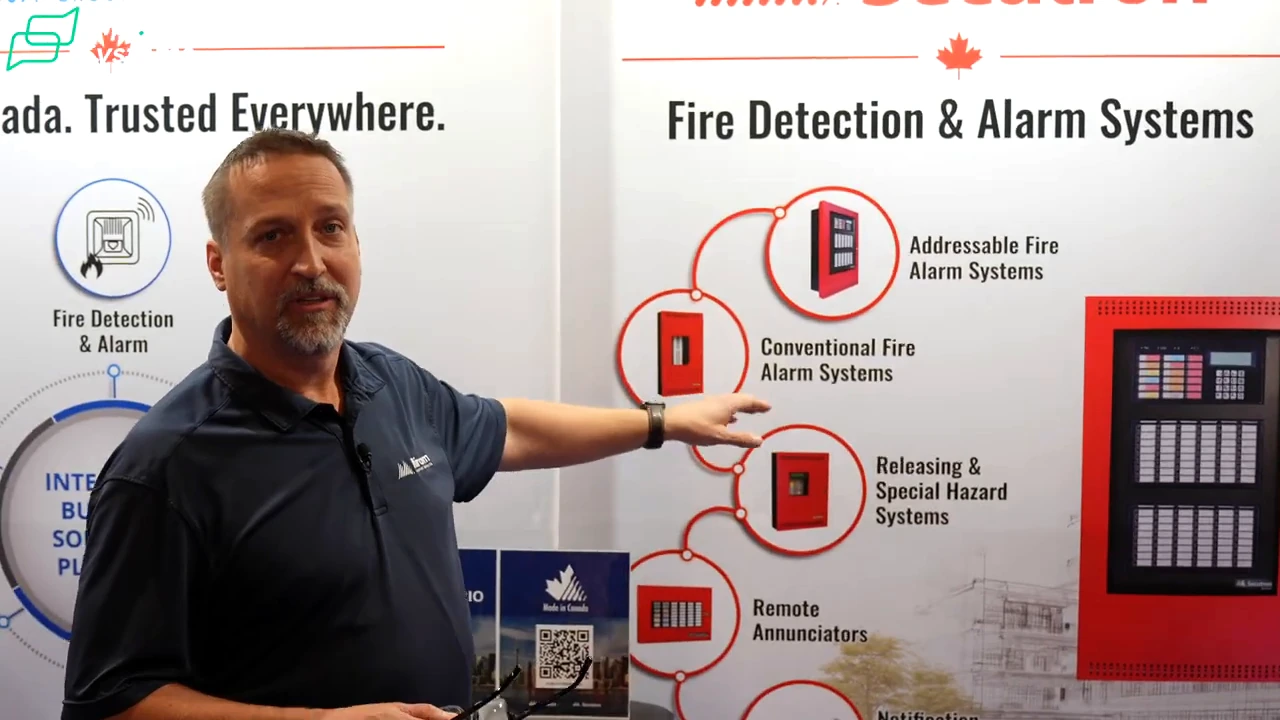
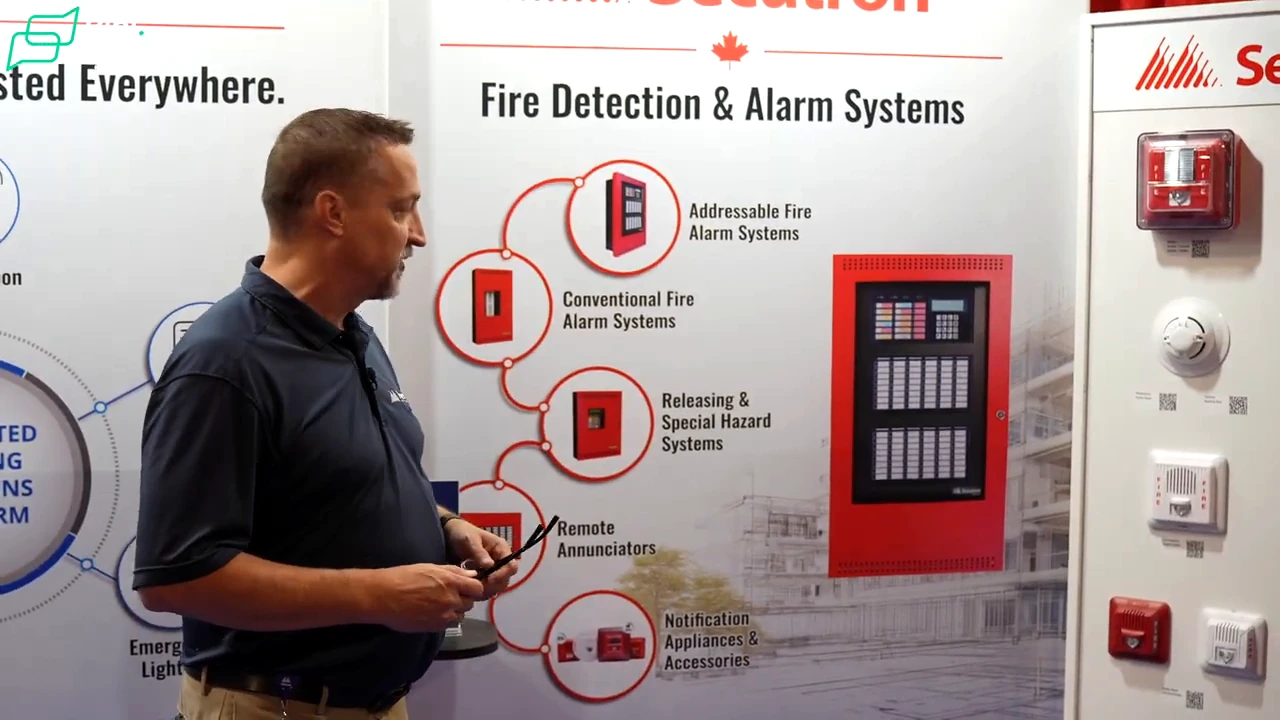
The booth separates addressable and conventional control systems before moving to releasing and notification equipment.
1 / 2
| Approach | How it organizes detection | What to confirm for a project |
|---|---|---|
| Addressable | Individually addressed compatible devices communicate over an SLC. | Loop capacity, compatible devices, expansion hardware and the required identification of alarm locations. |
| Conventional | Initiating devices are grouped on circuits associated with zones. | Zone layout, compatible detectors, existing wiring and the applicable panel variant. |
| Capacity comparison | 720 addressable devices and 8 or 12 conventional zones describe different units. | Compare a complete design and service plan, rather than treating the larger number as the better system. |
Understanding the 720-Device Addressable System
When Mike returns to the physical panel, he emphasizes more devices per loop and the potential to reduce wiring. The clearest documented example of the capacity he describes is the Secutron MR-401R: it ships with one SLC supporting up to 240 compatible MRI-4000 devices. An optional ALC-480 dual-loop adder brings it to three loops and a maximum of 720 devices in total.
That is 240 per loop, not 720 per loop. It is also an expanded-system limit, not three loops included in every base configuration. The booth footage does not make the panel’s exact part number readable, so the MR-401R specifications here provide a documented reference rather than a positive identification of the display unit.
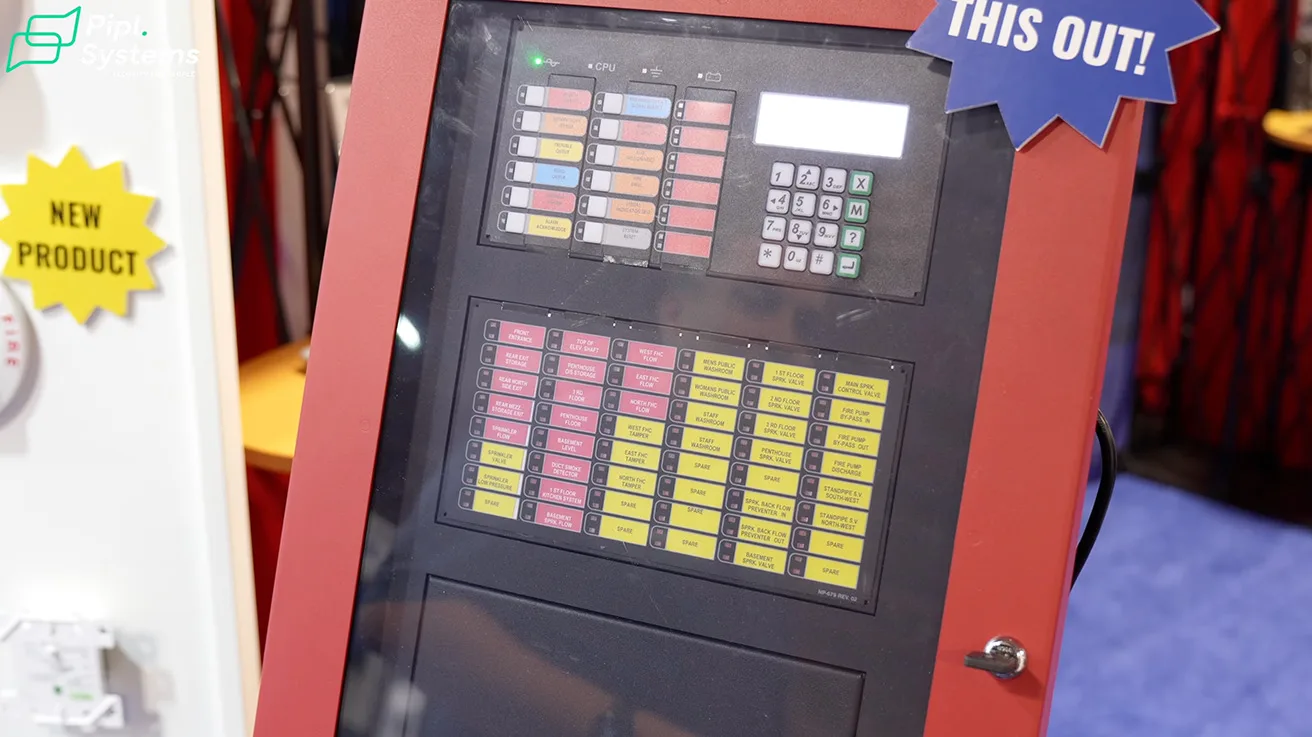
For a building team, the practical benefit is organizing a larger number of compatible points without treating every detector as a separate conventional zone circuit. Actual wiring depends on the layout and approved design; the walkthrough does not establish a percentage saving.
Keep the device count separate from notification power. Horns and strobes have their own circuit and power requirements. The MR-401 installation manual is the place to check circuit limits, compatible equipment and expansion arrangements with the installer.
Releasing Controls and Remote Annunciators Have Different Jobs
The portfolio extends beyond everyday detection and occupant notification. Mike includes releasing and special hazard systems, plus remote annunciators. A releasing control manages a defined suppression-release sequence; a remote annunciator presents system information away from the main panel.
Secutron’s MR-2320 releasing control unit illustrates the distinction: the manufacturer documents configurations for deluge, pre-action sprinkler and agent-release systems. Selecting one involves the suppression system and its approved control sequence, not simply adding a generic output to any fire panel.
For a property manager, a remote annunciator can make status information available at a staffed location. It does not replace the detection devices or make the main control unit unnecessary. These are separate functions to discuss when defining who needs to see—and respond to—an alarm.
Detection and Notification: From Duct Sensors to Ceiling Strobes
At the device board, Mike moves through smoke and heat detectors, duct smoke detection and sounder bases for residential applications. Detectors provide inputs; a sounder base adds an audible signaling function at a compatible detector location. Its role and compatibility need to match the selected system.
The duct detector addresses smoke in an HVAC air path. I would keep that task separate from the layout of room or corridor detection. The booth overview does not establish that one duct detector covers the occupied spaces served by a ventilation system.
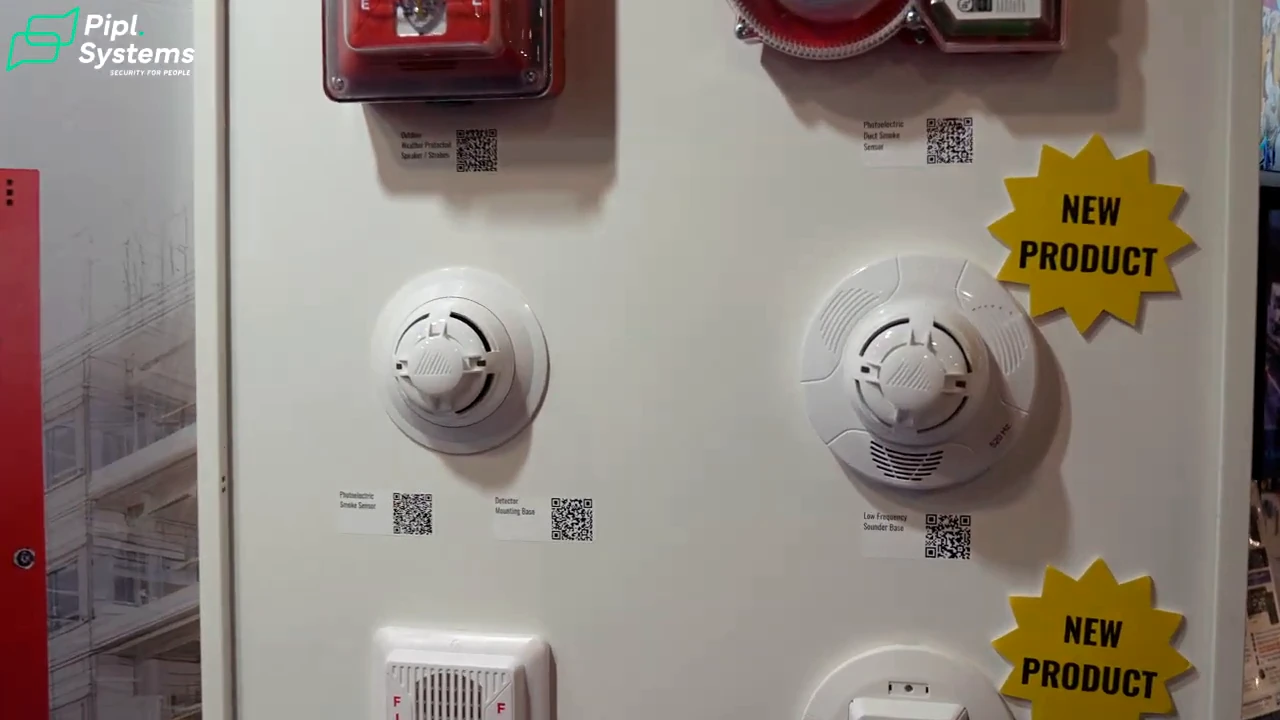
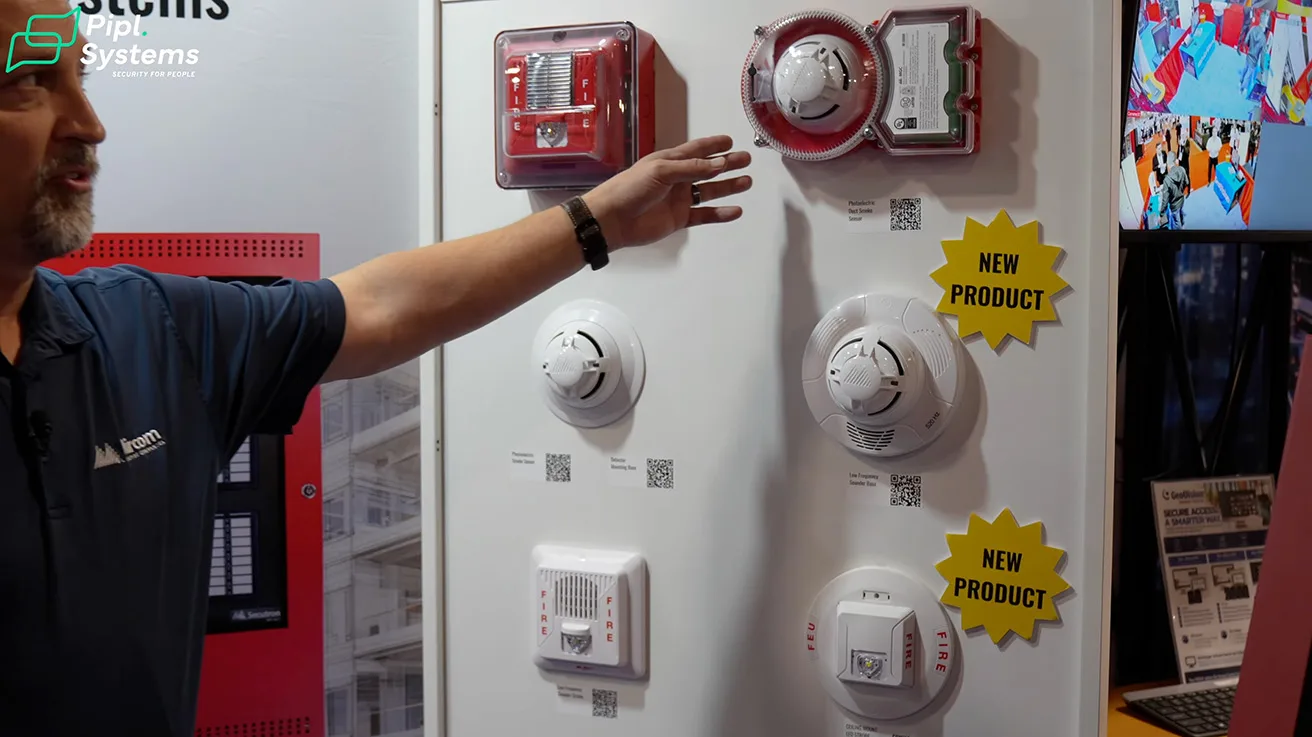
The device board brings smoke detection, duct detection and a sounder base into the same view. Each serves a different function.
1 / 2
The AV lineup means audible and visual notification: horns provide sound, strobes provide light, and horn-strobes combine both. Mike also points out outdoor notification appliances, manual pull stations and modules. A pull station lets a person initiate an alarm; interface and isolation modules support specific circuit functions. NFPA’s guide to fire alarm basics is useful for understanding these different roles.
The new slim-profile, round ceiling-mount LED strobe has a Coming Soon label on the booth display. That makes it a product preview at the event, rather than confirmation of current stock. The label does not establish an exact model number, and the outdoor equipment elsewhere on the board does not make this ceiling device outdoor-rated.
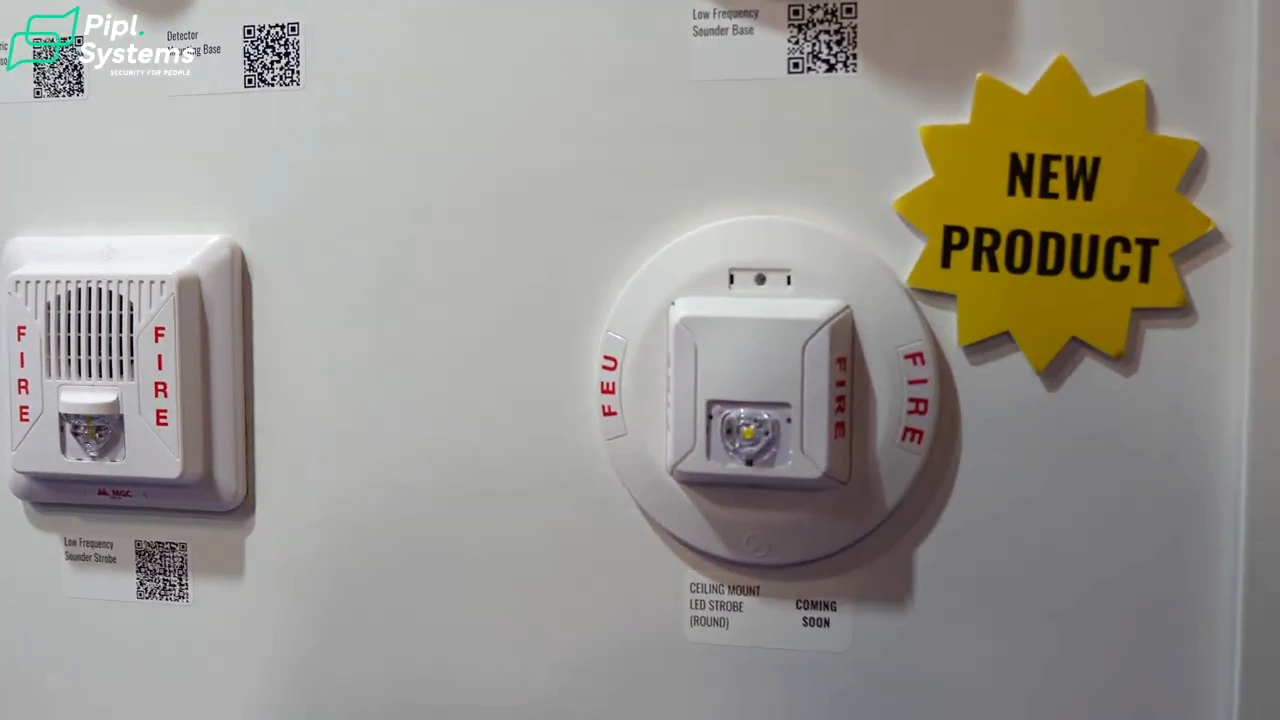
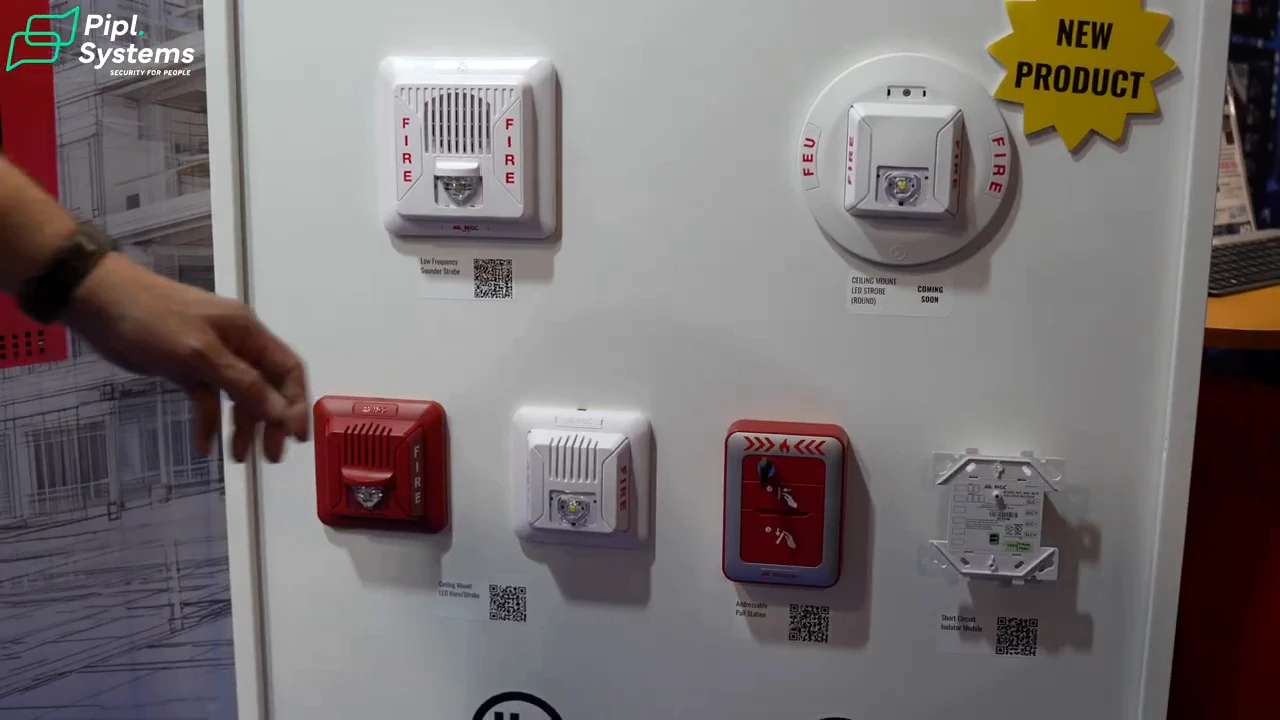
The new round ceiling-mount LED strobe carries a Coming Soon label at the show; the neighboring device combines sound and light.
1 / 2
For an apartment building or commercial retrofit, the selection question goes beyond appearance: which notification appliances suit each space, which are compatible with the control equipment, and how will the complete system be designed and verified? The footage shows the product range; it does not include an audibility, visibility or alarm-response test.
BACnet, Modbus and the Building-Management Conversation
Mike also brings up BACnet and Modbus integration. For a facilities team, the useful discussion is which fire-system status points need to reach the building-management system and what approved interface and configuration the project requires.
The walkthrough does not show that connection being configured. I would have the supplier identify the exact panel, interface or gateway, and supported functions in the proposal rather than assume that every panel has both protocols built in. The BACnet Committee’s FAQ explains why protocol support still involves configuration and model-specific capabilities.
That is especially relevant when a building already has an automation platform: sharing status information and controlling life-safety functions are different responsibilities. Define the required interaction before choosing the connection.
Emergency Lighting Completes the Egress Picture
The final hardware stop is emergency lighting. Mike includes running-man exit signs, lighting heads and battery backup in the lineup. Our close-ups show Mircom-branded lighting equipment at the Secutron display: twin LED remote heads and a running-man sign with an arrow and adjustable lights.
These devices serve a different purpose from a horn-strobe. Notification draws attention to an emergency; exit signs and lighting support the route out. Battery-backed lighting also needs its own project specification. The video does not establish a runtime for these units or show that the fire panel’s backup battery powers the lighting system.
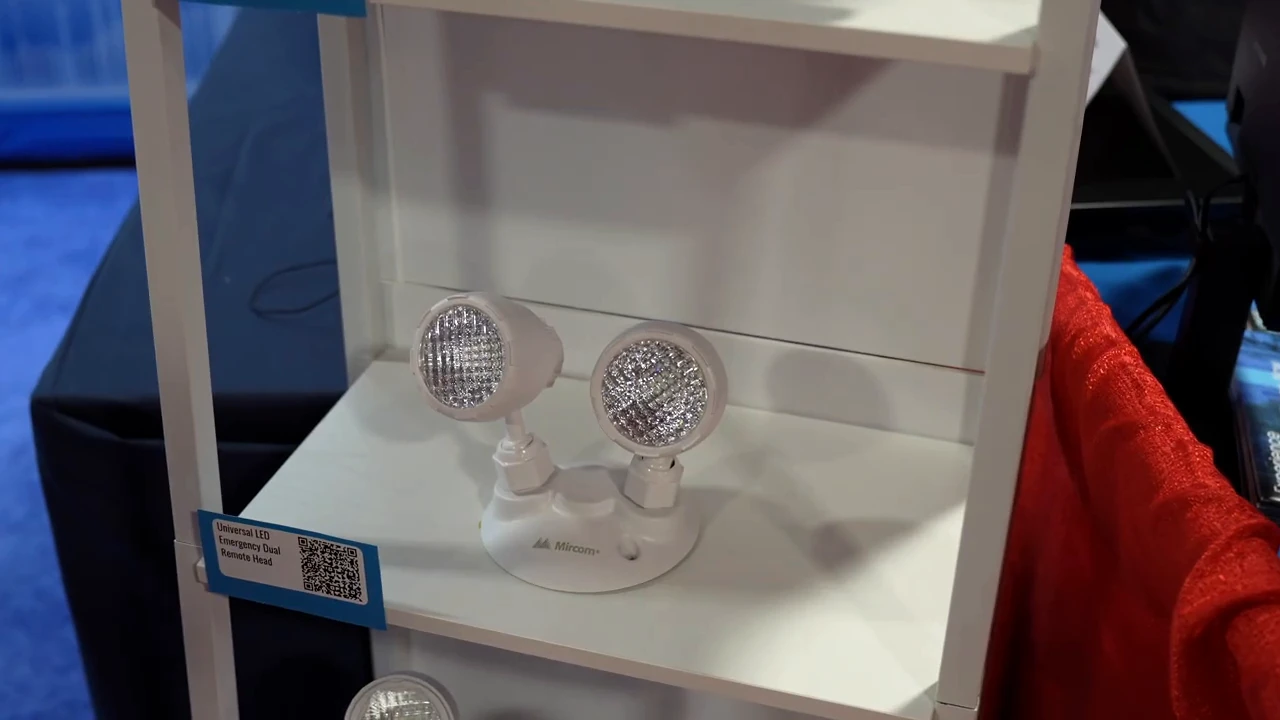
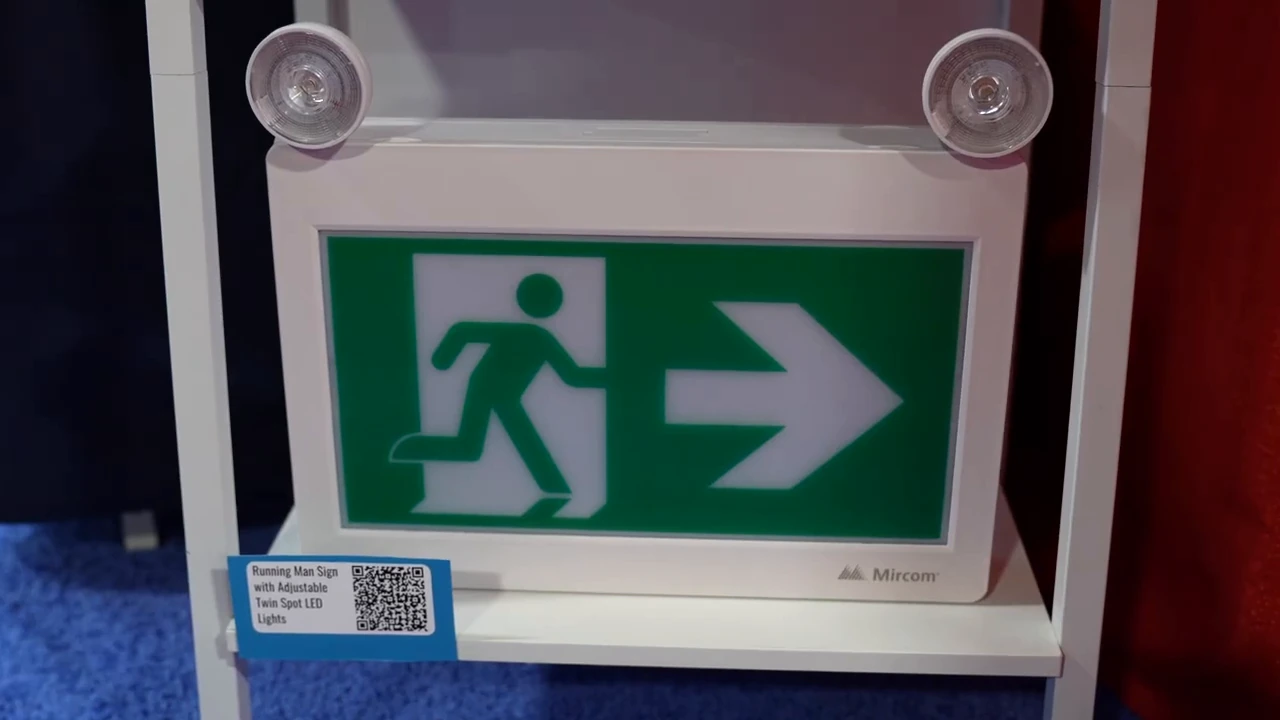
The emergency-lighting display includes twin LED remote heads, distinct from the alarm notification appliances.
1 / 2
What to Ask Before Specifying a Secutron System
My takeaway from the booth is that the panel is only one part of the decision. For a new building or retrofit, ask for a proposal that connects the control equipment, detection, notification, any suppression interfaces, emergency lighting and ongoing service.
Shawn Mahoney makes the local-requirements point directly in NFPA’s A Guide to Fire Alarm Basics: Codes and Standards, dated December 8, 2025:
“Make sure to look up the applicable codes and standards as well as any amendments in the jurisdiction in which you are working.”
That NFPA guidance is a useful procurement principle for a Canadian show audience too: do not substitute a generic code reference for the requirements that apply to your building and location.
| Project question | What to request |
|---|---|
| What is being protected? | The building use, existing system, required detection and notification coverage, and any special hazard scope. |
| Which equipment is included? | Exact panel and device models, loop adders, compatible notification appliances and the available expansion capacity. |
| What integrates with the building? | The specific BACnet or Modbus interface, required status points and responsibility for configuration and verification. |
| Who supports the system? | Relevant qualifications, design and acceptance responsibilities, documentation, commissioning and an ongoing inspection and maintenance plan. |
Start with Secutron’s official product information for current documentation. For the wider Mircom building-entry story, our Mircom TX3-T10 walkthrough covers a separate intercom and access-control application.
If you are assembling a project team, use our guide to choosing a security integrator and Pipl Systems directory to begin your search. Confirm that the company you select has the fire-alarm and life-safety qualifications required for your project; a general security profile alone does not establish that scope. You can also use the integrator request form at the end of this article.
Frequently Asked Questions
How many devices can the Secutron addressable system support?
Mike describes up to 720 addressable devices across three loops. For the documented MR-401R example, that means up to 240 compatible MRI-4000 devices per loop; the base panel has one loop, and an optional dual-loop adder is needed for three.
Does an eight-zone conventional panel support only eight detectors?
No. Zones and individual devices are different measures. A conventional design groups initiating devices on circuits associated with zones. The number and type of compatible devices must follow the exact panel documentation and project design.
Is the new round ceiling-mount strobe available now?
The round LED strobe shown in the video is labeled Coming Soon at Security Canada 2026. Confirm its final model and availability with Secutron before specifying it.
Do all Secutron panels include BACnet and Modbus?
The booth discussion mentions both protocols but does not establish built-in support across every panel. Ask for the exact panel, interface or gateway, supported functions and configuration needed for your building-management system.
Does the walkthrough show a complete installed system being tested?
No. It is a portfolio walkthrough at an exhibition booth. It shows control equipment, detection and notification products, and emergency lighting, but does not demonstrate a commissioned building installation or measure system performance.