


At VerkadaOne 2026 in Miami, I kept coming back to one question: what changes when cameras, doors, alarms, vehicles, and audio become parts of the same operational workflow? The most useful announcements were the ones that answered that question in practical terms.
Verkada Command is the cloud-based platform that connects these systems. The 2026 updates extend its role through live investigations, external AI integrations, transportation security, and cloud-managed sound. For security, IT, and operations teams, the opportunity is to work with more context while moving between fewer interfaces.
My conversations and the demonstrations at the event provide the basis for this article. I have also checked the product information against Verkada's published documentation. This is an assessment of the announced workflows and equipment, rather than a long-term deployment test. Our separate VerkadaOne exhibition-floor report shows more of the live demonstrations.
Verkada Command in 2026 — Oleg Bordiian’s overview
Video chapters · 16:05
What the Verkada Command updates mean for your organization
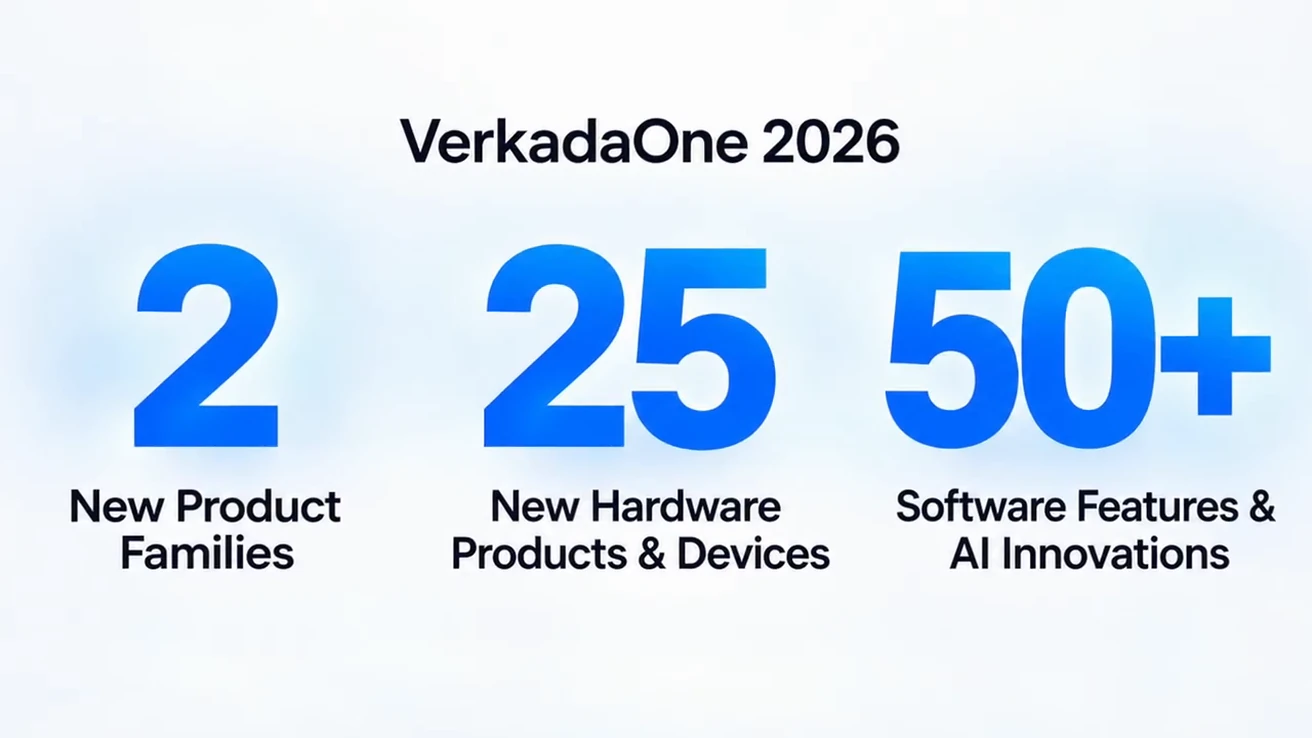
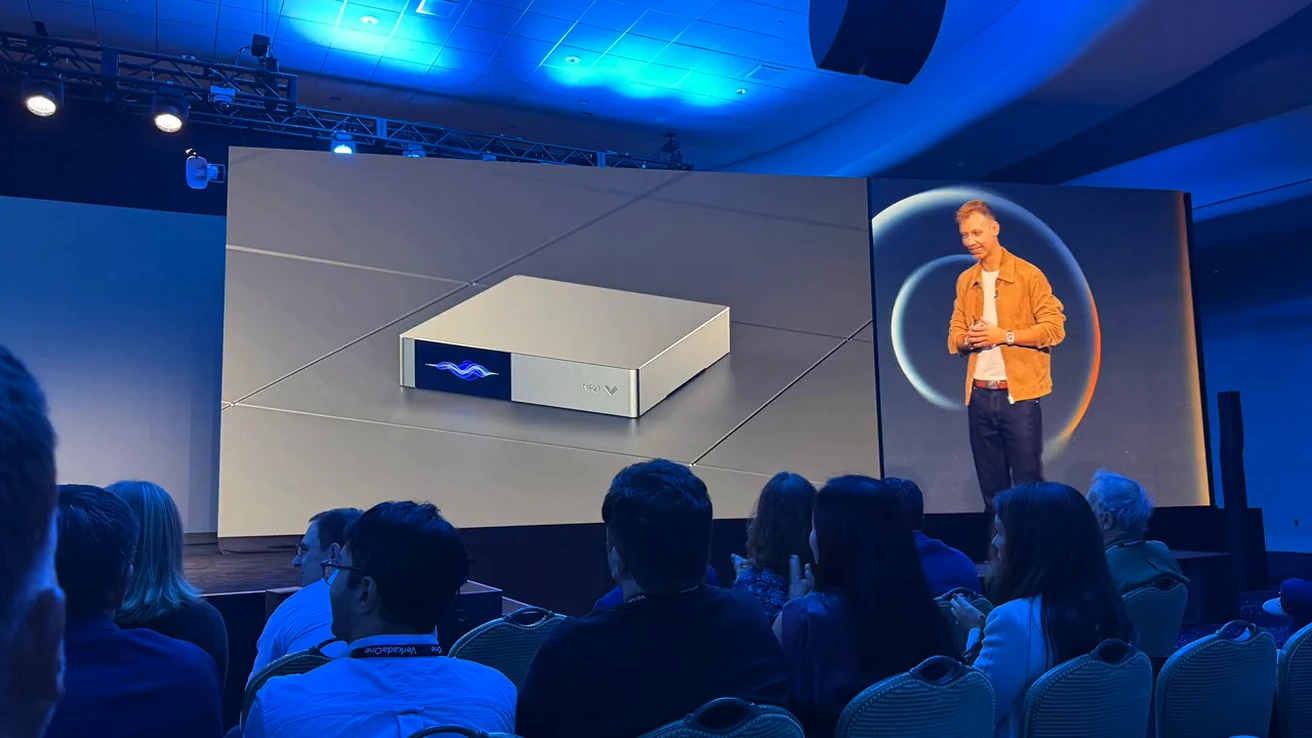
Verkada announced two new product families, 25 hardware products and devices, and more than 50 software features and AI innovations at VerkadaOne. The number matters less than how an organization could use them together. A school district could connect campus investigations with bus footage. A retailer could manage music, announcements, and security responses across stores. A facilities team could use camera information to identify maintenance tasks.
Here is how I would separate the main use cases before evaluating hardware:
| Operational need | Relevant update | What to establish in a demonstration |
|---|---|---|
| Follow an incident across a property | Unified Timeline Live mode and Maps | Camera coverage, event context, and operator permissions |
| Build repeatable operational reports | Catalyst, the Verkada MCP | Approved data access, available tools, and who reviews results |
| Connect vehicle and building security | Transportation cameras and KGX61 gateway | Cellular coverage, vehicle integration, footage access, and installation |
| Manage audio across locations | Network Speakers and Network Audio Players | Existing equipment, audio zones, music service, and announcements |
| Improve remote or specialized coverage | Thermal, remote, and government-grade cameras | Exact model, power, connectivity, regional availability, and site requirements |
| Coordinate entrances and intrusion alarms | TK74, access-control updates, and BP42 | Call routing, credentials, sensor layout, and response procedures |
Live investigations: Unified Timeline, targeted alerts, and Maps
I spoke with Abraham Alvarez, Verkada's VP of Product, about the development of Unified Timeline. A traditional investigation often requires an operator to find a person on one camera, locate the corresponding moment on another, and repeat the process across the property. Unified Timeline brings relevant sightings together so the operator can review an incident as a connected sequence.
Live mode extends that workflow to an incident that is still unfolding. As supported cameras detect new sightings, the timeline can update with additional context. Access Control and Guest integrations add information beyond video. An access event can help an operator understand what happened at a door, while video helps explain the surrounding activity. The operator still needs to assess the evidence; a suggested association is not proof of identity or intent.
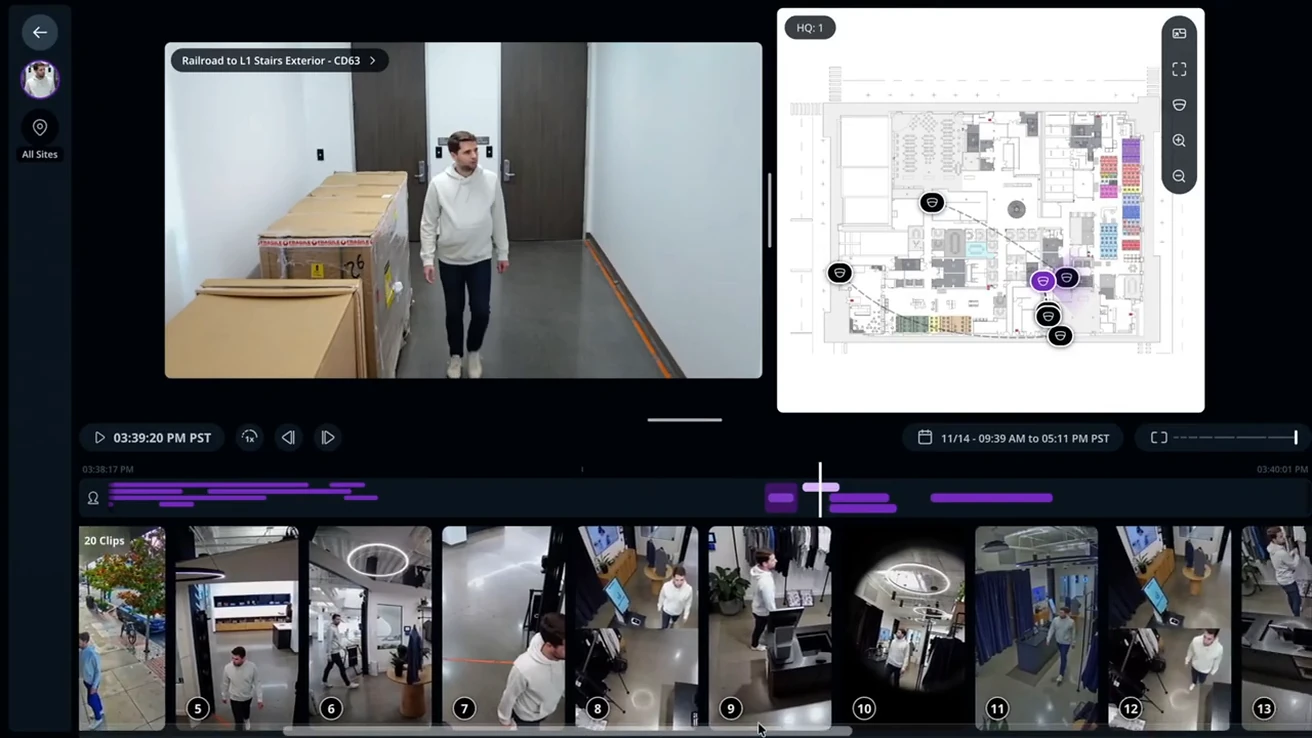
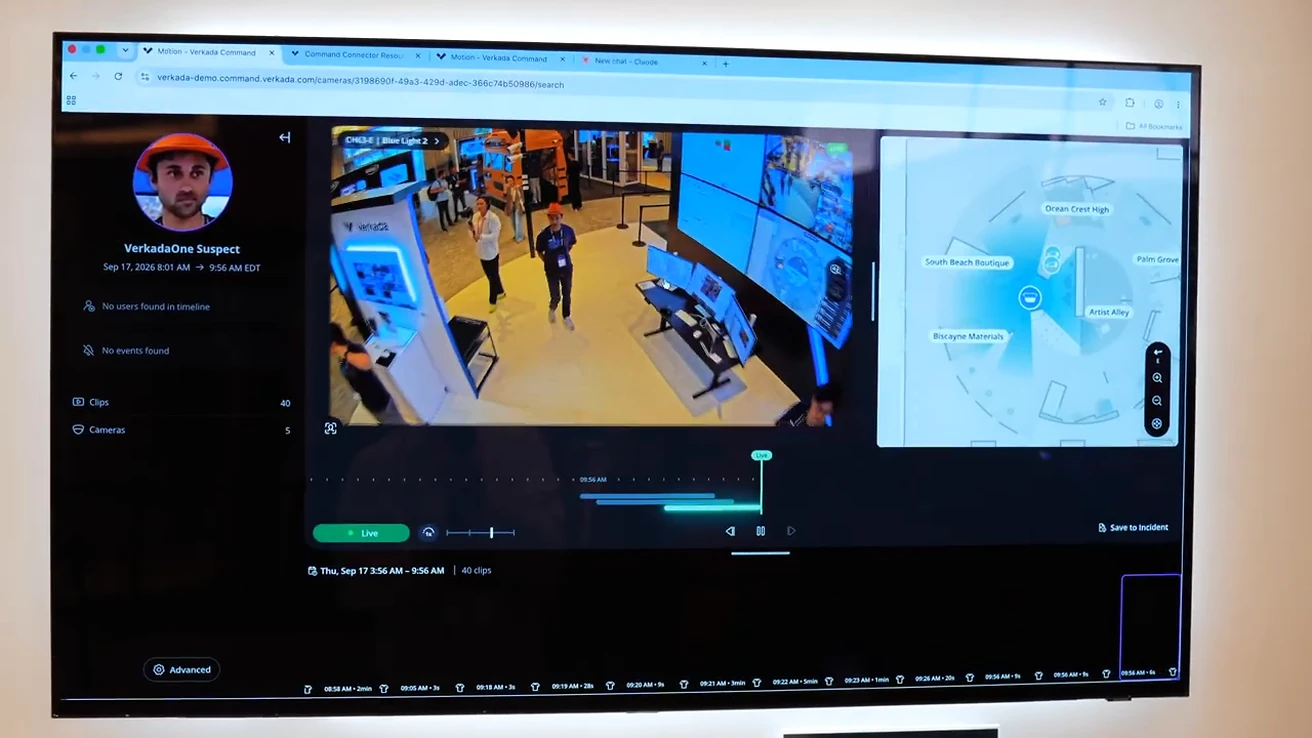
Unified Timeline brings relevant camera sightings and spatial context into a connected investigation view.
1 / 2
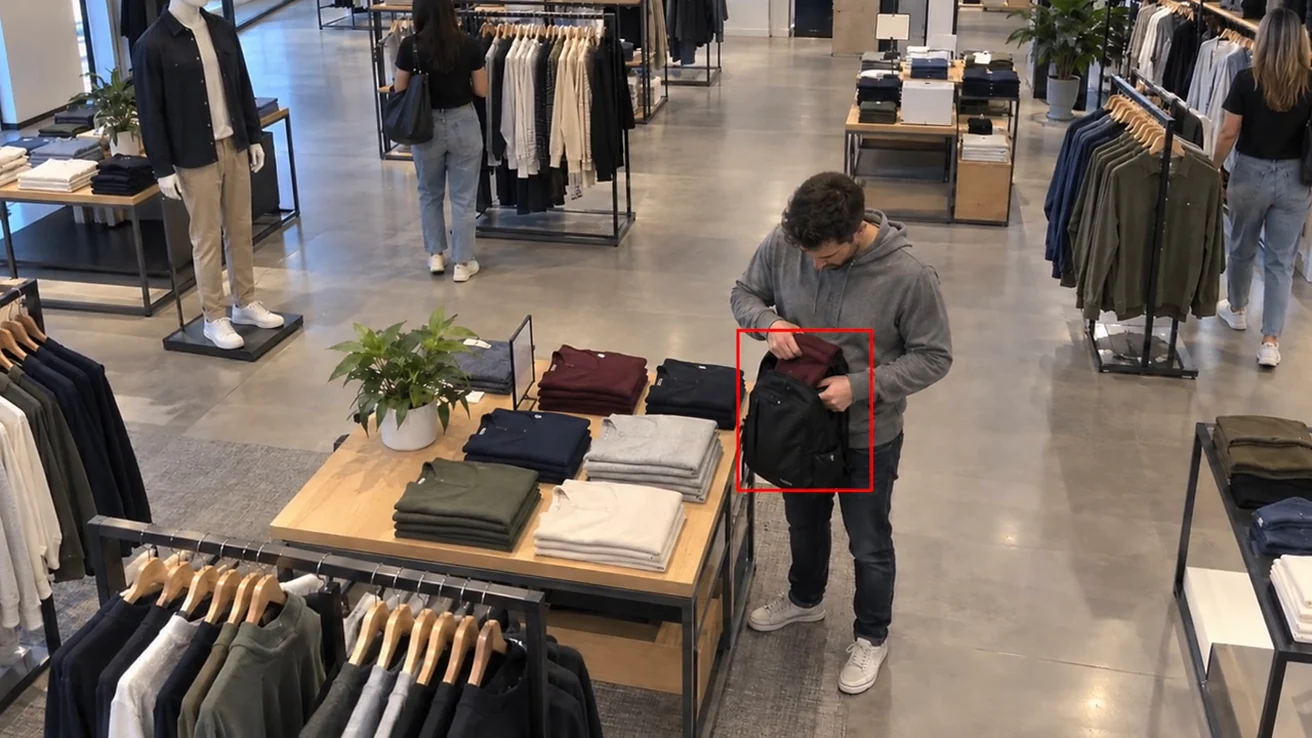
The newer alerts also address more specific tasks. Concealment and grab-and-run alerts are aimed at retail loss prevention. Blocked-door and wrong-way-driving alerts address different operational risks. Transport Number Mode helps logistics teams search shipping containers by identification number. These are distinct functions, with their own configuration and coverage requirements, rather than one general-purpose detector that understands every situation.
Verkada Maps, introduced in beta, adds a spatial view of the same environment. Teams can see devices, active alerts, and camera coverage, and authorized users can take supported actions such as remotely unlocking a door. During an incident, that layout can make the relationship between a camera, an entrance, and a nearby alert easier to understand than a list of device names.
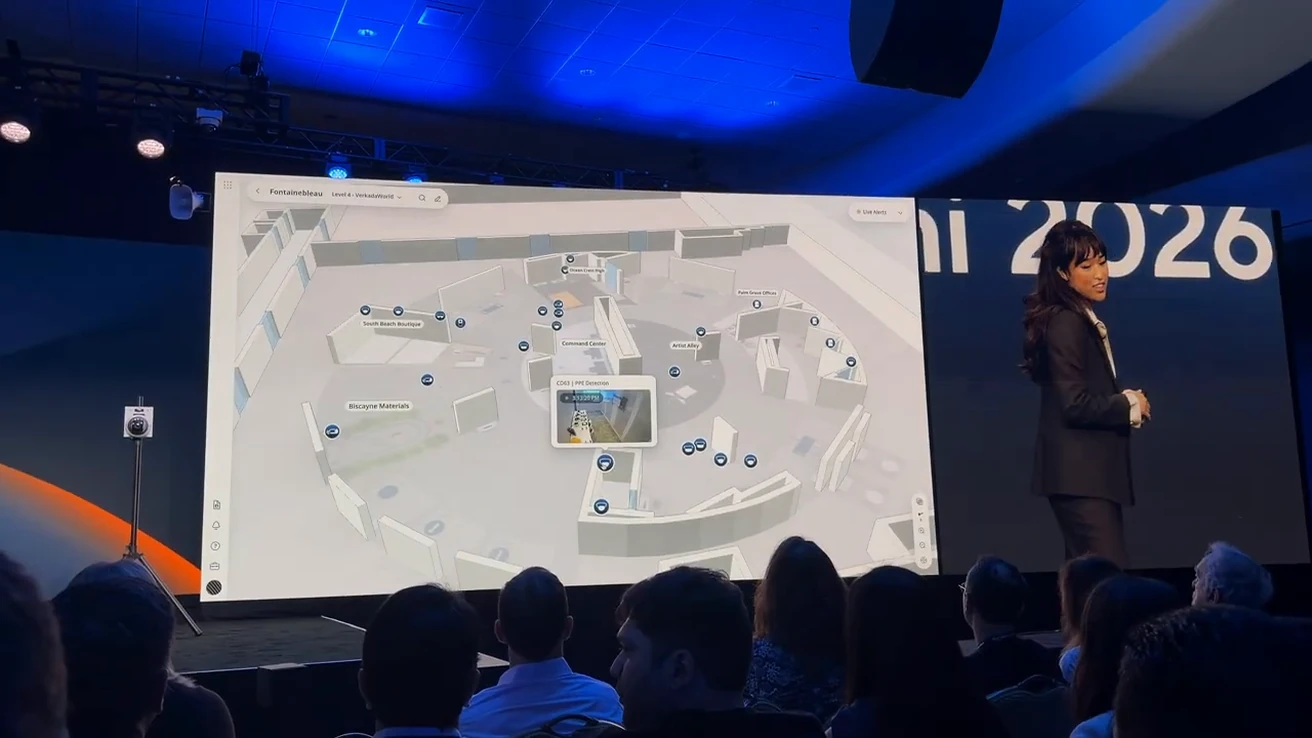
Our earlier Verkada security system review provides background on the platform; the important 2026 development here is how live video and other event sources work together.
Catalyst: connecting Verkada data to external AI platforms
Abraham and I also discussed Catalyst, Verkada's Model Context Protocol integration. MCP provides a way for an AI application to connect to external tools and information. Catalyst connects approved AI platforms, including Claude, ChatGPT, and Gemini, with data from Command.
The initial rollout is read-only, and Verkada describes Catalyst as a private beta. That distinction matters: an AI assistant analyzing information from Command is not the same as giving it permission to change access rights or operate doors. A wider workflow may involve actions in another connected system, but those require their own tools and authorization.
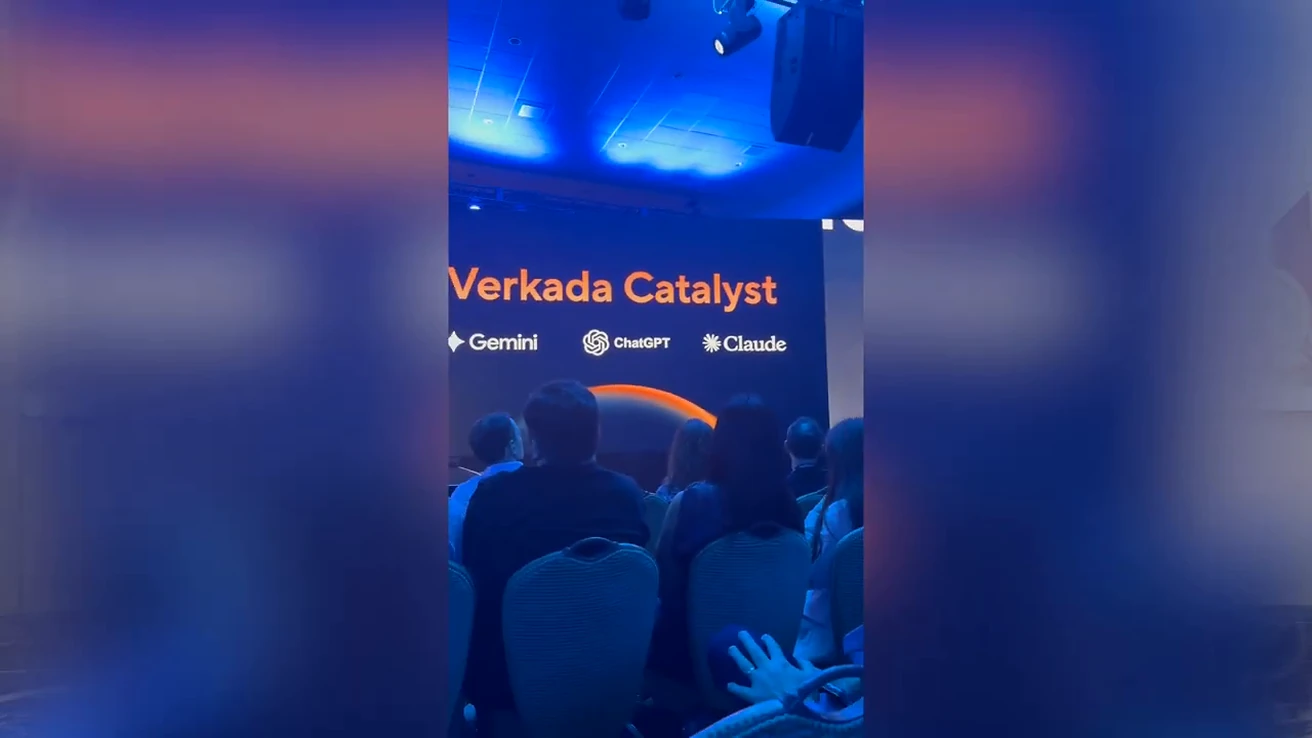
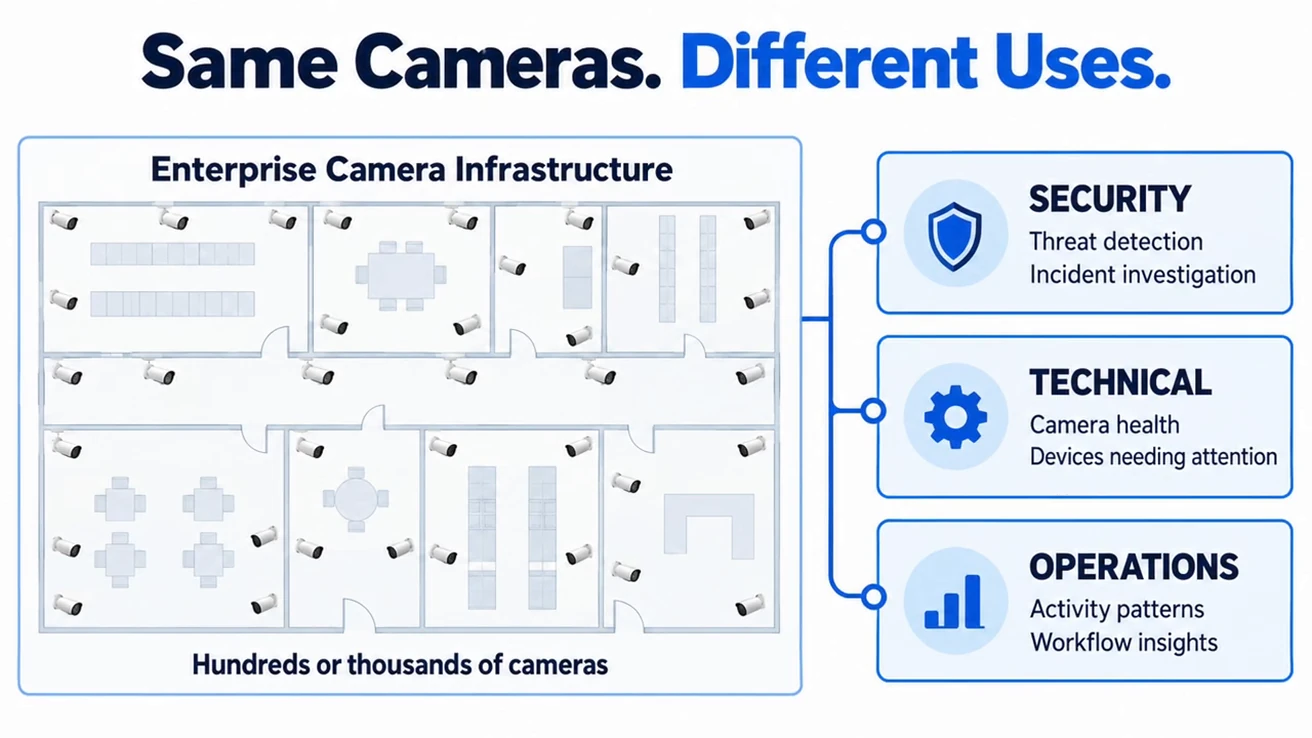
The practical examples interested me more than the protocol itself. An IT team could use camera thumbnails to flag an obstructed or dirty lens. An operations team could review whether visible shelves appear stocked. The restaurant example discussed at the event was a readiness check across locations: whether dining areas appear prepared and whether the scene suggests the site is ready to open.
Those examples describe possible workflows, not a guarantee that a camera can establish staffing compliance or understand every operational condition. Someone must define the task, choose appropriate views, and check the output. Scheduled reports also depend on the agent and workflow configuration; connecting Catalyst alone does not create every automation.
For a broader perspective, NVIDIA founder and CEO Jensen Huang said on May 18, 2025: “Physical AI and robotics will bring about the next industrial revolution.” The NVIDIA announcement concerned robotics development, not an endorsement of this particular Verkada workflow. The relevant connection is the growing use of AI to interpret and interact with physical environments.
For this deployment, I would start with one repeatable operational question, measure how reliably the system answers it, and expand only when that answer is useful. Verkada's Catalyst and platform integration update describes the beta and example workflows.
Verkada Transportation: cameras, GPS, and vehicle context
My discussion with Verkada's transportation product team focused on a familiar fleet problem: recorded footage may be on a vehicle that has not returned to the depot. Bringing video access, location, and vehicle information into Command changes how a team can approach that investigation, subject to the vehicle's connectivity and system configuration.
The announced lineup includes three ruggedized camera models: the KCD41-E dome, KCF61-E fisheye, and KCW41-E wedge. The KGX61 Transportation Gateway powers and connects the cameras while capturing GPS and vehicle telemetry. Camera placement and suitability need to be checked against each model's installation documentation rather than inferred from its shape.
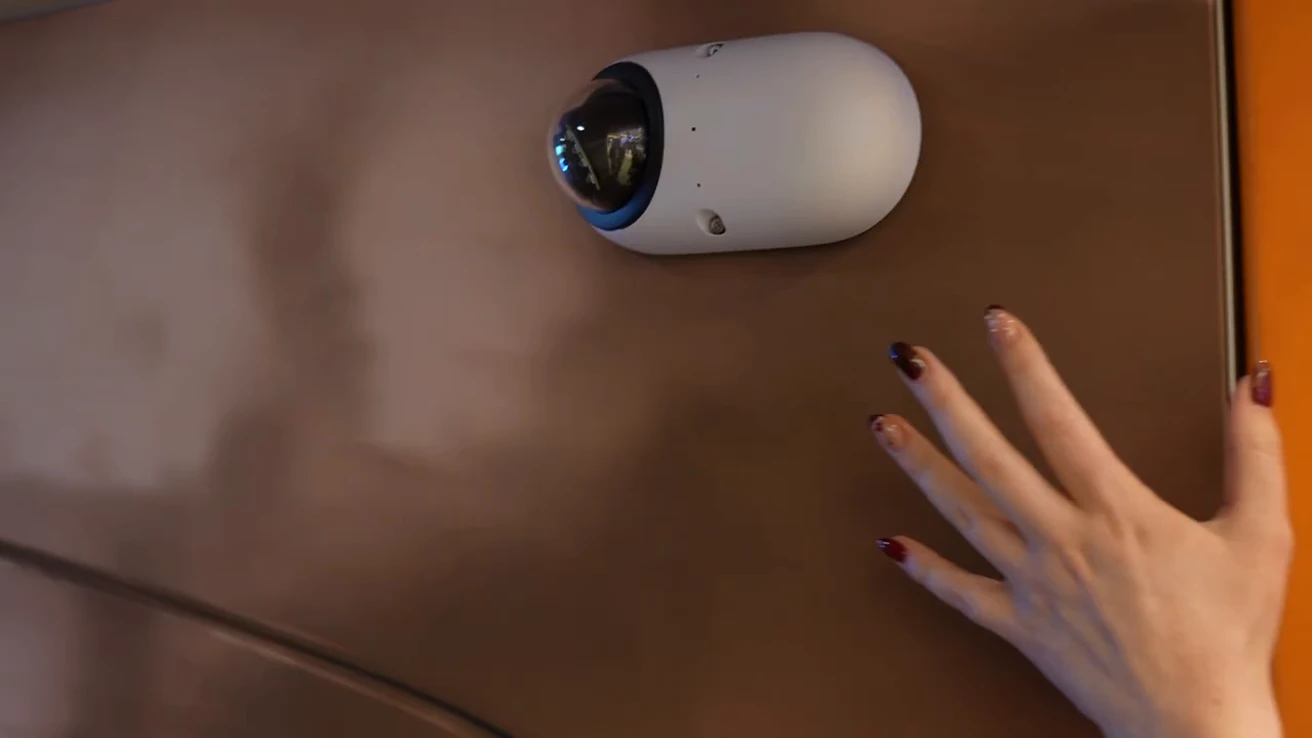
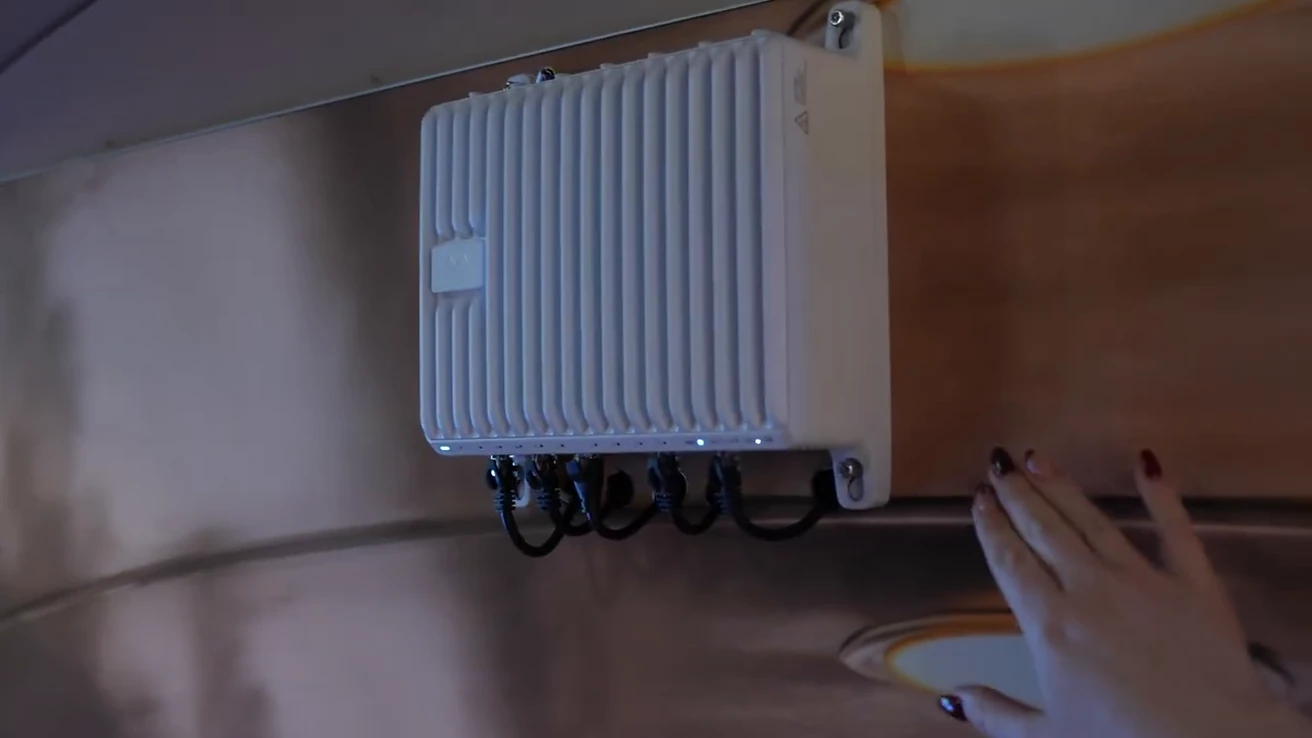
Transportation camera hardware shown at the event. Select the exact model and mounting arrangement for the vehicle.
1 / 3
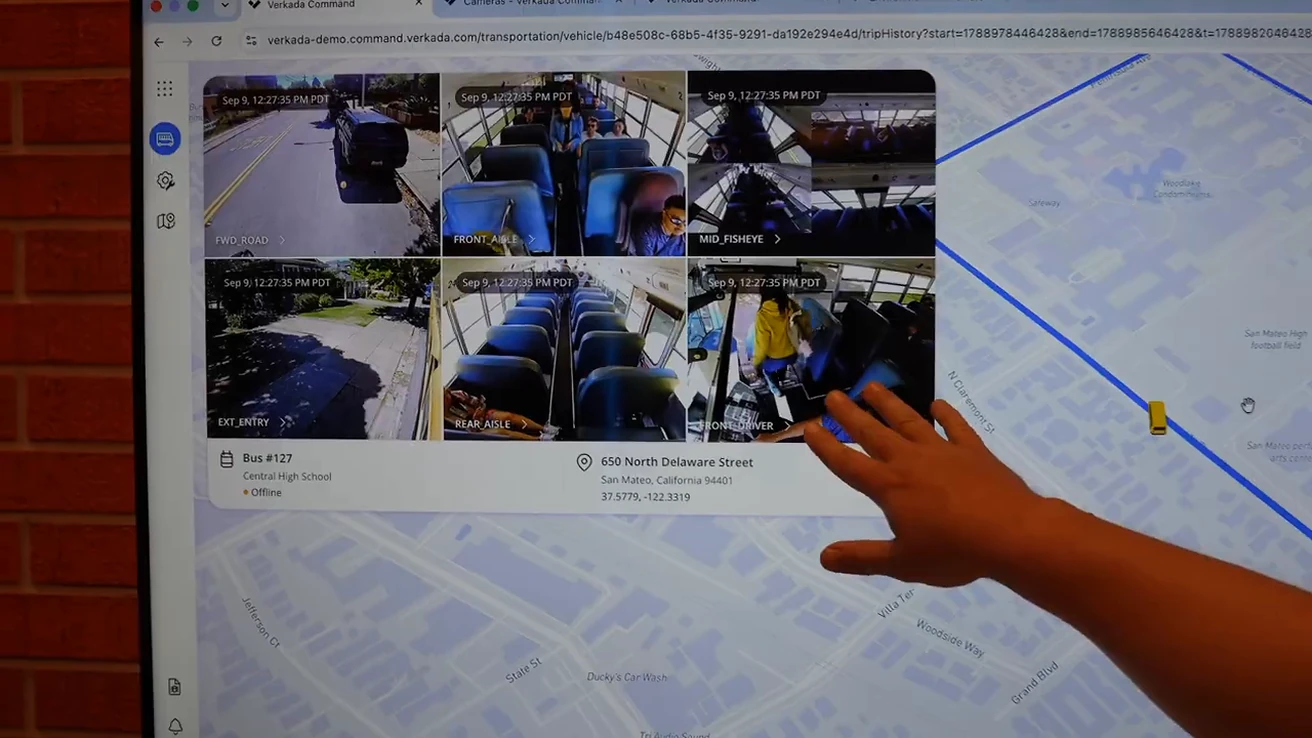
Inside Command, the transportation workflow brings together vehicle locations, trips, video, fleet health, and driving events. For a school district, that could connect an investigation involving a bus with the relevant campus footage. For another fleet, the useful context might be the vehicle's position and video around a harsh-braking event.
The school-bus scenario illustrated in the video explains the architecture; it is not a measured result from a deployed district. Remote access also does not eliminate the need to evaluate cellular coverage, retention, power, and installation requirements.
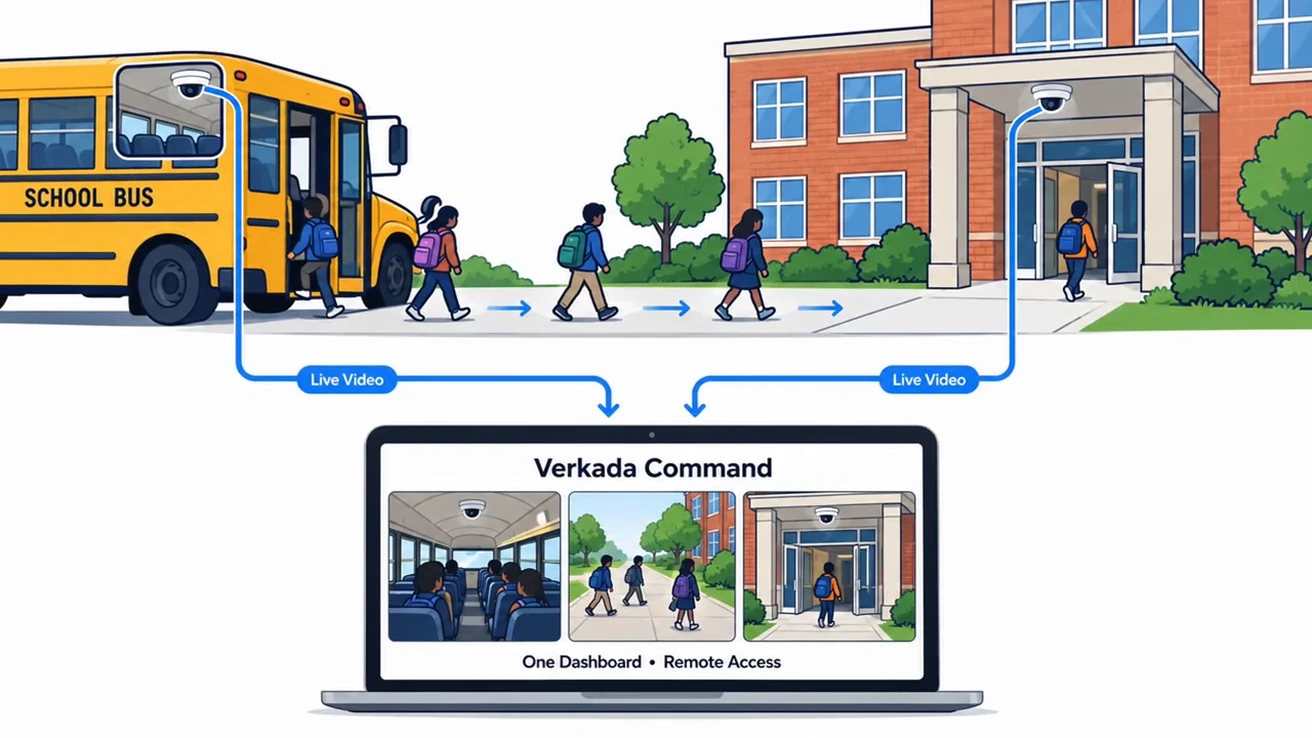
As checked on October 21, 2026, Verkada Transportation is announced for availability on November 30 in the US and Canada. Organizations planning a deployment should confirm the current delivery schedule and vehicle requirements before setting a rollout date.
Verkada Sound Systems: music, announcements, and security audio
Dominic Komarek, Senior Product Manager at Verkada, described an issue that will be familiar to multi-site retailers: an amplifier from one vendor, speakers from another, a music service, a PA system, and separate security announcements. Keeping that arrangement consistent across locations can take substantial coordination.
Sound Systems brings audio management into Command through two hardware lines. Network Speakers include the NS151, NS261, and NS631. Network Audio Players include the NP21 and NP81, allowing organizations to connect existing audio infrastructure rather than replace it all at once. The NP21 provides two line-level outputs; the NP81 provides sixteen. These outputs should not be confused with built-in amplified speaker channels.
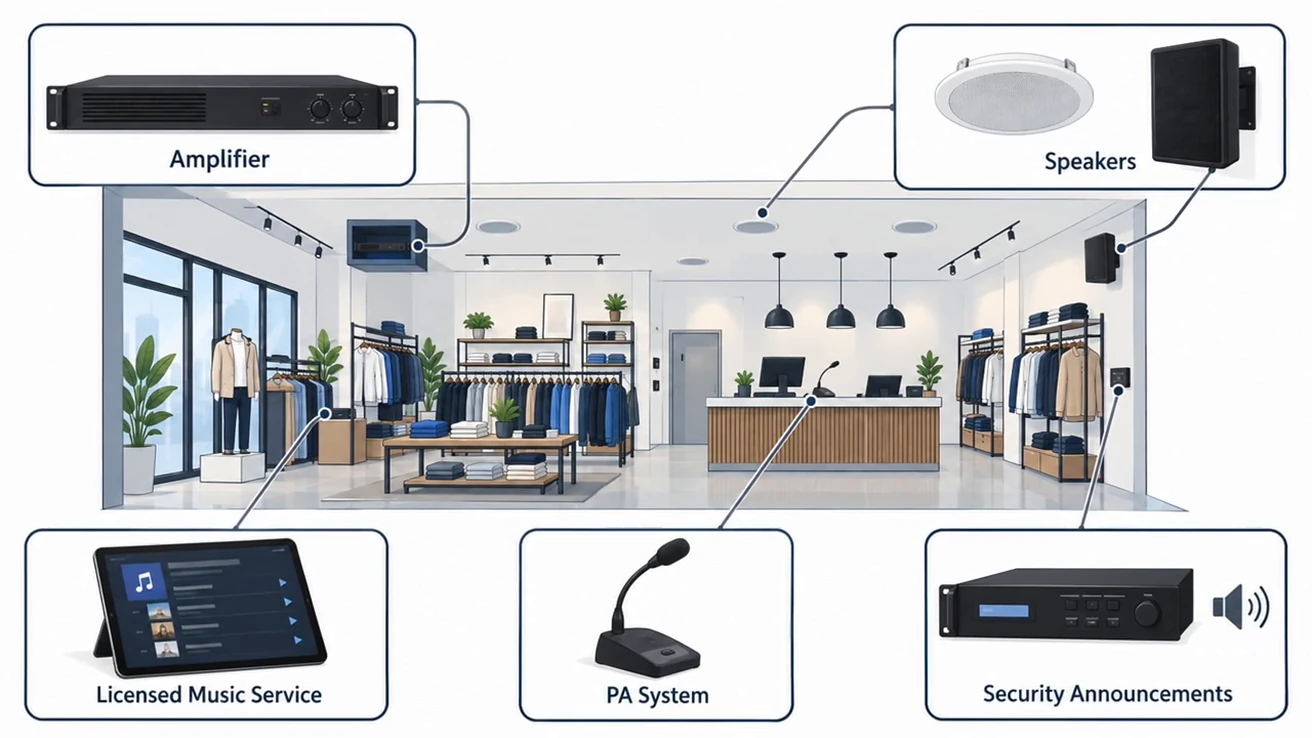
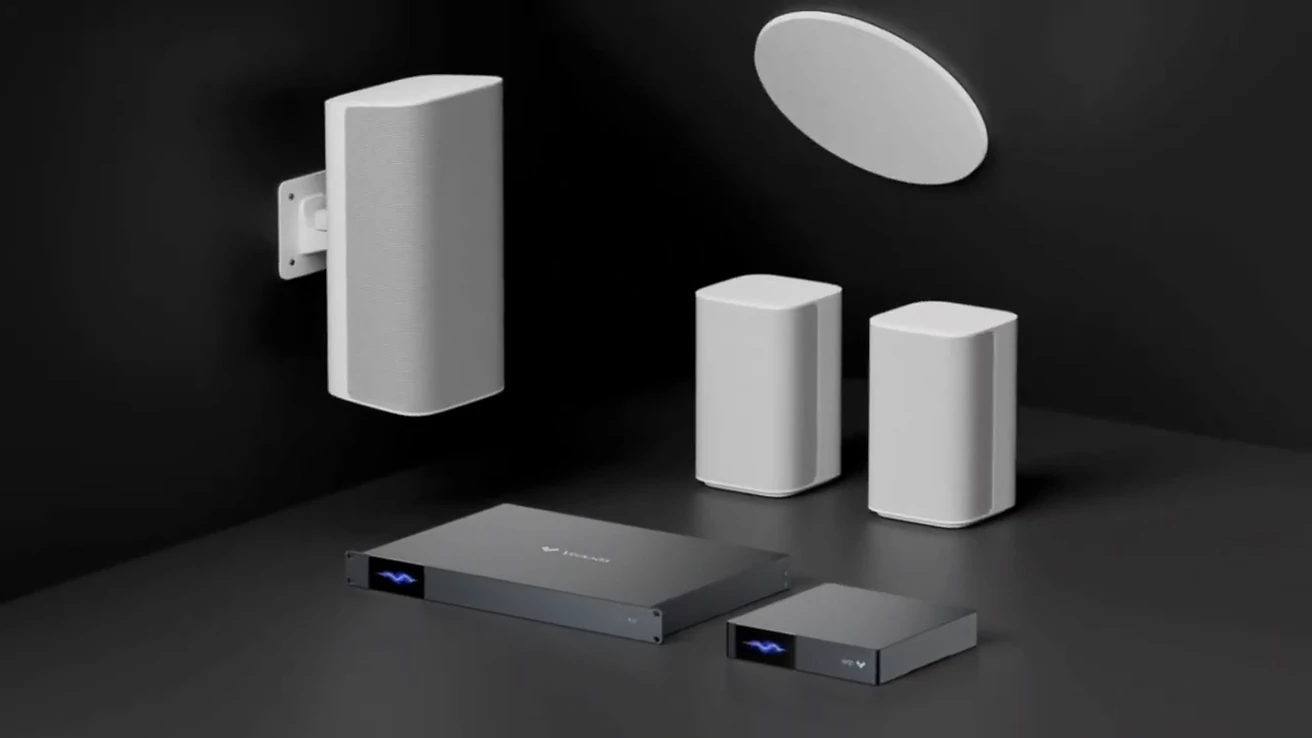
The video illustrates the fragmented audio setup that Sound Systems is intended to simplify.
1 / 3
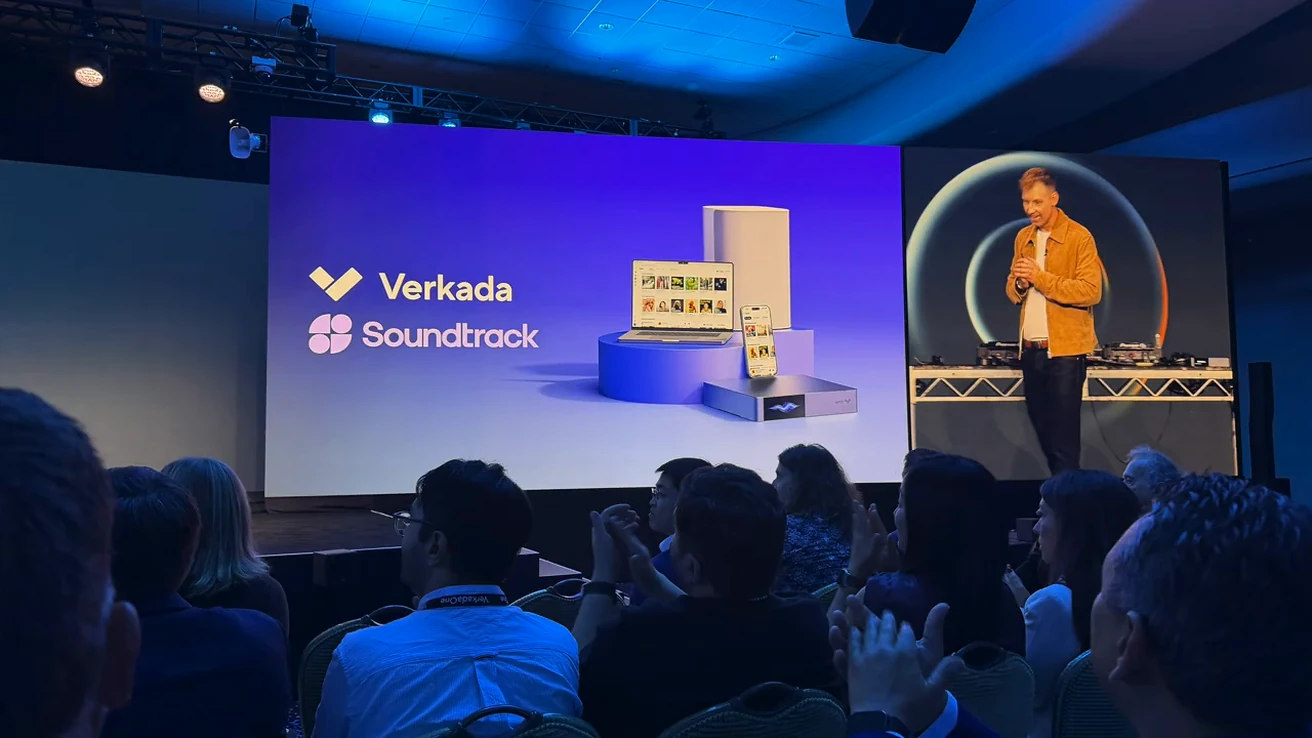
The Soundtrack integration supports commercially licensed music managed through Command. For the buyer, the useful question is what the proposed service and licensing arrangement includes at each site, alongside zoning, announcements, and day-to-day staff controls. Music and security audio share infrastructure, but they have different operational priorities.
When paired with Alarms in a supported configuration, Sound Systems can play warning messages following relevant camera detections and escalate the message if activity continues. That is a security response workflow, separate from routine background music. Teams should test how announcements and deterrence behave in their own spaces. Ordinary network audio should not be assumed to replace a required, specifically approved life-safety notification system.
Verkada's Sound Systems announcement explains the hardware families and integrations.
New hardware: thermal cameras, entrances, and alarms
CTB63 thermal cameras and specialized deployments
Verkada's announced dual-spectrum thermal bullet camera family combines a standard video feed with thermal imaging. The current official model names are CTB63-E and CTB63-TE, covering wide-angle and telephoto variants.
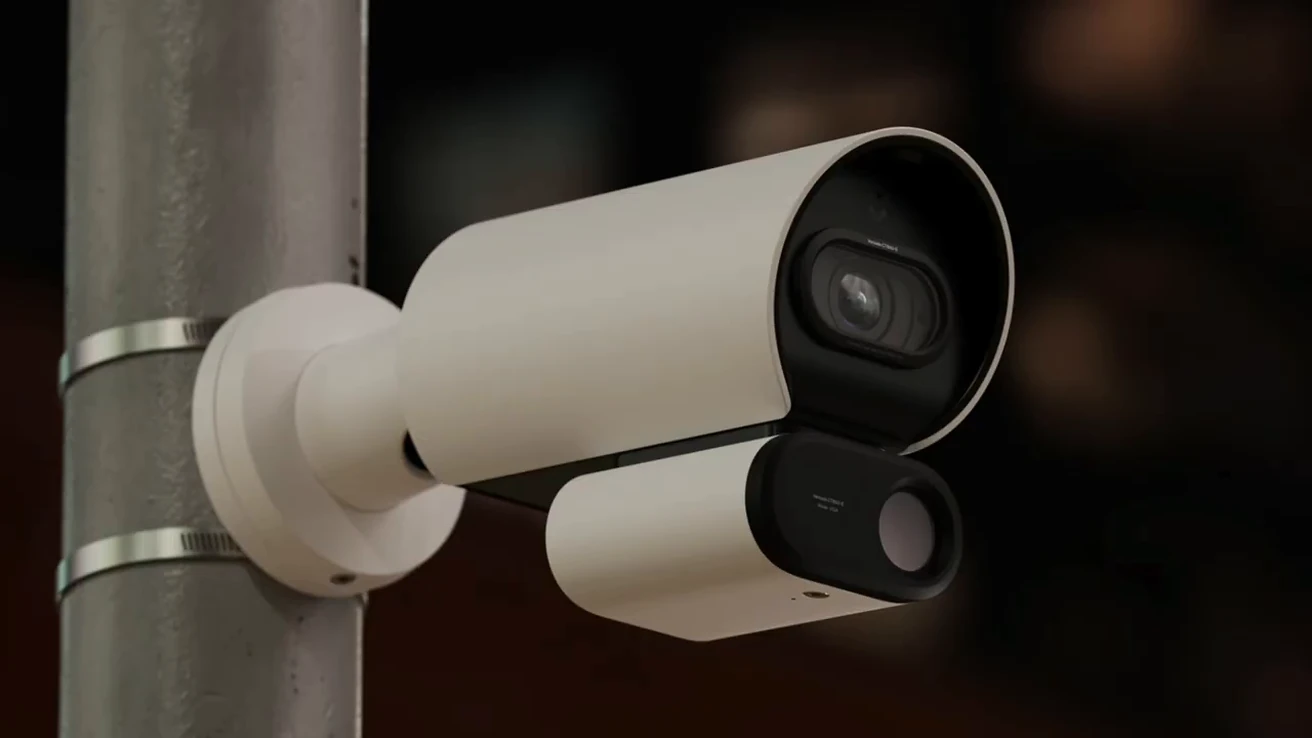
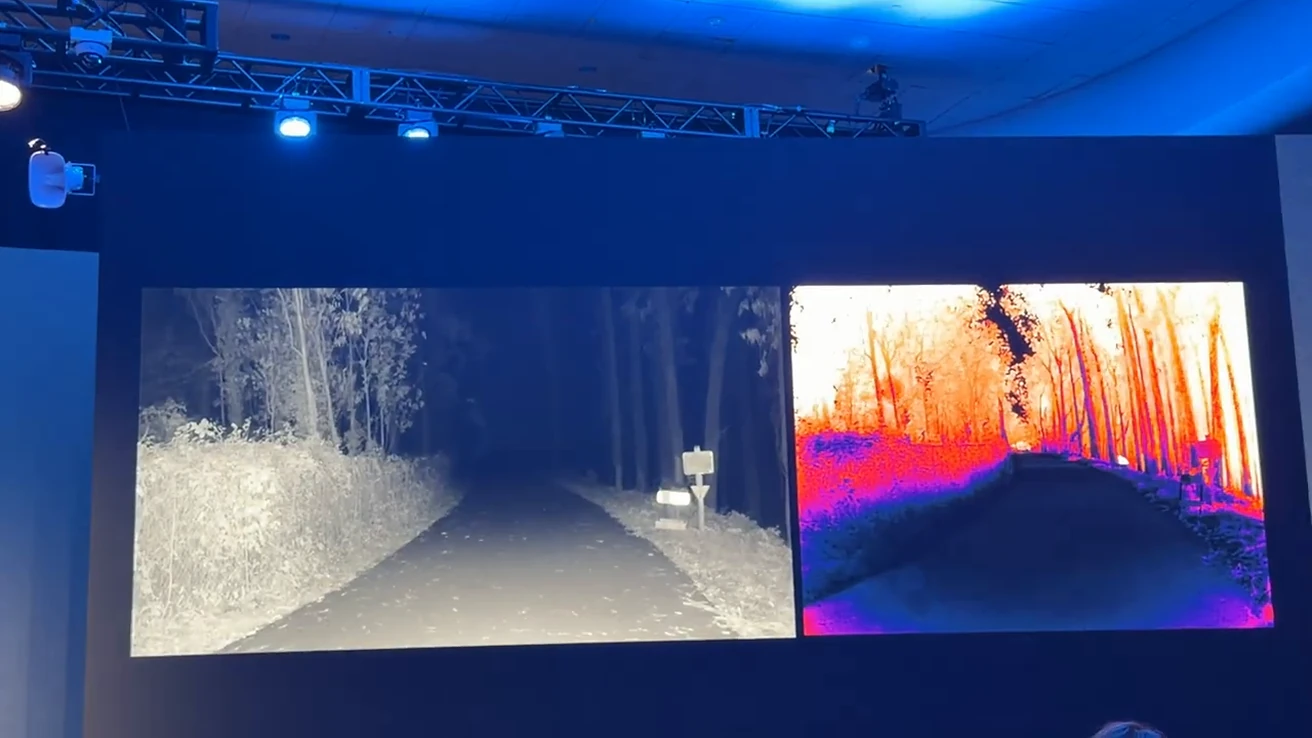
Dual-spectrum thermal camera hardware shown in the video. Current official documentation identifies the announced family as CTB63.
1 / 2
For industrial facilities, utilities, and perimeter security, the benefit is another way to observe activity when visible-light footage alone is insufficient. Temperature insights and supported people and vehicle analytics add other evaluation points. Thermal imaging is not a guarantee of identification through every obstruction or weather condition.
The official thermal camera page lists limited availability beginning November 2026 and notes regional export restrictions. These are unreleased-product specifications and remain subject to change. The wider announcements also include remote and government-grade camera options. A site's requirements must be matched to the exact product and applicable approval, rather than treating a brand-wide claim as sufficient.
TK74, access-control events, and AI reception
The TK74 Touchscreen Intercom has a 7-inch display and supports two-way video calling on supported receiving devices. Verkada's launch documentation identifies Desk Station, Pass on iOS, and Command on iOS for that calling feature. Multi-tenant directories and AI-assisted visitor routing address the practical challenge of finding the right recipient at a shared entrance.

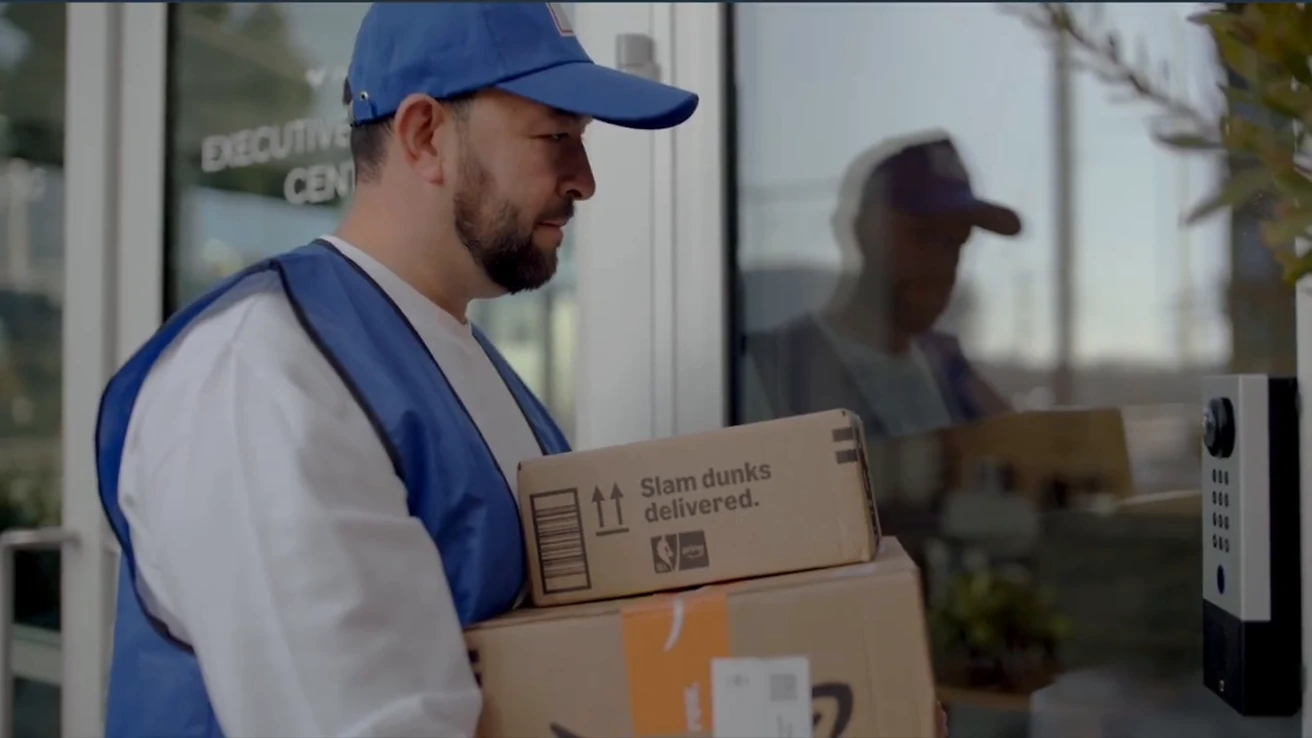
The TK74 presentation illustrates two-way video calling; supported receiving devices and configuration determine the available workflow.
1 / 2
In the delivery demonstration included in the video, the AI reception dialogue asks for clarification about a recipient, identifies the intended tenant, and connects the call. The recipient then admits the visitor. This sequence illustrates routing and human authorization; it does not establish that an AI receptionist independently approves every delivery or makes unrestricted entry decisions.
Access-control events can also join the investigation workflow, and the Pass SDK allows supported access functionality to be embedded in an organization's own mobile app. For more background, our AI intercom guide discusses how these systems change entrance communication. Exact TK74 capabilities are described in the official TK74 introduction.
BP42 and multi-site alarm management
The compact BP42 Alarm Panel targets smaller sites with ten wired input zones and support for Better Sensor Protocol, or BSP. BSP is an addressable sensor protocol intended to simplify sensor deployments. Compatible devices, wiring, power limits, and layout still need to be specified for the actual site.
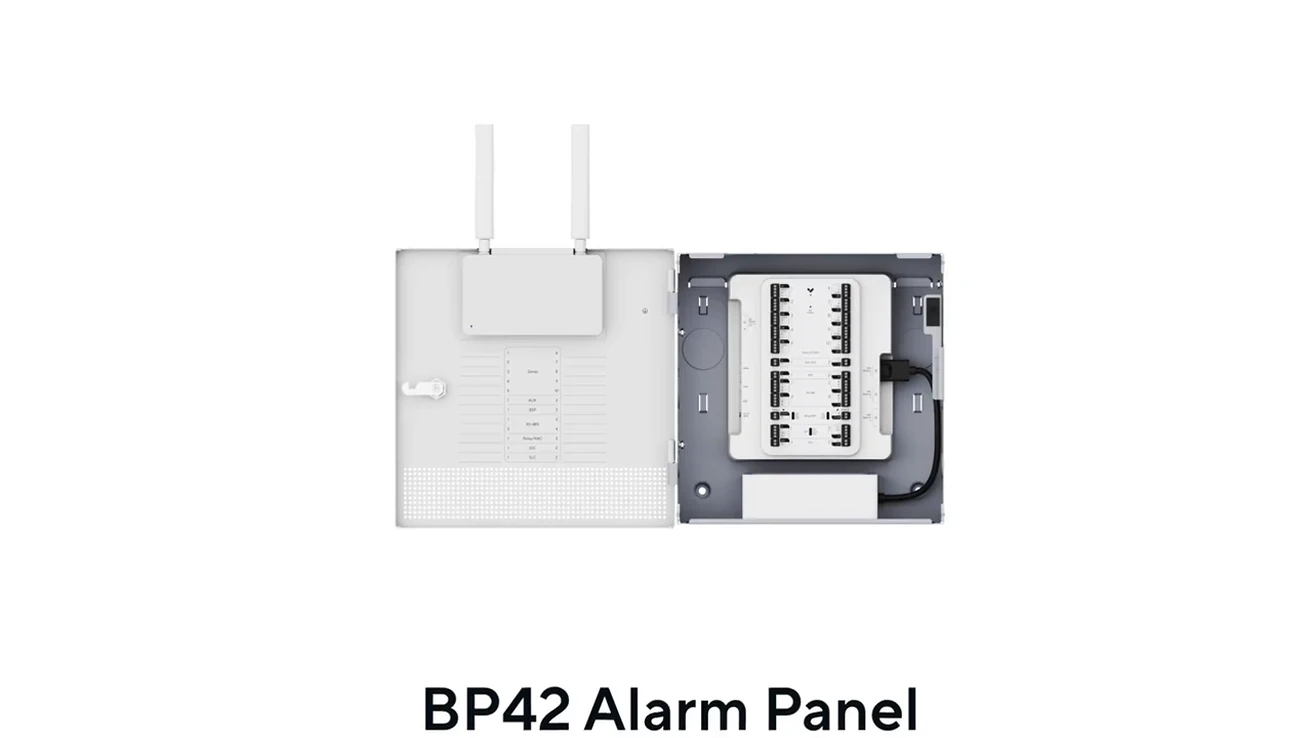
For organizations with many locations, centralized system-health monitoring and alarm management may be more useful than a visually dramatic hardware change. These tools help teams identify where attention is needed. They do not, by themselves, establish a monitoring contract, dispatch policy, or guaranteed emergency response.
What I would verify before a rollout
The announcements point toward a broader operational platform, but a purchasing decision needs more than a feature list. I would ask the integrator to demonstrate one complete workflow using the devices, permissions, network conditions, and services proposed for the project.
| Item | Position at the October 21, 2026 source review | Planning implication |
|---|---|---|
| Catalyst | Private beta; initial Command integration is read-only | Confirm access, supported tools, data permissions, and review procedures |
| Maps | Introduced in beta | Confirm access and supported devices and actions |
| Transportation | November 30 availability stated for US and Canada | Confirm ordering, delivery, vehicle installation, and connectivity |
| CTB63 thermal series | Limited availability beginning November 2026; regional restrictions | Confirm variant, final specifications, and eligibility |
| Other software announcements | October release information generally specifies October 8 unless noted otherwise | Verify the feature in the actual organization's configuration |
Beyond availability, ask for an itemized proposal covering hardware, software licenses, retention, installation, connectivity, maintenance, and any monitoring or music services. Verkada's pricing catalog separates hardware from additional licensing; there is no single meaningful price for every Command deployment.
The Command system requirements also deserve attention before procurement. Supported browsers and network access are part of the working system. Cloud management does not mean that every function remains equally available during an internet or power outage; ask for the behavior of the specific devices and workflows being proposed.
NIST researcher Elham Tabassi put the evaluation question well in her January 26, 2023 AI Risk Management Framework launch remarks: “We no longer only focus on whether technology works, but also on how it works.” Her remarks on trustworthy AI address AI generally. For this project, that means checking permissions, privacy, human review, and how an operator handles an incorrect result.
Command Connector's additional third-party camera support, including passive ONVIF mode and H.265, and the platform's API updates are also relevant to existing installations. These expand integration options; they do not mean every third-party camera gains every native Verkada feature. Confirm compatibility and feature scope in writing.
After VerkadaOne, my main takeaway is that the platform's value increasingly depends on how its parts work together. The right starting point is a concrete operational problem: following an incident, managing a fleet, maintaining cameras, or communicating across locations. If you need help translating that problem into a deployment plan, the Pipl Systems security integrator directory provides a place to begin comparing local providers.
Frequently asked questions
Is this a review of one Verkada camera?
No. It covers the 2026 Command platform updates and how cameras, software, access control, alarms, transportation, and audio can support connected workflows. It is based on event reporting and documentation, rather than a long-term test of every device.
Can Catalyst change settings or unlock doors?
Catalyst is currently in private beta, and Verkada describes the initial Command integration as read-only. Do not treat it as general permission for an external AI agent to operate doors or change security settings. Any action in a wider workflow needs its own supported tools and authorization.
Can existing speakers work with Verkada Sound Systems?
Network Audio Players are intended to bridge existing audio systems to Command. An installer should check the actual amplifiers, connections, zones, and service requirements before specifying an NP21 or NP81.
Are the transportation and thermal products already available?
At the October 21, 2026 source review, transportation availability was listed for November 30 in the US and Canada. The thermal series listed limited availability beginning November 2026, with regional restrictions. Confirm these dates and eligibility before ordering.
Does connecting a third-party camera provide all native features?
Do not assume so. Command Connector supports documented third-party configurations, but compatibility and feature availability must be checked for the camera, connector, and intended workflow.
What should an organization ask for before committing?
Ask for a demonstration of its actual use case, an itemized hardware and service proposal, confirmed release status, retention and outage behavior, and a documented permission and response plan. Those answers are more useful than a feature count alone.