

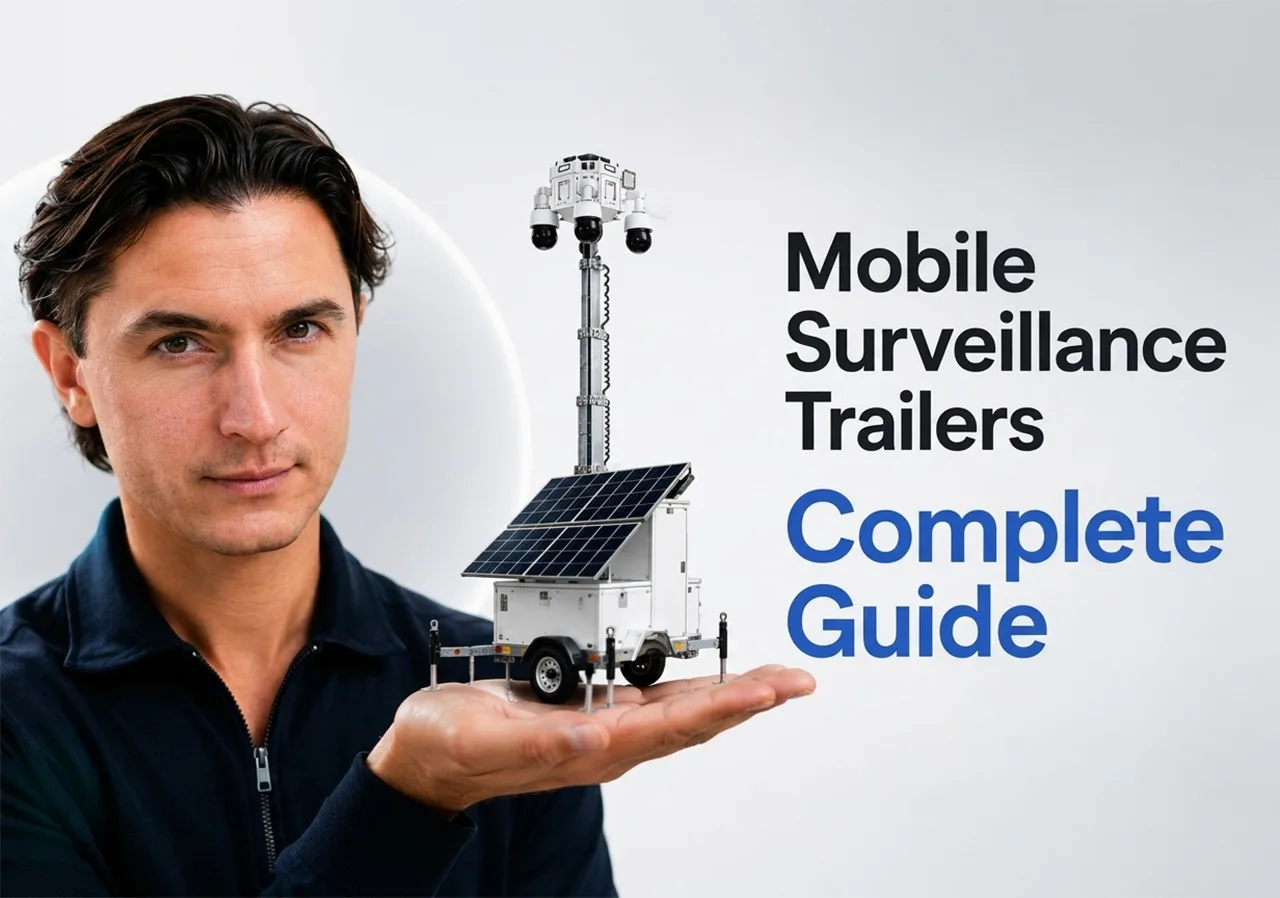
Key Takeaways:
- 💎 Immediate 24/7 Protection: A mobile surveillance trailer provides an instant, self-contained security solution for locations lacking permanent power, internet, or physical structures.
- 💎 AI-Driven Automation: Modern mobile security trailers utilize advanced artificial intelligence to filter out false alarms, perform license plate recognition, monitor worker safety, and alert remote operators only when a verified threat occurs.
- 💎 Active Deterrence: Instead of just recording crimes, these intelligent platforms use personalized audio warnings, strobe lights, and sirens to intervene and stop incidents in real time.
- 💎 Crucial for Insurance: High-risk environments like construction sites and energy projects often require professional mobile surveillance as a strict condition for maintaining proper insurance coverage.

If you have ever driven past a construction site, you have probably noticed a trailer with a tall mast and several security cameras mounted on top. At first glance, it looks like nothing more than a few cameras on wheels. In reality, these systems represent an entire industry that has been growing rapidly over the last several years.
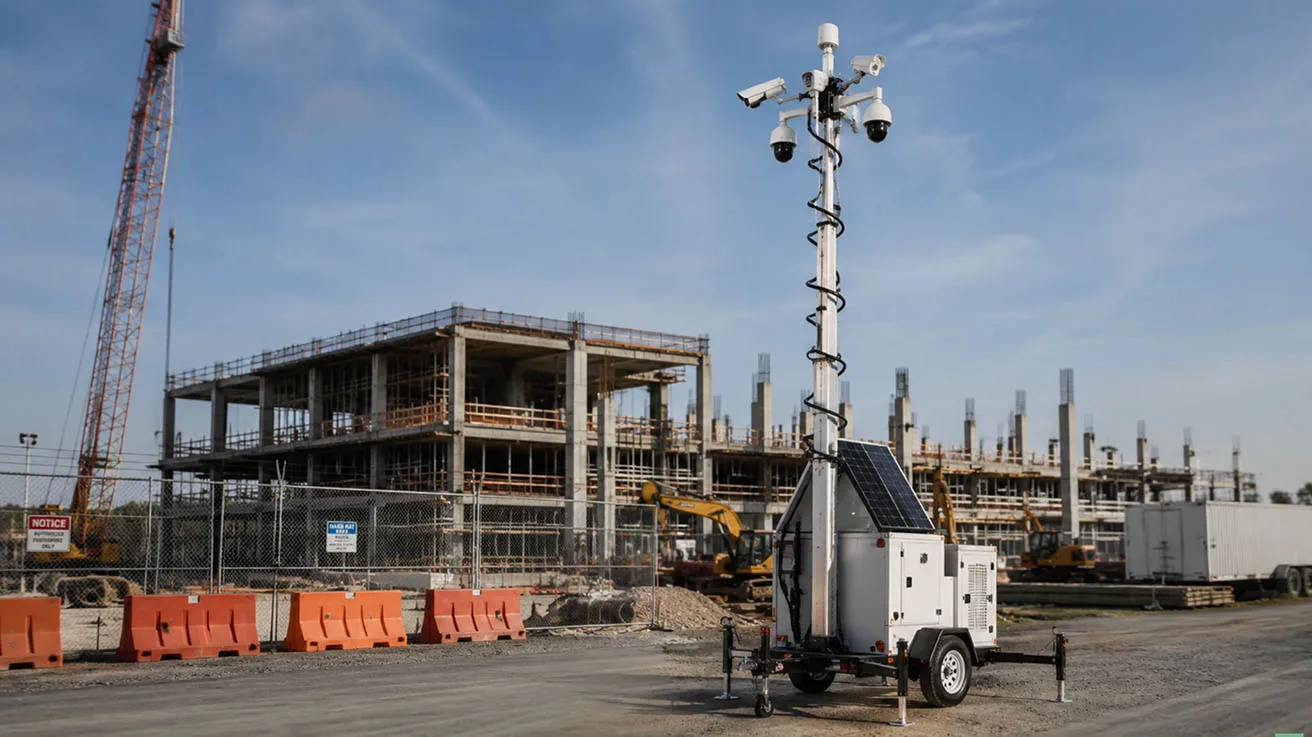
Today, mobile surveillance trailers are used far beyond basic construction sites. You will find them protecting industrial facilities, energy projects, parking lots, public events, and many other locations where businesses need to deploy professional security quickly and maintain reliable protection around the clock.
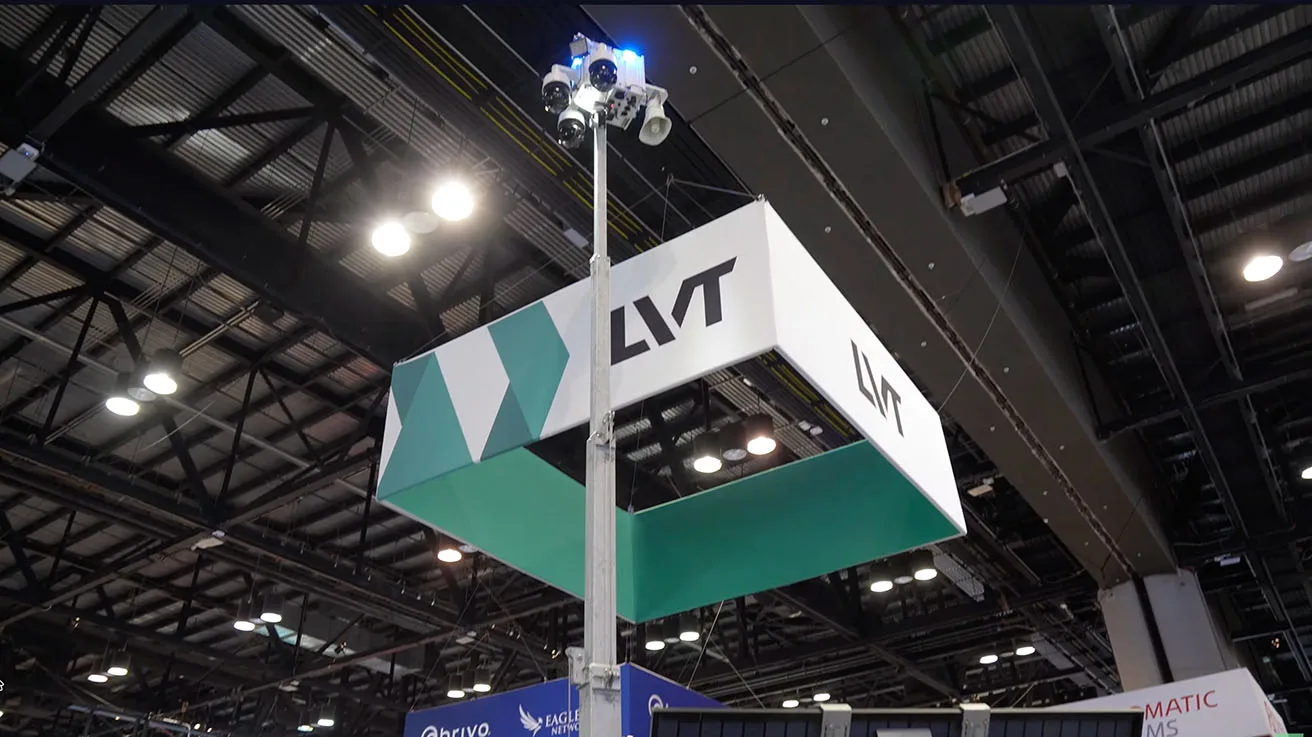
I first became interested in this topic several years ago. One of my first opportunities to learn about these systems in depth was at the GSX 2024 security show in Orlando, where I spoke with the team from LVT, one of the industry's leading manufacturers. Since then, I have continued researching this market by speaking with manufacturers, security integrators, remote monitoring providers, software developers, and the end users who rely on a mobile security trailer every day.
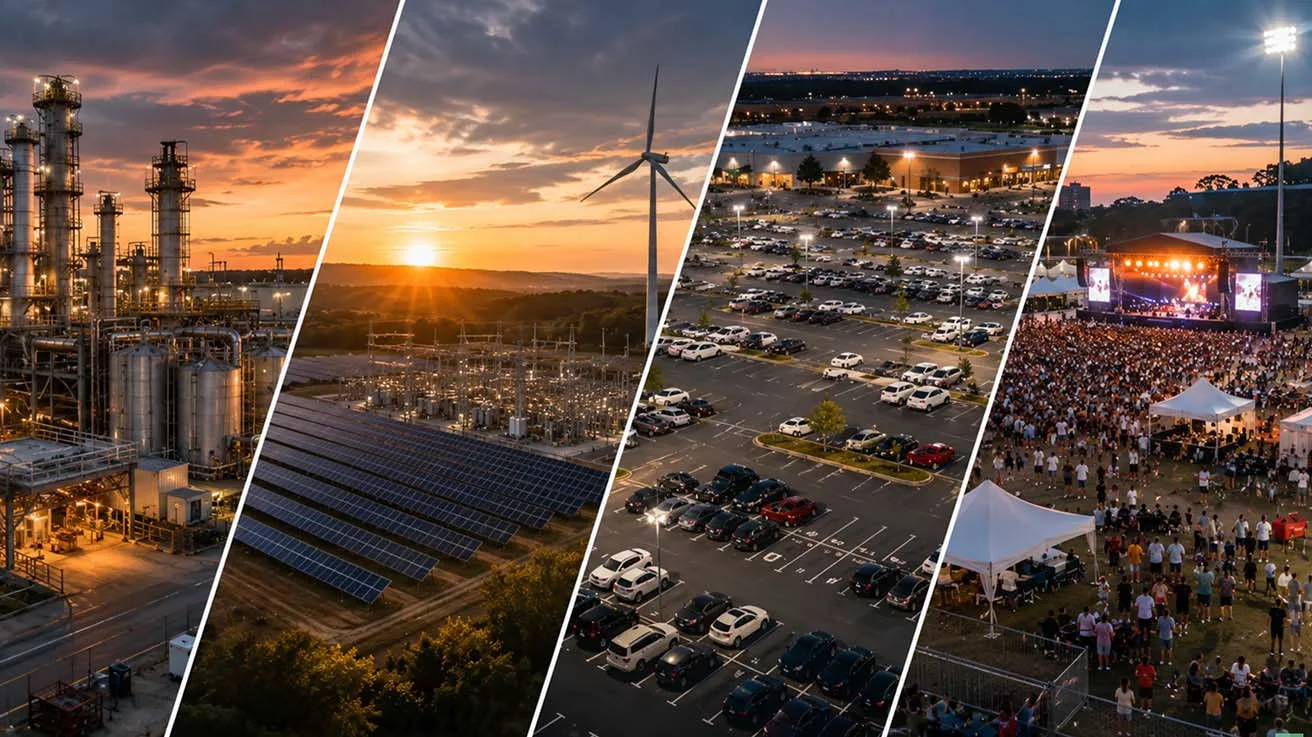
Those conversations have given me a much better understanding of the strengths of these systems, alongside the practical realities that rarely appear in marketing materials. In this guide, I want to share the real-world observations and industry experience that security professionals have shared with me. We will look at what a mobile surveillance trailer actually is, how it works, and why these units have become a foundational part of how businesses manage security operations efficiently.
The Problem with Traditional Security on Job Sites
Before we look at the trailer itself, we first need to understand the exact problem it was designed to solve.
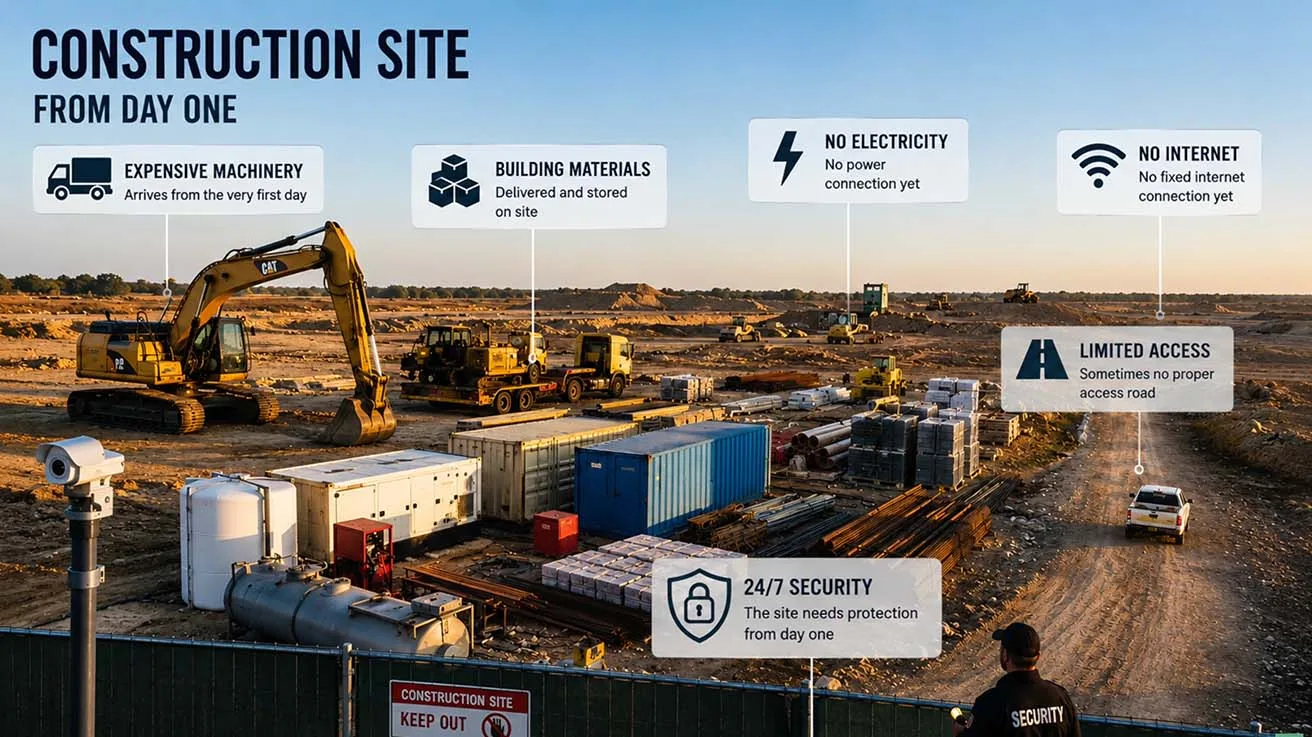
Imagine a typical construction jobsite. From the very first day, expensive machinery, tools, building materials, fuel, and other valuable equipment start arriving on site. The building itself, however, may not exist yet. There is typically no electricity, no fixed internet connection, and sometimes not even a proper access road. At the same time, the site already requires strict 24/7 security.
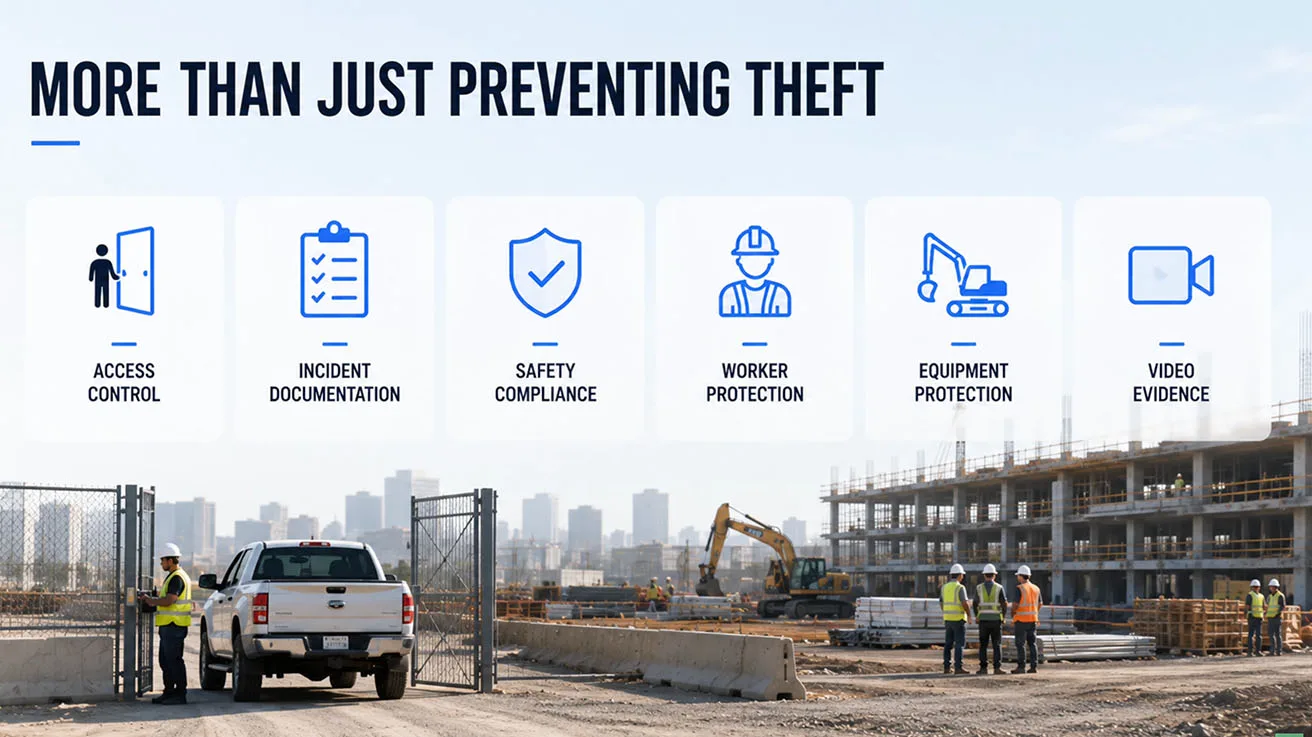
This requirement is not just about preventing theft. Companies also need to:
- Control exactly who enters the property.
- Document incidents accurately.
- Monitor daily safety compliance.
- Protect workers and heavy equipment.
- Maintain a clear video record of what happened on site for liability purposes.
If something is stolen, damaged, or involved in an accident, management needs reliable video evidence to understand exactly what happened. Almost every security professional I have interviewed described the exact same challenge. Businesses need a complete security solution from the very first day of a project, even though the infrastructure required for a traditional security system simply does not exist yet.
There is another vital reason why a mobile surveillance trailer for construction sites has become so popular. That reason is insurance.
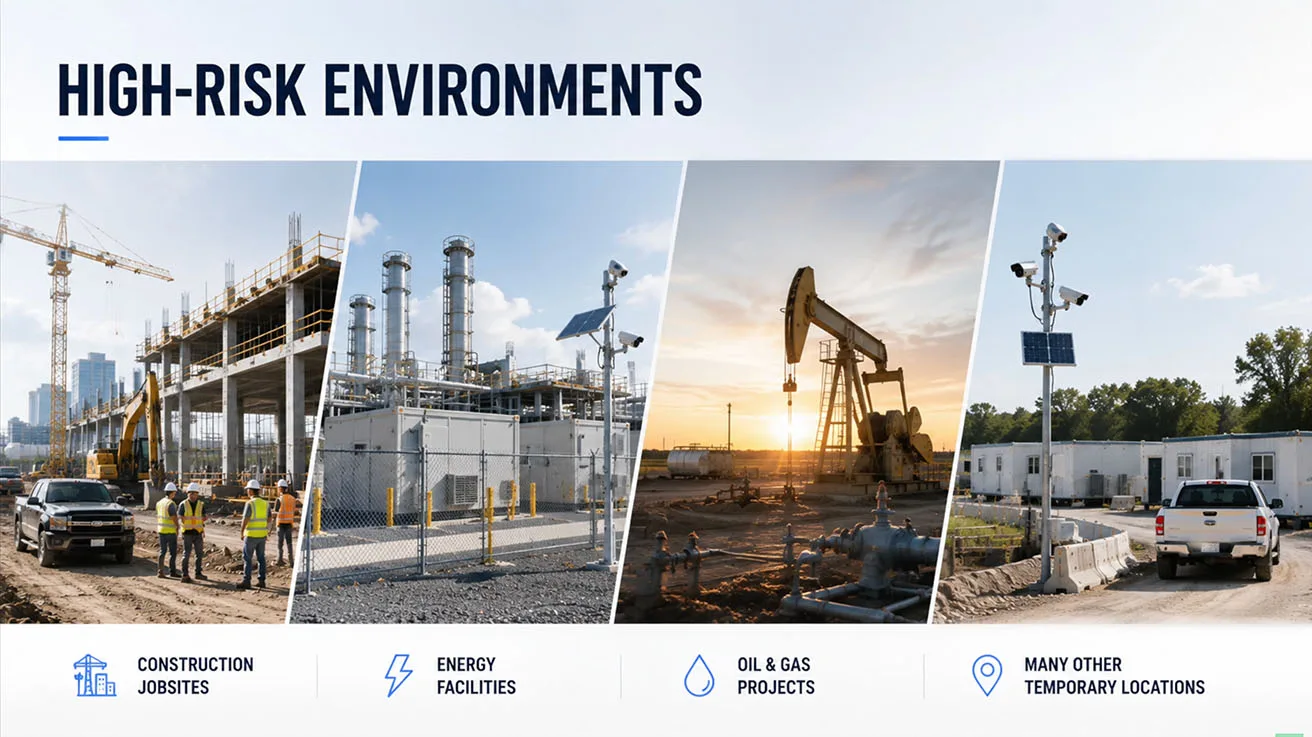
Construction jobsites, energy facilities, and oil and gas projects are considered high-risk environments. They contain expensive equipment while the site layout changes constantly. Equipment is relocated, new structures appear, access points shift, and the overall landscape looks completely different from one week to the next. Because of these fluid risks, having a professional security system is often a mandatory part of the insurance process.
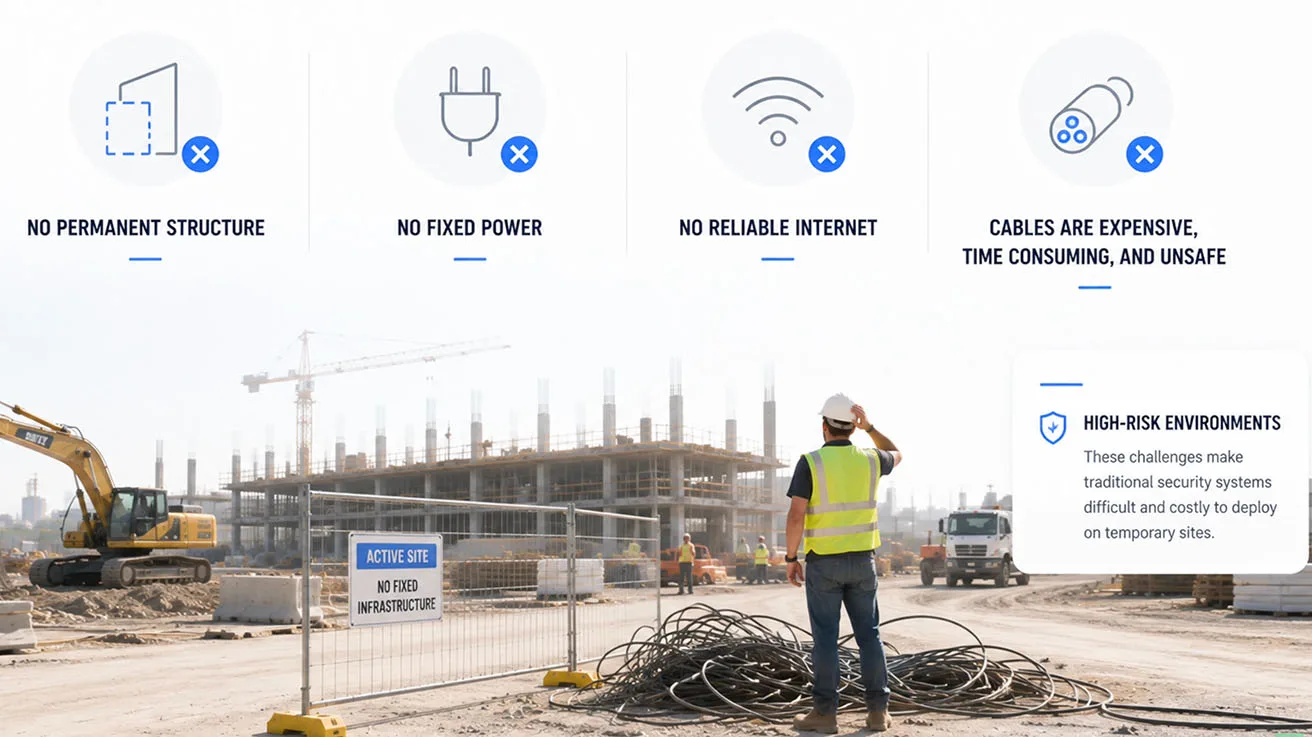
Installing a traditional fixed video surveillance system vs a mobile security trailer in these environments is highly impractical. There is no permanent structure to mount cameras on, no fixed power grid, and running cables across an active construction site is expensive, time-consuming, and unsafe. Even if a traditional system could be installed, the project might only last a few months. Once the work finishes, the entire system has to be manually removed and relocated.
1 / 2
Businesses need a solution that can be delivered to a site, deployed within hours, operate off-grid, and be repositioned effortlessly to reduce blind spots as the project develops.
Why the Mobile Surveillance Market is Growing Fast
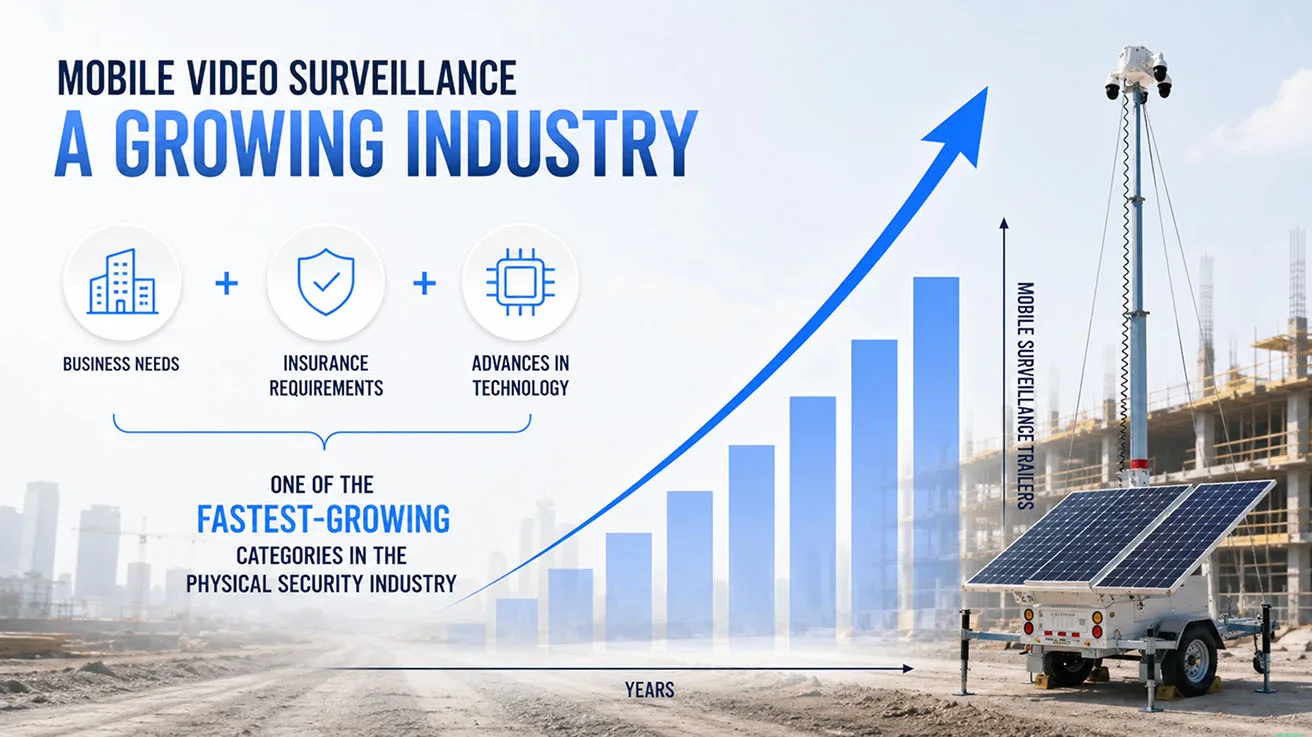
The concept of mobile video surveillance is not entirely new. However, if you look at the market today, growth has accelerated dramatically over the last three to five years.
Several critical technologies have matured simultaneously, making these solutions far more practical.
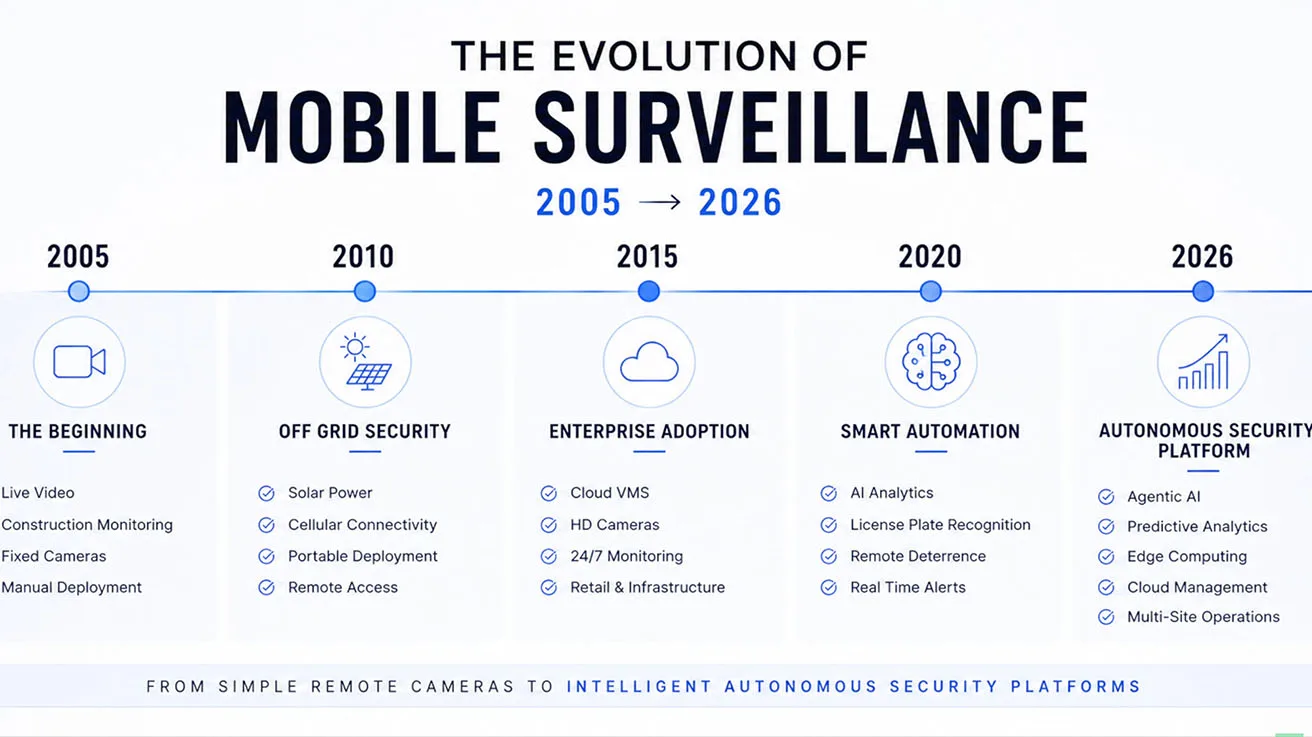
First, modern security cameras have become significantly better and more affordable. They offer superior image quality, perform exceptionally well in low-light conditions, and cover much larger physical areas than previous generations. Businesses can now monitor more of their property with fewer cameras while capturing highly detailed evidence.
Second, cellular and satellite connectivity has improved dramatically. Today, sites can easily rely on LTE or 5G networks. Remote off-grid locations increasingly use satellite internet services like Starlink. This makes it entirely possible to transmit live video from locations where traditional wired internet is unavailable.
However, the single biggest reason behind the rapid growth of the mobile security trailer market is artificial intelligence.
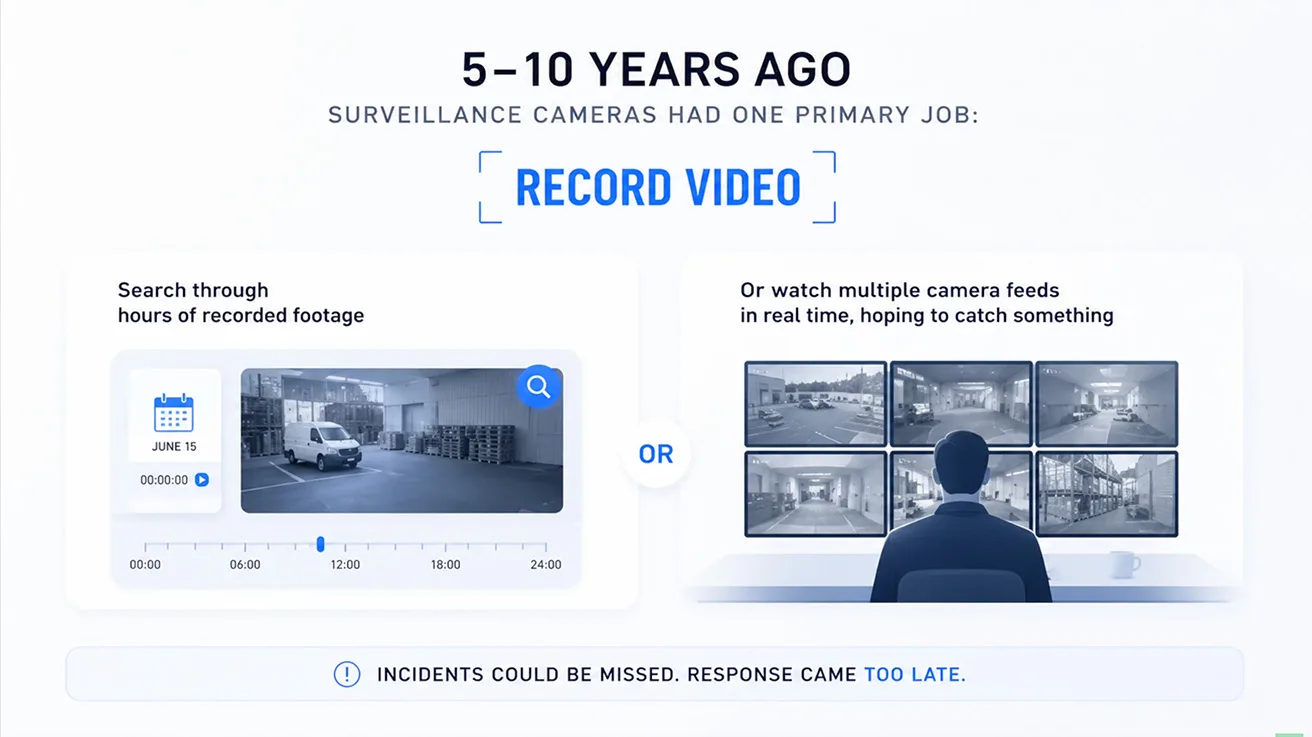
Only five to ten years ago, most surveillance cameras had one primary job: recording video. If an incident occurred, a security operator had to manually search through hours of recorded footage or continuously watch multiple live feeds, hoping to notice an event before it was too late.
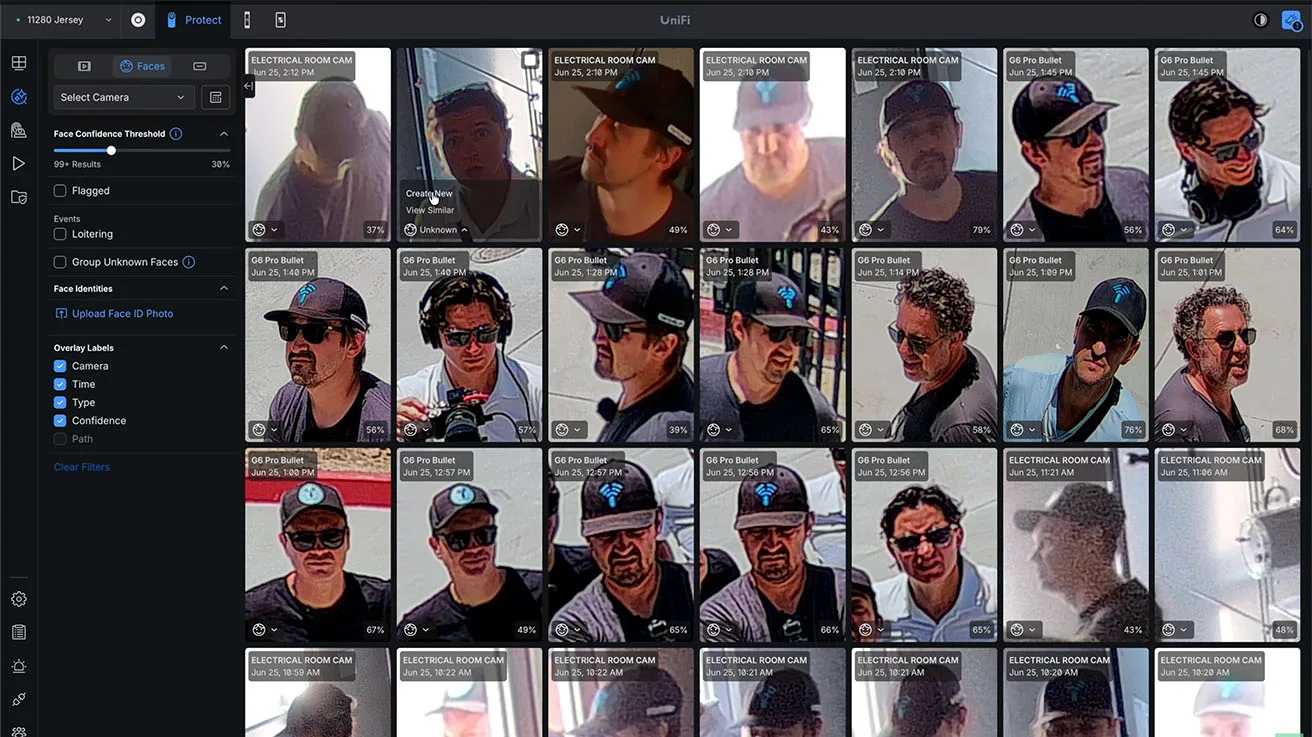
Today, modern AI-powered systems analyze video automatically as events happen. The most basic level of AI analytics involves detecting whether the camera sees a person, a vehicle, or an animal. This simple capability alone dramatically reduces false alarms compared to traditional pixel-based motion detection. The system can instantly distinguish meaningful activity from moving shadows, heavy rain, or blowing vegetation.
Advanced AI video analytics now go much further:
- Target Identification: Platforms perform facial recognition and high-speed License Plate Recognition (LPR).
- Perimeter Defense: Systems detect when someone crosses a virtual line or enters a restricted zone.
- Hazard Detection: AI can identify abandoned objects, detect early signs of smoke and fire, or perform weapon detection.
- Worker Safety: Algorithms determine if a worker is wearing a hard hat, a high-visibility safety vest (PPE), or if they have experienced a dangerous fall.
When a safety violation occurs, the system immediately notifies a remote monitoring operator, allowing for much faster emergency response times. The value of a security system is no longer determined by how many cameras it has, but by how well the system understands what is happening within the video itself.
This technological shift has completely transformed remote monitoring. Instead of asking an operator to watch dozens of screens, the AI analyzes every camera feed in real time. It filters out the noise and alerts the operator only when human attention is genuinely required. For an in-depth look at how remote monitoring centers leverage these automated video analytics to scale their operations, you can explore this breakdown of the 3dEye AI Operator V2 Gateway Automation Platform.
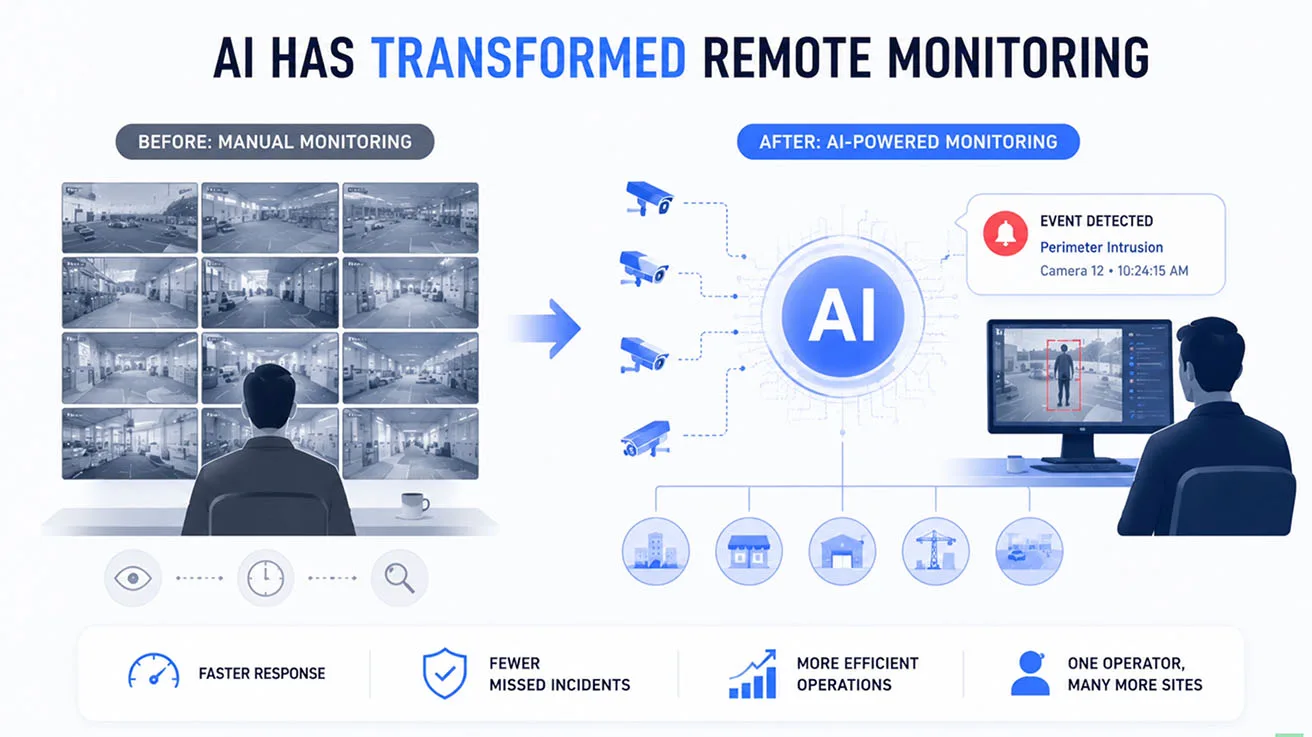
Because of this intelligence, a single operator can efficiently monitor multiple locations simultaneously. Businesses benefit from faster response times, fewer missed incidents, and highly efficient security operations.
What is Inside a Modern Surveillance Trailer?
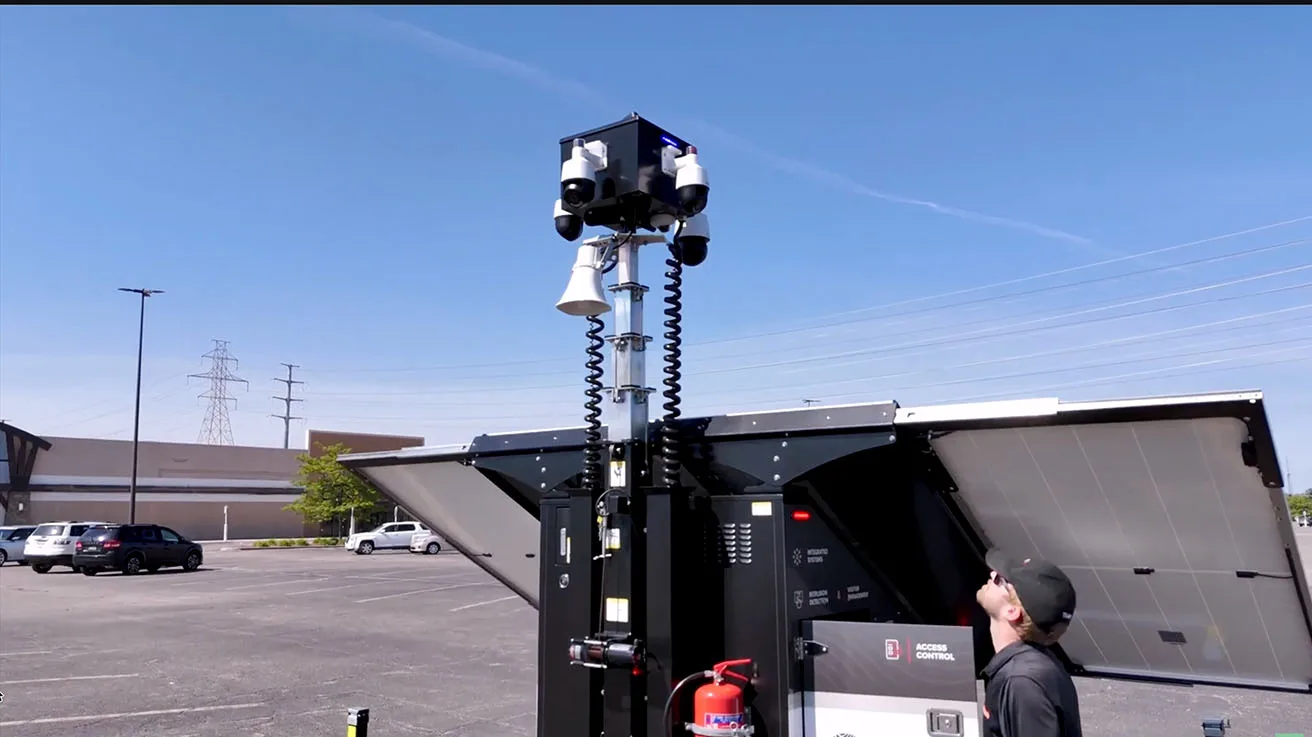
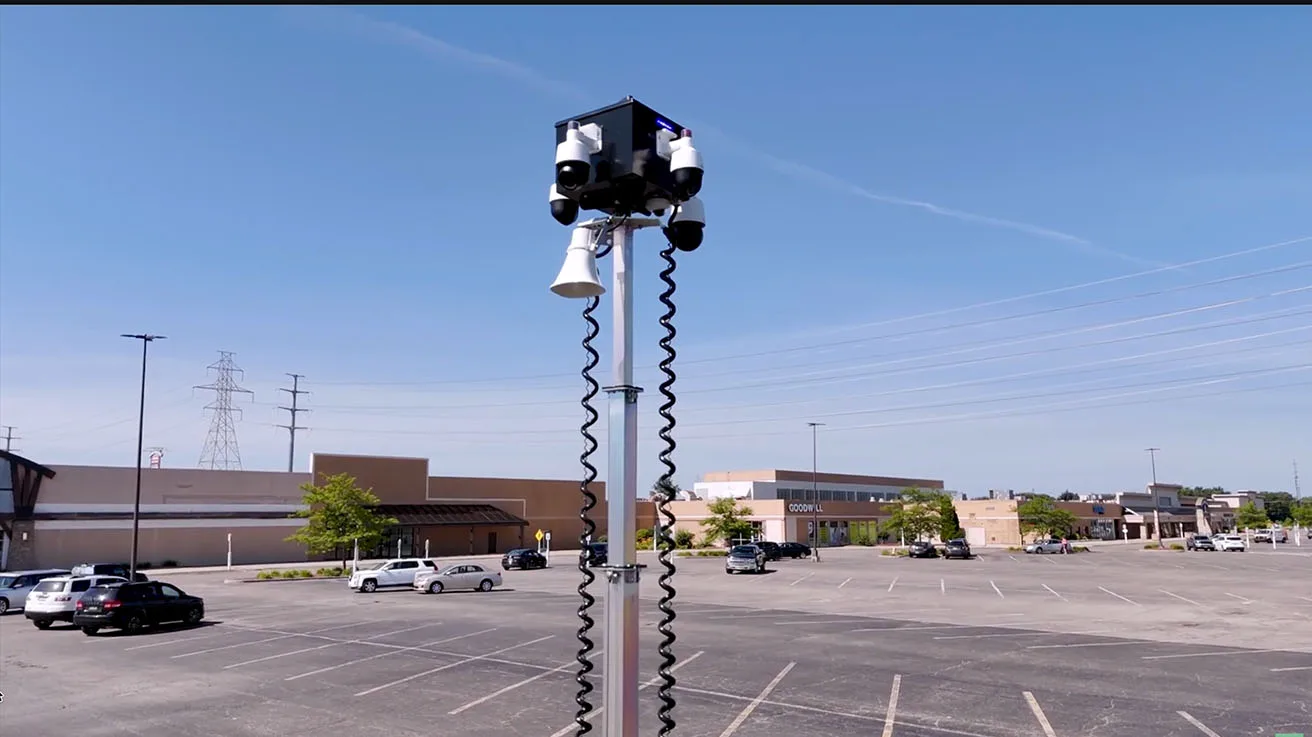
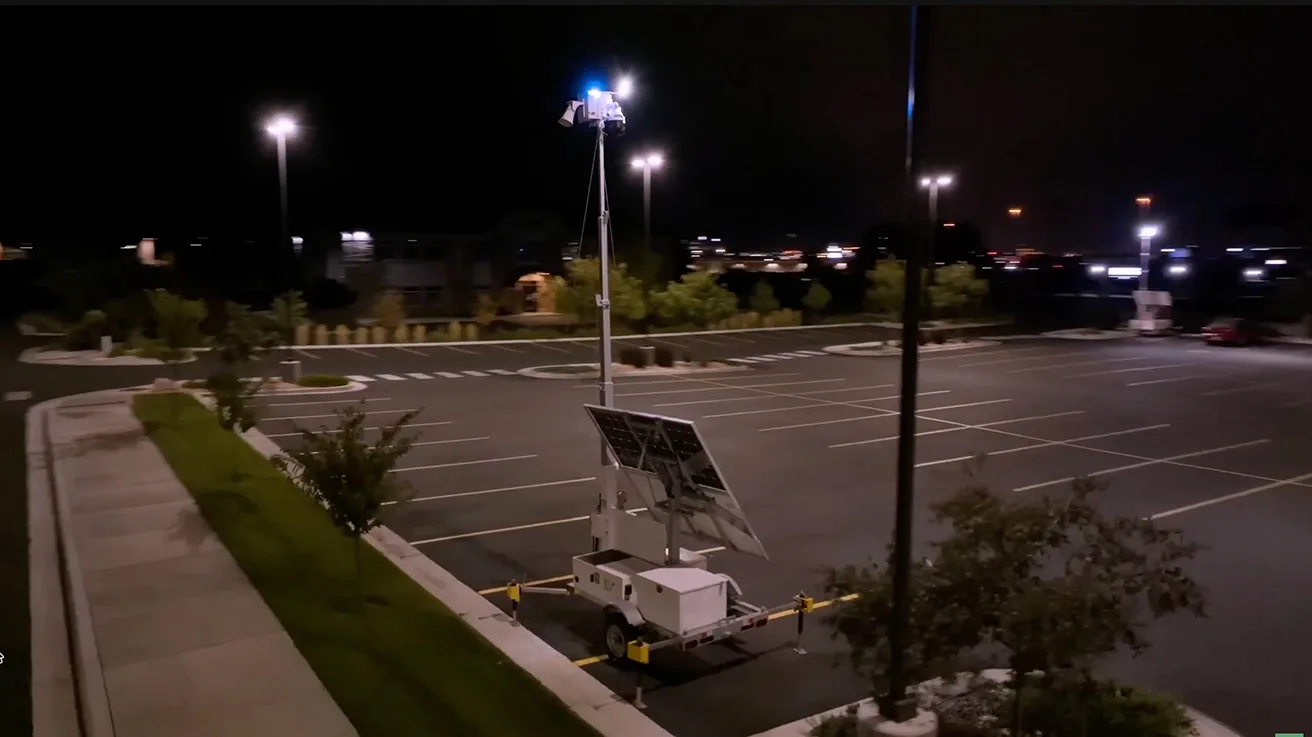
Now let us take a closer look at what a modern mobile surveillance trailer actually is. At first glance, it looks fairly simple. It is a towable trailer equipped with a telescoping mast and several security cameras.
After speaking with manufacturers, it becomes clear that the physical trailer is the simplest part of the entire system. In reality, it is a self-contained mobile security platform that brings multiple enterprise-grade technologies together in one solution.
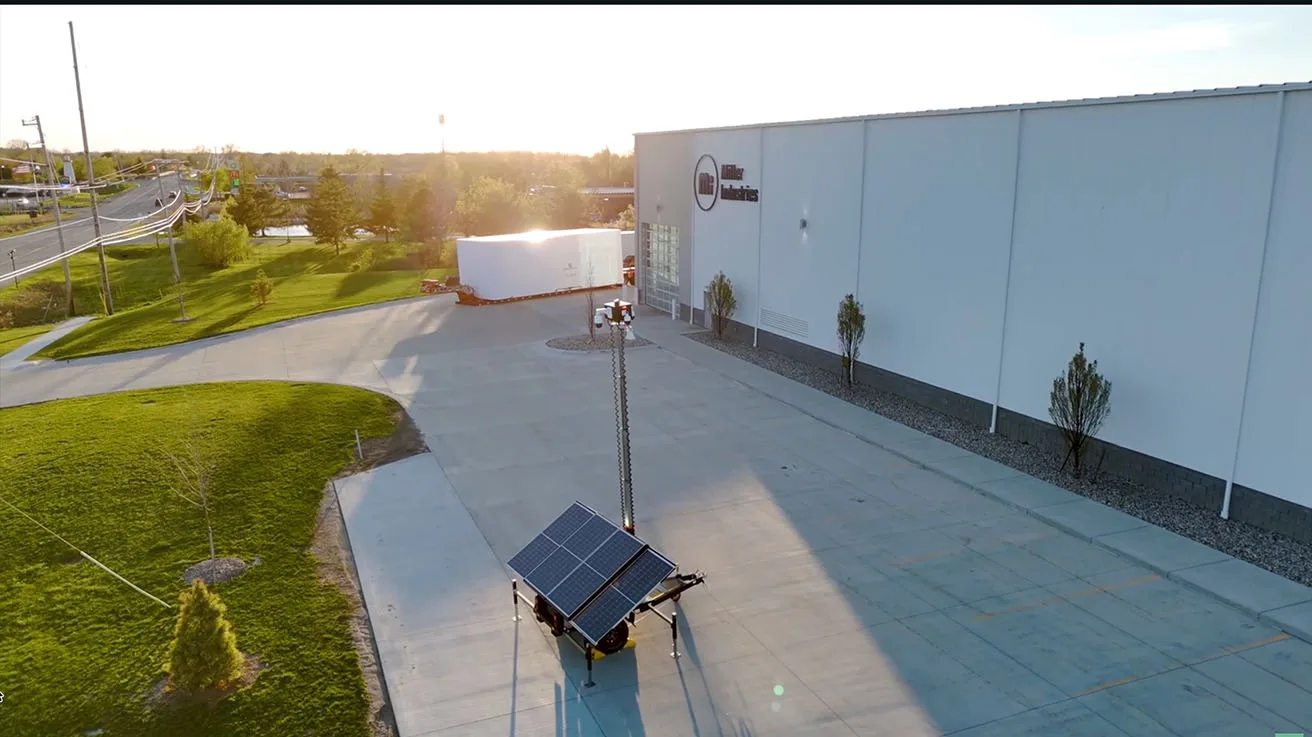
The trailer format allows the hardware to be delivered quickly to a parking lot, industrial facility, or public event. Once the project wraps up, the mast is lowered, and the unit is transported to the next site.
The Hardware Setup
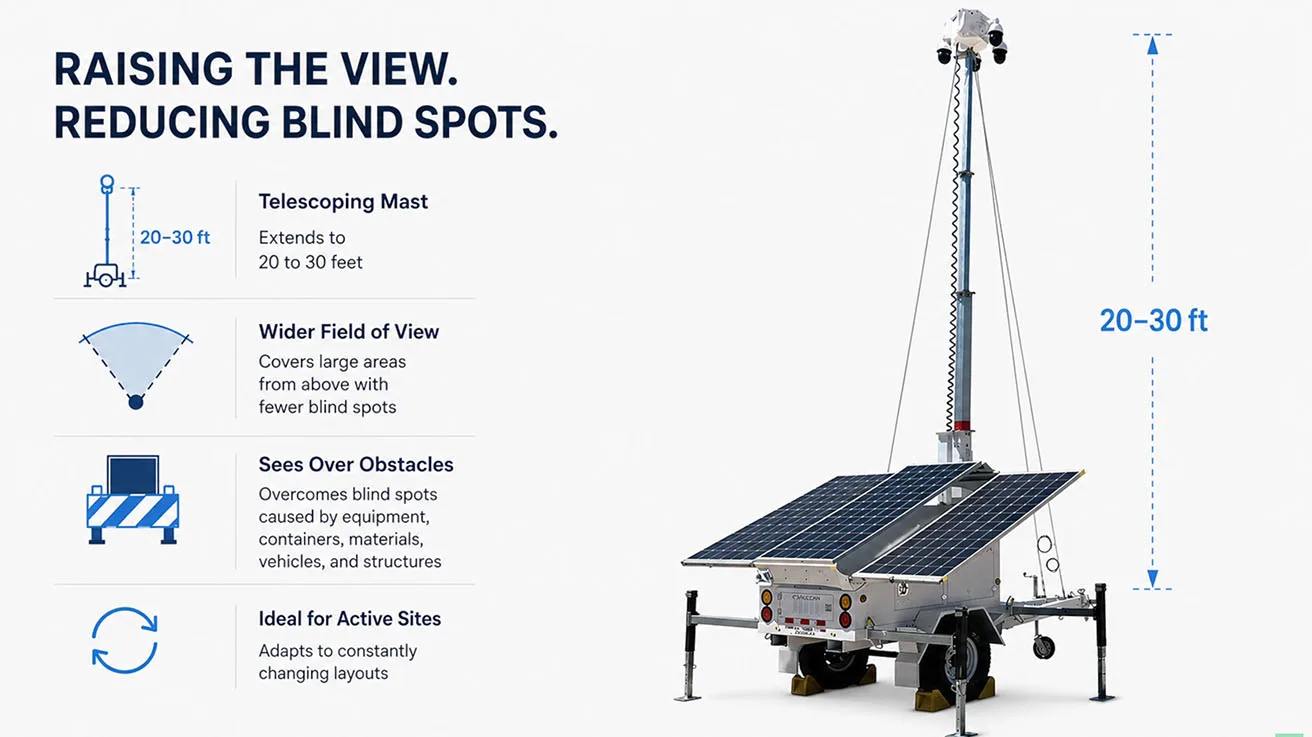
Most commercial units feature a telescoping mast that extends approximately 20 to 30 feet into the air. Raising the cameras above the site provides a massive field of view. This height allows one unit to cover a large area while effectively reducing blind spots created by heavy equipment, shipping containers, and temporary structures.
At the top of the mast, you will typically find a mix of specialized cameras:
- PTZ Cameras (Pan, Tilt, Zoom): These cameras can rotate horizontally, move vertically, and zoom in on specific targets. This allows a remote operator to investigate suspicious activity in great detail and physically follow a person or vehicle moving across the property.
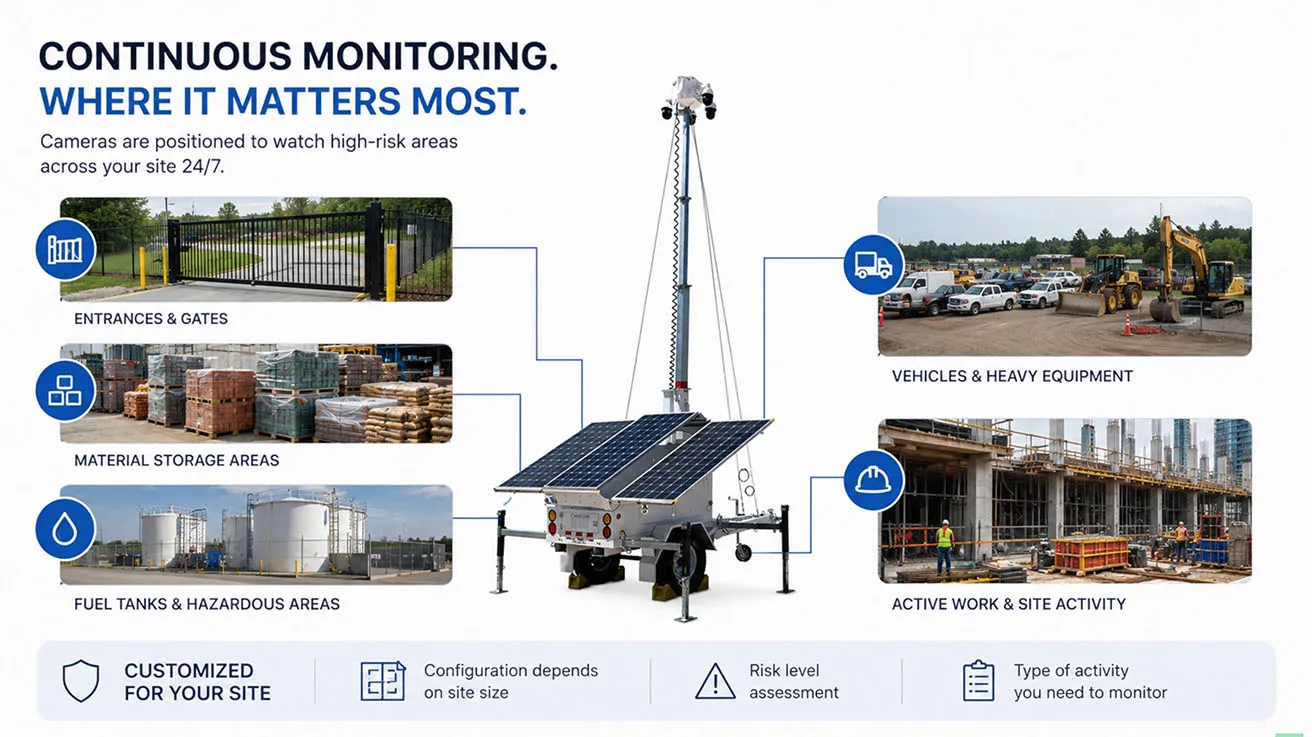
- Fixed Cameras: Bullet, dome, panoramic, or thermal cameras continuously monitor static areas that require constant coverage, such as entry gates, material storage, and fuel tanks.
The cameras are just the outer layer. Inside the secure cabinet, the trailer houses local or cloud-based video storage drives, an edge controller or video recorder, advanced networking equipment, and cellular or satellite modems. To see how manufacturers are packing high-performance computing power into these ruggedized mobile setups, take a look at the hardware innovations we covered Inside Luminys at ISC West 2026.
Active Deterrence and Audio Warnings
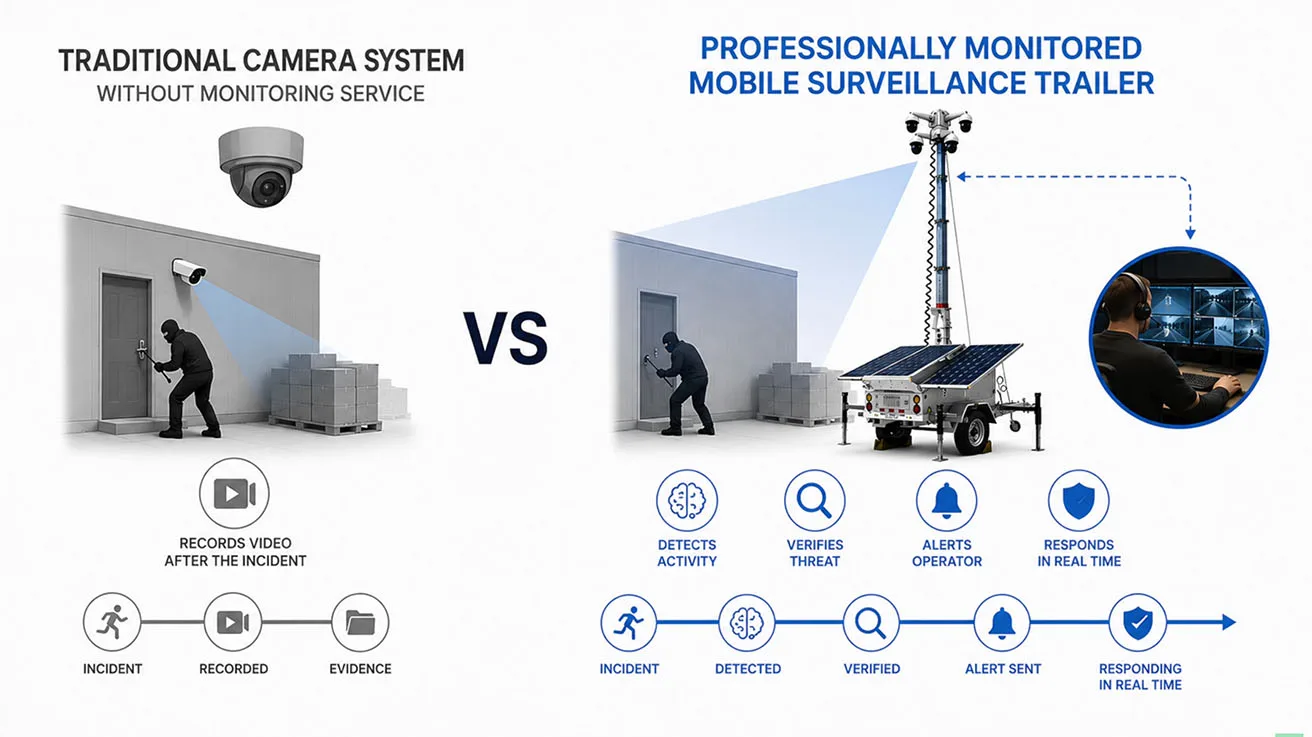
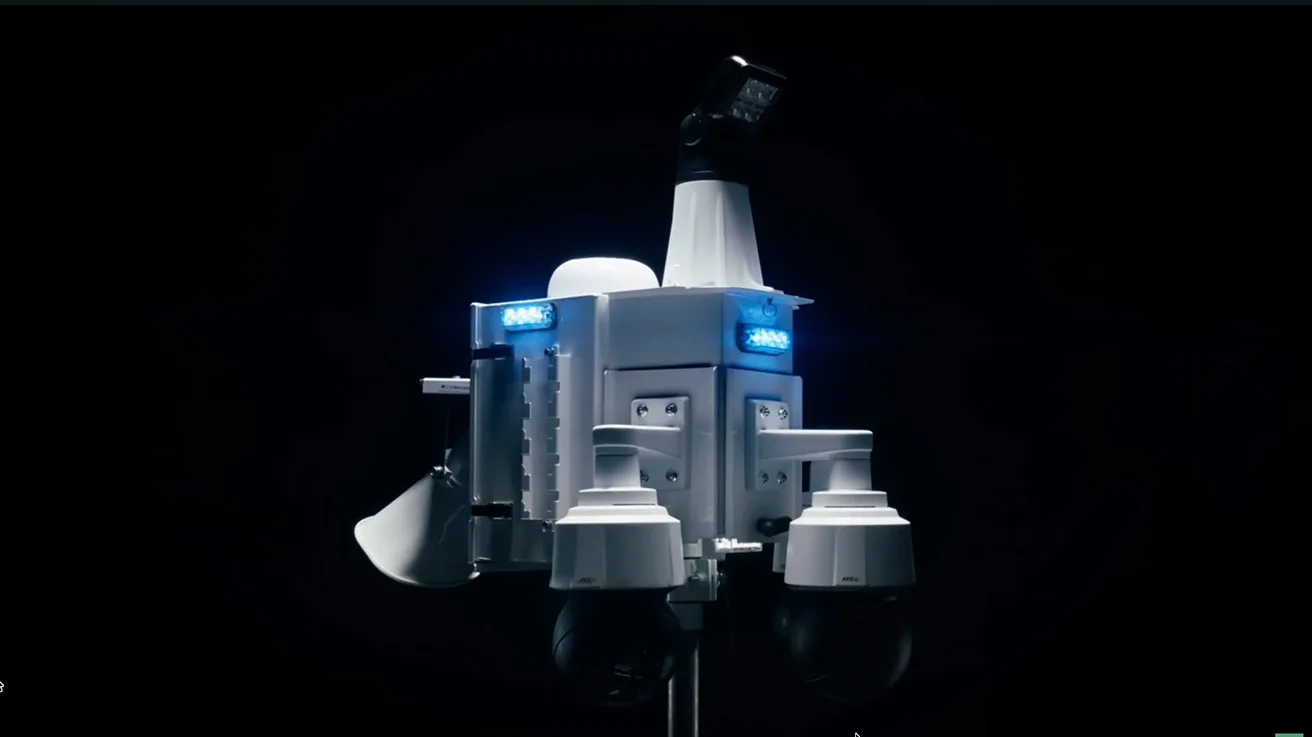
Many units also include high-powered LED floodlights, strobe lights, sirens, and loudspeakers. The industry calls this "active deterrence" because the system is designed to actively intervene while a crime is happening, rather than just passively recording it.
When the AI detects suspicious activity, an alert hits the remote monitoring center. The operator reviews the video, verifies that an unauthorized person has breached the property, activates the blinding strobe lights, and speaks directly through the loudspeaker. A live voice warning is usually enough to stop a theft or trespassing incident before the police or a mobile guard even need to be dispatched.
We are also seeing highly advanced solutions where the AI analyzes visible details about the intruder to generate a highly specific voice warning. For example, the system might announce: "You in the red shirt and black cap are on private property. Police have been contacted. Leave the site immediately."
A personalized warning like this is incredibly convincing. The intruder instantly realizes this is not an automated recording. Someone is watching them in real time and can describe their exact appearance to law enforcement. This combination of cameras, communications, AI analytics, and active deterrence makes the mobile surveillance trailer one of the most effective tools in the physical security industry today.
How Off-Grid Power Systems Work
After seeing everything that is built into a modern mobile surveillance trailer, many people naturally ask the same question. If the system includes cameras, AI analytics, network equipment, horns, and multiple communication systems, where does all the power come from? After all, these trailers are usually deployed in places where there is no connection to the electricity grid.
That is exactly why the power system is one of the most important parts of the entire platform. Based on my conversations with manufacturers, there is no single power solution that works perfectly for every application. The right choice depends on where the trailer will be deployed, the local climate, the expected duration of the project, and the customer's operational requirements.
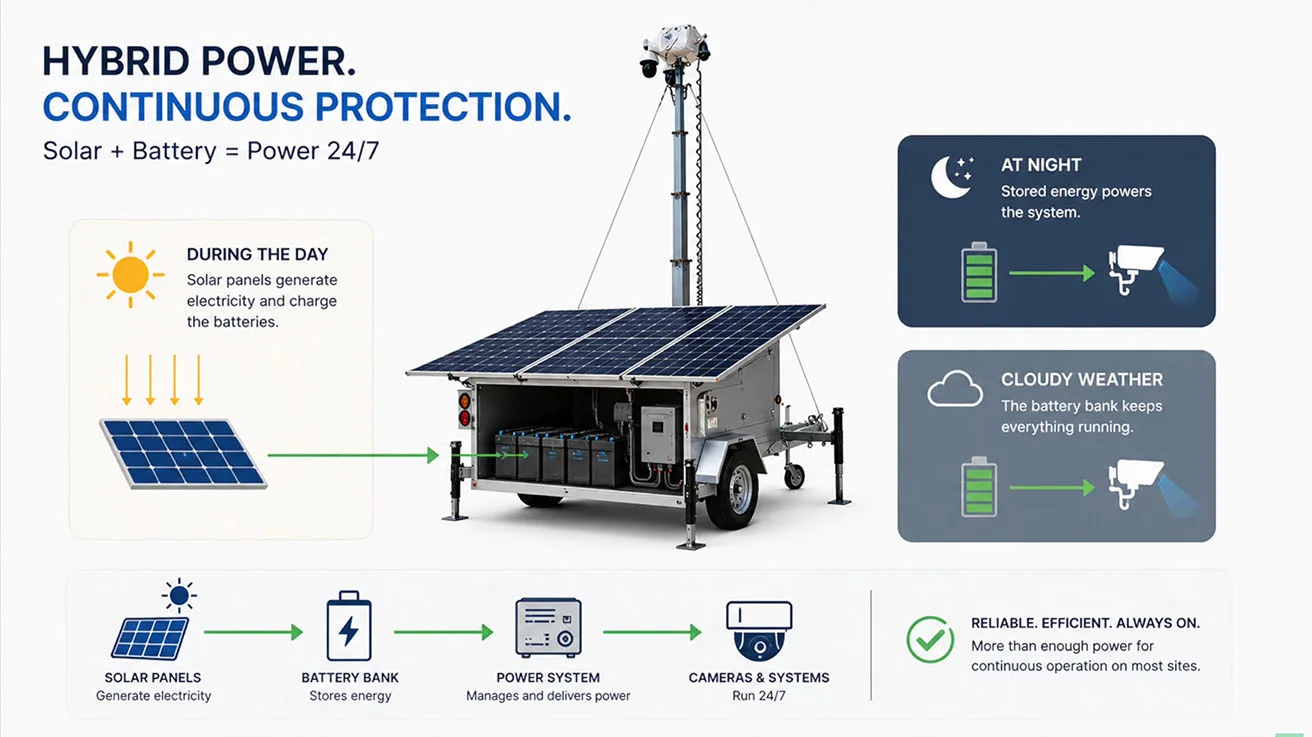
The most common configuration today is a hybrid power system that combines solar panels with a battery bank.
- During the day, solar panels generate electricity while also charging the batteries.
- At night or during periods of cloudy weather, the entire system continues operating using the energy that has already been stored.
- For many projects, this provides more than enough power to keep the system running continuously.
This push for sustainable and cost-efficient power is not limited to massive trailer platforms. We see the exact same trend in standalone best wireless solar security camera systems. For instance, cameras like the Vosker VKX bring this same off-grid reliability to smaller-scale remote sites. They combine high-capacity solar panels with cellular transmission to protect vacation properties, farms, and rural land without any traditional infrastructure, operating for months without a single manual charge.
However, not every location receives enough sunlight throughout the year. Some regions experience long winters, frequent overcast conditions, or simply have much higher power demands because of additional cameras, lighting, or communication equipment. In those situations, the most common backup solution is a diesel, gasoline, or propane generator.
When the battery charge falls below a predetermined level, the generator starts automatically, recharges the batteries, and then shuts down again. This approach is much more fuel-efficient than running a generator continuously while still providing reliable power whenever it is needed.
Over the last several years, some manufacturers have also introduced another interesting technology: direct methanol fuel cells.
- Instead of generating electricity by burning fuel like a traditional generator, these systems produce electricity through an electrochemical reaction using methanol.
- They are often combined with solar panels and batteries, creating a hybrid power system that can operate for weeks or even months with very little maintenance.
- Compared with generators, fuel cell systems operate much more quietly, require less routine servicing, and reduce carbon emissions.
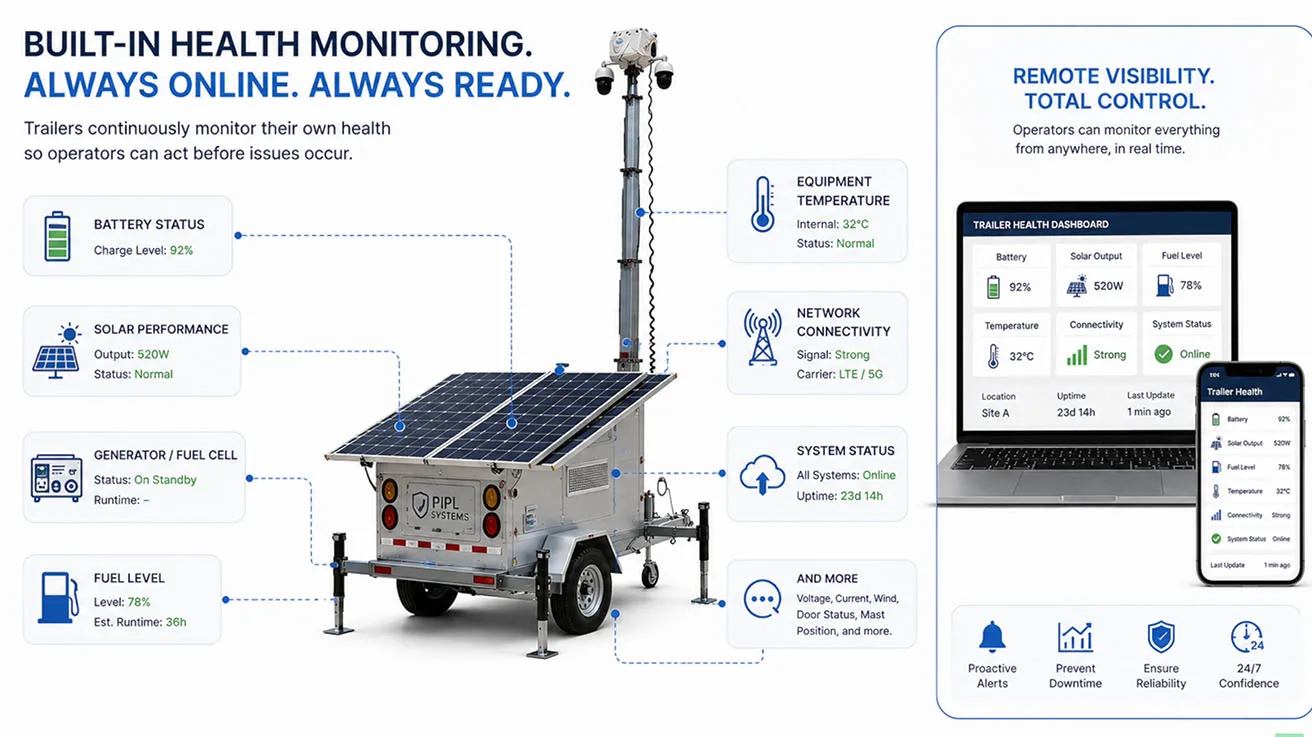
Powering the trailer is only part of the story. Modern mobile surveillance trailers continuously monitor their own health in addition to monitoring the site they are protecting. Operators can remotely view battery charge levels, solar panel performance, generator or fuel cell status, fuel levels, equipment temperature, and network connectivity. If one of these systems begins to operate outside its normal range, the service provider can often identify the issue long before it affects the cameras or remote monitoring operations. This allows maintenance to be scheduled proactively instead of waiting for an unexpected failure in the field.
Why Most Companies Rent Instead of Buy
After everything we have discussed, you might assume that most companies simply purchase a mobile surveillance trailer and use it on their own job sites. In reality, the market works a little differently.
One thing that became very clear while speaking with manufacturers and service providers is that many customers are not actually buying the trailer itself. Instead, they are purchasing a complete managed security service.
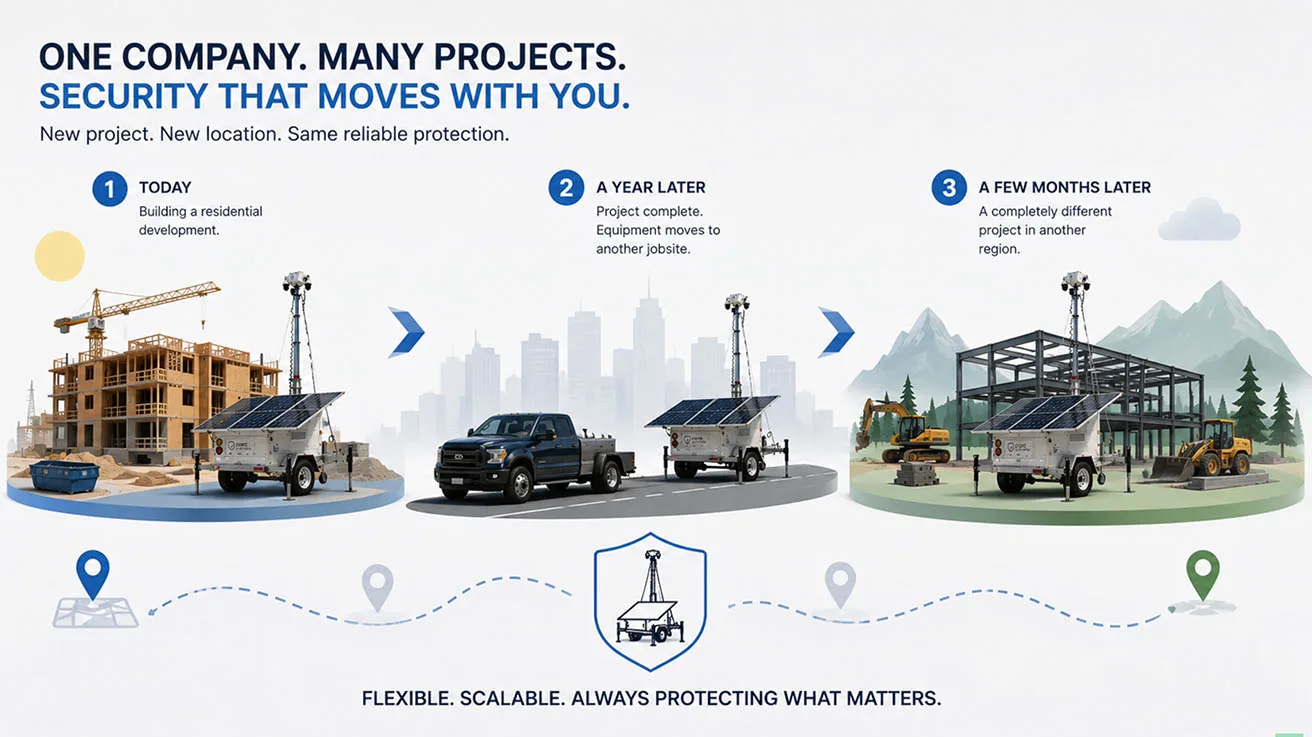
Let's take a construction company as an example. Today, it may be building a residential development in one part of the city. A year later, that project is finished and the equipment moves to another job site. From the construction company's perspective, becoming an expert in mobile surveillance simply is not part of its business. Its job is to build buildings, not manage security technology.
Companies do not want to:
- Maintain cameras or keep software up-to-date.
- Refuel generators or monitor battery health.
- Troubleshoot network connectivity.
That is where specialized service providers come in. Many companies offer mobile surveillance trailers as a complete managed solution. Depending on the provider, this service may include the trailer itself, on-site deployment, remote video monitoring, preventive maintenance, generator or fuel cell management, and 24/7 technical support. In other words, the customer receives a complete security system that can begin protecting the site almost immediately after it arrives.
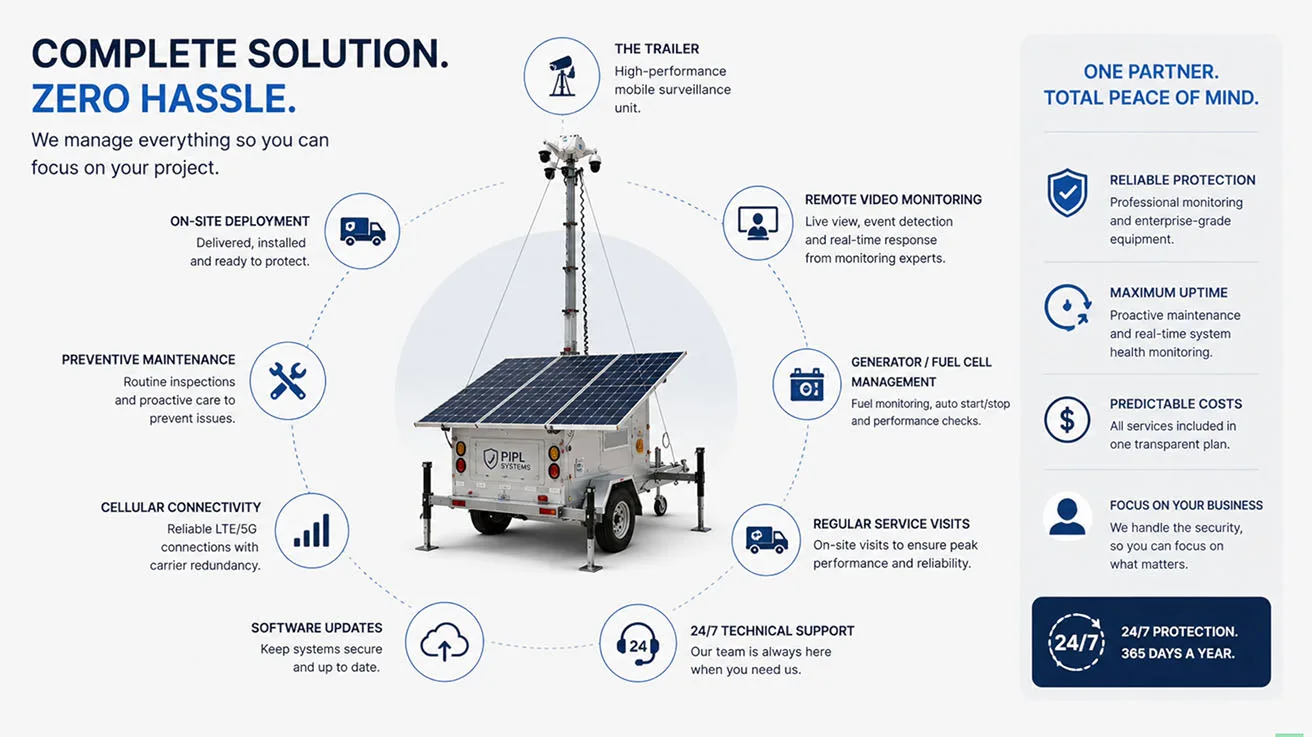
A massive component of this managed service is handling the wireless communication infrastructure. Think about your smartphone. The real revolution of the smartphone is being reachable from anywhere. We apply that exact same logic to a modern cellular security camera. These independent systems offer total location freedom, allowing a camera to be mounted in place and start recording immediately. There are no complicated cables to install, and they rely on a stable, reliable cellular network. Service providers manage all these cellular connections for the trailers, ensuring the video feeds never drop.
While preparing this video, I spent time researching how these services are typically priced.
- When I first started looking into this market back in 2024, a typical mobile surveillance trailer rental often started around 3,000 US dollars per month.
- More advanced configurations that include 24/7 remote monitoring, additional cameras, larger power systems, generators, or fuel cells could cost 4,000 to 5,000 dollars per month or even more.
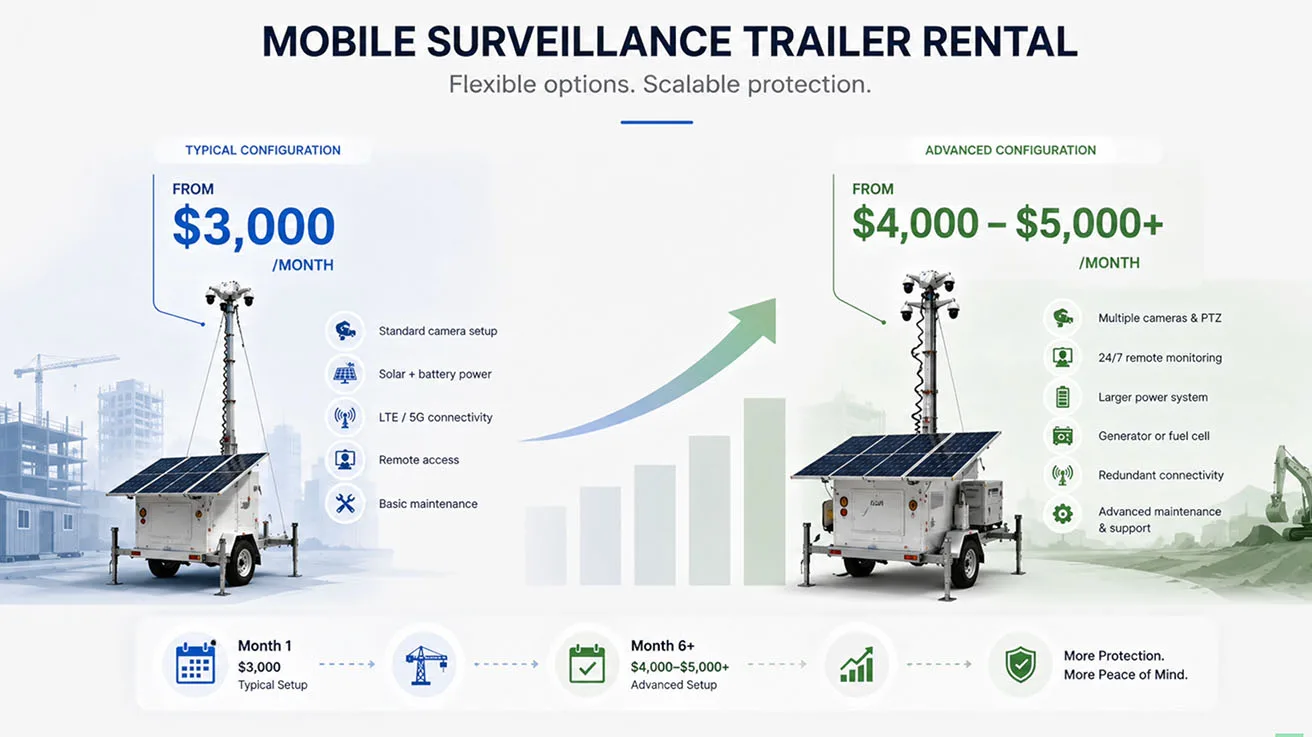
Of course, these numbers should only be viewed as general reference points. Actual pricing depends on the country, the region, the rental period, the equipment configuration, the level of remote monitoring, and the services included in the package.
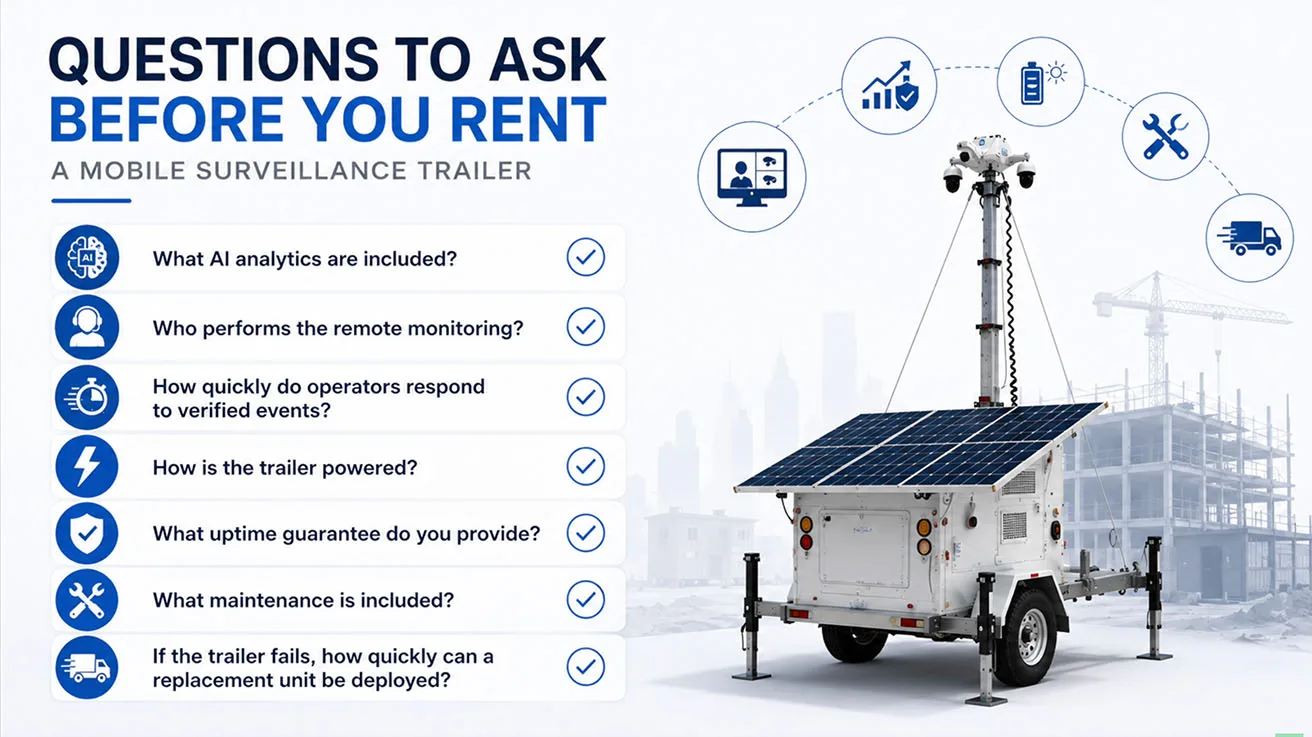
The market has become much more competitive over the last several years, giving customers a much wider range of options in both pricing and capabilities. If you are considering a mobile surveillance trailer for your business, I encourage you to compare much more than just the monthly price. You need to ask critical questions:
- What AI analytics are included?
- Who performs the remote monitoring, and how quickly do operators respond to verified events?
- How is the unit powered, and what uptime guarantees are provided (I recommend a minimum of 3 to 5 days)?
- What maintenance is included, and how quickly can replacement equipment be deployed if something fails?
In many cases, the answers to those questions will have a much greater impact on the success of the project than the cost of the trailer itself.
The Future of Mobile Security Tech
As we have seen throughout this guide, today's mobile surveillance trailers are much more than just trailers with a few cameras mounted on top. They combine autonomous power systems, modern security cameras, artificial intelligence, remote video monitoring, wireless communications, and ongoing service support into one single integrated security platform.
In my opinion, that is exactly what makes this market so interesting. I believe we will see even more innovation over the next few years, and it will be exciting to watch how these technologies continue to change the way temporary sites are protected.
Find a Verified Security Integrator
Need a security system installed? Finding a trusted, qualified integrator is not easy. Pipl Systems is a platform to find verified professional security integrators. You can browse by location, see real projects, and choose a company you can actually trust. Find your trusted security integrator today.
Summary
Securing temporary locations, such as active construction sites and energy projects, requires a completely different approach compared to traditional corporate offices. Standard wired systems fail in these environments because the necessary infrastructure simply does not exist. The rapid evolution of the Mobile Surveillance Trailer has bridged this critical gap, providing businesses with an autonomous, intelligent, and highly effective security platform from day one.

By leveraging hybrid power systems like solar panels paired with auto-start generators, these units operate indefinitely off the grid. Advanced AI analytics have transformed them from passive recording devices into proactive digital guards. They identify specific threats in real time, filter out harmless environmental motion, and empower remote monitoring operators to intervene instantly using active deterrence features. Ultimately, choosing a managed mobile surveillance service allows business owners to focus on their actual projects while maintaining strict safety compliance, satisfying rigorous insurance requirements, and fully protecting their valuable assets.
Want to see this platform in action? Watch our complete video guide below to explore the hardware, advanced AI capabilities, and off-grid power systems of a modern mobile surveillance trailer.
Frequently Asked Questions (FAQ)
How much does a mobile surveillance trailer cost to rent?
Pricing varies based on features and location, but standard rentals typically start around $3,000 per month. Advanced setups featuring 24/7 live remote monitoring, extra PTZ cameras, and heavy-duty hybrid power systems like generators or fuel cells can cost between $4,000 and $5,000 or more per month.
Do mobile security trailers require Wi-Fi or wired internet?
No, they operate completely independently of local wired networks. Modern trailers rely on LTE or 5G cellular networks to transmit live video and analytics alerts. For highly remote off-grid locations, many providers now equip these trailers with satellite internet services like Starlink.
How does a mobile security trailer get power without grid electricity?
These systems use autonomous hybrid power platforms. The most common setup combines solar panels with a large battery bank. For environments with harsh winters or high power demands, they utilize backup diesel, gasoline, or propane generators that start automatically to recharge the batteries. Some advanced units also use highly efficient direct methanol fuel cells.
What is active deterrence in video surveillance?
Active deterrence means the system is built to stop a crime while it is happening, not just record it for later. When a threat is detected, operators can activate high-powered LED floodlights, strobe lights, and sirens. They can also use built-in loudspeakers to issue live, personalized voice warnings to intruders.
Can a mobile surveillance trailer reduce false alarms?
Yes, significantly. Modern systems use advanced artificial intelligence to analyze the video in real time. The AI can accurately distinguish a human or a vehicle from blowing vegetation, moving shadows, or heavy rain, ensuring that operators are only alerted when a genuine threat is present.
Why do most construction companies rent surveillance trailers instead of buying them?
Construction companies specialize in building, not managing complex security networks. Renting provides a complete managed service where the provider handles the hardware deployment, cellular connectivity, generator refueling, remote video monitoring, and all necessary software updates.